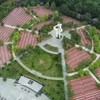
Da Nang (VNA) – Da Nang is expanding its tourism portfolio with a new community-based tourism initiative centred on the Ky Anh Tunnels and the Dam River Reed Bed, combining wartime heritage, local culture and natural landscapes to promote sustainable tourism and heritage conservation.
The initiative took centre stage at the 2026 Ky Anh Tunnels–Dam River Reed Bed Cultural and Tourism Festival, which opened on July 24 in Ban Thach ward.
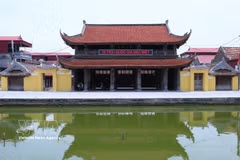
The festival featured a rich programme of cultural, tourism and sporting events, including art performances, traditional ceremonies at Thach Tan and Vinh Binh communal houses, a re-enactment of soldiers returning to their village during wartime, a fish and shrimp release to replenish aquatic resources in the Dam River, and a community folk dance contest.
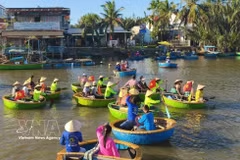
Visitors also experienced Bai Choi folk singing, a floating lantern ceremony, photo exhibitions, displays of OCOP (One Commune One Product) items, local agricultural specialities and start-up products, traditional sedge mat weaving in Thach Tan, regional cuisine, guided tours of the Ky Anh Tunnels–Dam River Reed Bed National Historical Site, and kayaking on the Dam River.
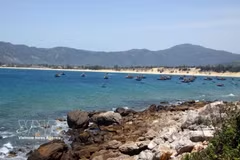
Phan Xuan Thanh, Vice Chairman of the Da Nang Tourism Association, said the site lies along the Central Heritage Road, linking the heritage destinations of Hue, Da Nang, Hoi An and My Son. It also enjoys convenient connections to attractions such as the Vietnamese Heroic Mother Monument, Tam Thanh Beach, coastal community tourism destinations and Da Nang's network of historical and cultural sites.
He said the new tourism products will help showcase the area's historical and cultural heritage while promoting Ban Thach's landscapes and local identity. The initiative is also expected to strengthen community-based and experiential tourism, adding a distinctive heritage offering to Da Nang's growing tourism sector.
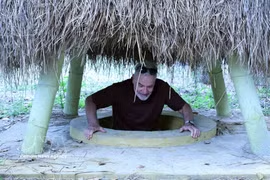
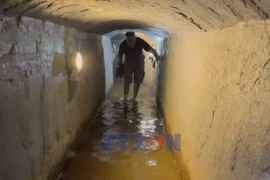
The Ky Anh Tunnels are among Da Nang's most important revolutionary relics. Constructed by hand during the resistance war against the US, the three-kilometre underground network became known as the "tunnels beneath the people's homes", with secret shelters, engineering bunkers and medical facilities built beneath houses and village communal halls.
The tunnels demonstrate remarkable wartime engineering in coastal sandy terrain and once served as a concealed base for military command, shelter, medical treatment and the storage of weapons and supplies.
Spanning about 180 ha, the Dam River Reed Bed is a natural freshwater wetland that is home to nearly 300 species of plants and animals. It also served as a key revolutionary base during the war and remains one of the region's most valuable ecological assets./.