Localities turn cultural heritage into driver of tourism, economic development

Ho Chi Minh City identifies traditional art forms such as hat boi, cai luong (reformed opera) and puppetry as areas requiring greater investment and promotion to become distinctive cultural products associated with tourism.

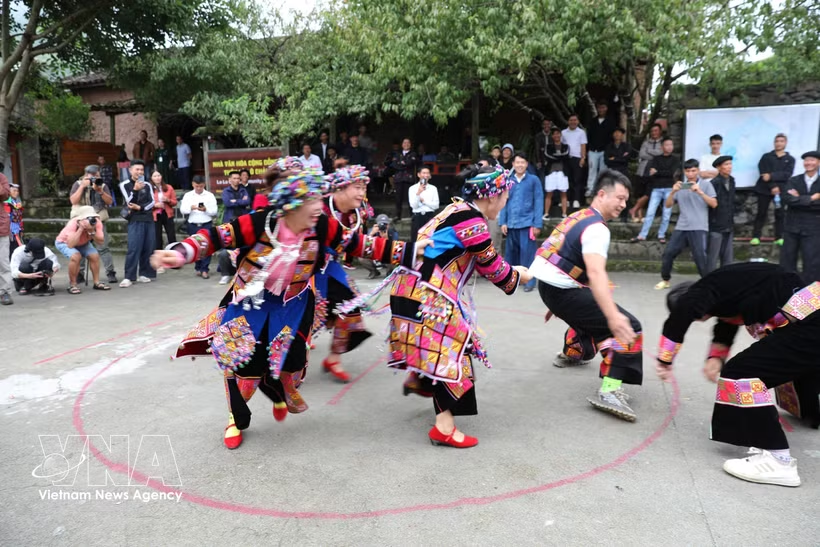
The Lo Lo Chai people in Tuyen Quang province immerse themselves in a traditional dance, attracting a large number of visitors to enjoy and experience the performance. (Photo: VNA)

Hanoi (VNA) – Localities nationwide have rolled out measures to preserve and promote cultural heritage while linking it with tourism and economic development as part of effort to implement the Politburo's Resolution No. 80-NQ/TW on the development of Vietnamese culture.

Bringing traditional opera closer to the public

In Ho Chi Minh City, efforts to preserve and promote hat boi (Vietnamese classical opera) have focused on renewing approaches to audiences, particularly young people. Instead of limiting performances to traditional venues, the city’s Hat Boi Theatre and artists have expanded their activities to public spaces such as Nguyen Van Binh Book Street, Nguyen Hue pedestrian street and shopping malls, while strengthening their presence on digital platforms.

vnanet-phat-boi.jpg
Artist Khong Minh Khuong performing in the 'hat boi' (classical drama) play "Emperor Le Dai Hanh." (Photo: VNA)

Performance programmes have also been tailored to different audiences. Historical excerpts are selected and dialogue adapted to make it more accessible, combined with exchanges and hands-on activities to help audiences understand makeup techniques, the significance of characters and props, and the distinctive performing language of hat boi.

​The “School Stage” programme has been maintained at numerous schools, with content designed for different age groups and incorporating historical figures and stories relevant to educational curricula. Through performances combined with experiential activities, pupils and students can gain a more direct understanding of traditional arts.

Ho Chi Minh City identifies traditional art forms such as hat boi, cai luong (reformed opera) and puppetry as areas requiring greater investment and promotion to become distinctive cultural products associated with tourism. Combining preservation with digital technology and expanded performance spaces is expected to enhance the promotion of cultural heritage.

Developing tourism from cultural identity and festivals

Many other localities have also taken steps to uphold and bring into play their cultural heritage.

The northern mountainous province of Tuyen Quang is tapping cultural values, landscapes and community identity to transform tourism an important economic sector.
vnanet-tuyen-quang.jpg
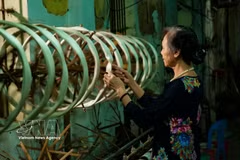
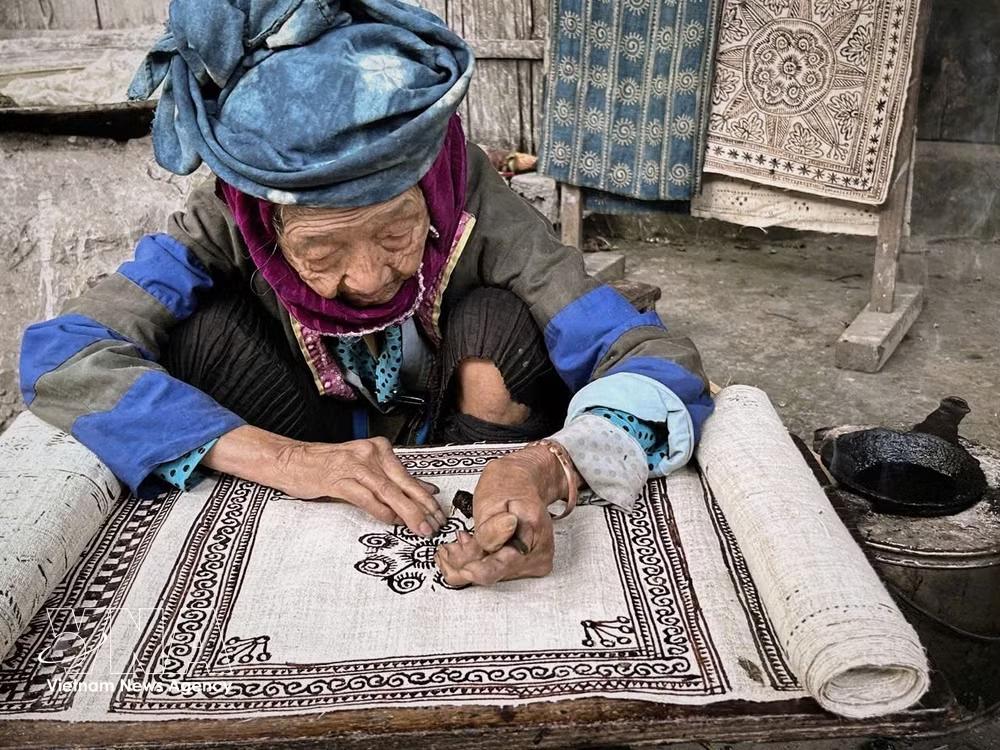
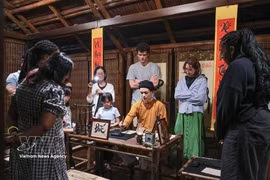
An elderly artisan from the Lung Tam weaving village in Tuyen Quang province draws patterns using beeswax on linen fabric. (Photo: VNA)

The province plans to host the 12th edition of the Buckwheat Flower Festival, themed “Echoes of the Rocky Plateau”, which is set to open at Thanh Nien Square in Dong Van commune on November 6. Festival activities will include the 2026 Vietnam–China International Trade Fair and an exhibition of OCOP items and agricultural specialties. The programme will also feature the second “Spirit of the Stone” rock concert, traditional folk games across communes within the Dong Van Karst Plateau UNESCO Global Geopark, along with sports competitions and cultural performances.

To prepare for the festival, provincial authorities have instructed localities to implement tasks according to the approved plan and cultivate around 400ha of buckwheat flowers, ensuring they bloom during the opening period at major tourist destinations.

Tuyen Quang is turning its cultural heritage into an economic resource. Since the beginning of 2026, the province has welcomed nearly 2.1 million visitors, including over 406,000 international arrivals, and recorded total tourism spending exceeding 5.8 trillion VND (nearly 222 million USD). Community-based tourism models in Lo Lo Chai, Lam Binh and Hoang Su Phi have proven effective by combining cultural preservation with experiential tourism products. Meanwhile, 357 OCOP items rated three stars or higher have helped increase the economic value of local culture.

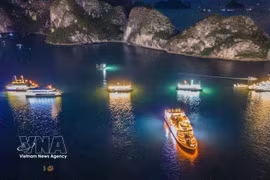
In central Lam Dong province, the recent 2026 Phan Thiet Whale Worship Festival was among the notable activities aimed at preserving and promoting cultural heritage in connection with local tourism and economic development. Its traditional rituals and a series of cultural activities helped to not only preserve the identity of fishing communities but also popularise the image of coastal culture and attract domestic and foreign visitors.

A highlight was the lantern-floating ceremony on the Ca Ty River, where hundreds of lanterns were released, conveying wishes for peace and prosperity, favourable weather, safe voyages for fishermen and bumper catches. The festival was also accompanied by a wide range of cultural and artistic activities, folk games, exhibitions, and displays of OCOP and other local specialty products.

These activities have enriched tourism offerings, created more experiences for visitors and opened up opportunities to promote local farm produce, specialties and cultural products.

Such models demonstrate how Resolution No. 80-NQ/TW is being effectively translated into practice, with culture gradually becoming an internal resource for socio-economic development and local brand enhancement./.
VNA

See more

The poster of "Glorious Ashes" movie.

Vietnamese cinema returns to Berlin summer film programme

The screening attracted considerable interest from film enthusiasts and the Vietnamese community in the German capital. It marked the fourth time Vietnamese films have been featured in the programme, following "The House of No Man" by Tran Thanh, "Glorious Ashes" by Bui Thac Chuyen, and "My Best Friend's Wedding" by Nguyen Quang Dung and Diep The Vinh in previous years.

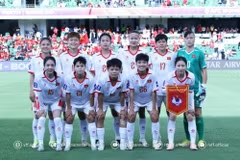
Xuan Son comes on in the second half and contributes to Vietnam’s second goal, with his shot forcing a Cambodian defender into an own goal to put Vietnam 2-1 ahead (Photo: VNA)

Vietnam's 22-match unbeaten run draws praise from RoK media

Under the tournament format, the semifinals and final will be played over two legs. Vietnam will travel to Malaysia for the first leg on August 16 before hosting the second leg on August 19. Should Vietnam overcome Malaysia, they will meet the winner of the other semifinal between Thailand and Singapore in the final.

A performance at the Vietnam–Korea Festival 2026 in Da Nang city (Photo: VNA)

Vietnam–Korea Festival 2026 kicks off in Da Nang

Now in its fifth edition, the festival has cemented its place as Da Nang’s signature annual diplomatic event, spotlighting the distinct cultures of both nations, fostering friendship and driving cooperation with Korean localities and partners.

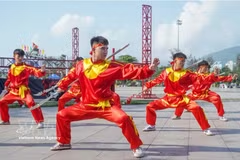
A performance at the opening ceremony of the 2026 Hanoi International Martial Arts Festival on August 7 (Photo: VNA)

Hanoi opens international martial arts festival

The event attracts about 2,000 martial artists of 66 delegations, including seven international delegations from six countries, namely Indonesia, Russia, France, Germany, Switzerland and Morocco.

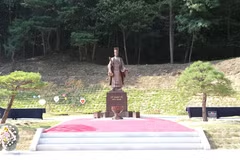
The statue of Vietnam's King Ly Thai To ( (974 - 1028) in Bonghwa county (Photo: VNA)

RoK to develop K-Vietnam Valley project linked to Ly Dynasty heritage

With the designation in place, Bonghwa will carry out eight specialised projects worth a combined 347.6 billion KRW (245.1 million USD) from 2026 to 2030 – among them the K-Vietnam Valley itself, tourism development around Changpyeong Reservoir, rental smart farms, and a Baekdudaegan healing ‘pet village.’

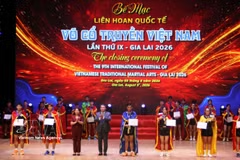
The organising committee presents awards to outstanding martial artists at the festival. (Photo: VNA)

9th Int’l Festival of Vietnamese Traditional Martial Arts wraps up

The ninth International Festival of Vietnamese Traditional Martial Arts has fostered the martial spirit, strengthened national pride, promoted cultural exchanges and reinforced the aspiration to bring Vietnamese traditional martial arts to a wider international audience.

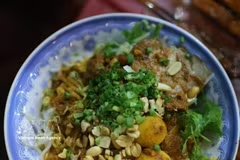
An appetising bowl of My Quang features a rich combination of ingredients. (Photo: VNA)

Da Nang to host festival honouring Quang Nam-style noodle soup

My Quang is not only a signature dish of the Quang region but also reflects the history, culture and daily life of communities in central Vietnam. With its diverse ingredients, preparation methods and distinctive flavours, the noodle soup has become one of Vietnam's best-known culinary specialities, helping strengthen Da Nang's position on the culinary tourism map.

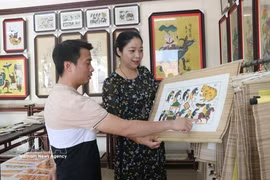
Hanoi’s traditional silk weaving craft continues to be preserved and developed today. (Photo: VNA)

Van Phuc silk weaving village officially recognised as Hanoi tourist destination

With its millennia-old heritage and growing integration of preservation and innovation, Van Phuc silk weaving village is poised to become a distinctive cultural destination, helping promote Hanoi’s sustainable cultural tourism and bring the quintessence of Vietnamese silk weaving closer to domestic and international visitors.

Minister of Construction Tran Hong Minh speaks at the session (Photo: VNA)

Lawmakers mull over changes to architecture law

On architectural management, the draft Law amending and supplementing several articles of the Law on Architecture clarifies the concept of “national cultural identity in architecture”, tying design to the preservation and promotion of regional heritage. It pushes architecture that mirrors local identity and fits each locality’s natural, historical and social conditions, while setting criteria to identify, assess and protect architecturally valuable buildings as a distinct form of cultural heritage.