Binh Dinh launches all-out bid to put martial arts on UNESCO’s world stage

Binh Dinh has already mapped out a 2026-2030 plan to keep its fighting spirit breathing, complete with specific targets and a clear step-by-step timeline.

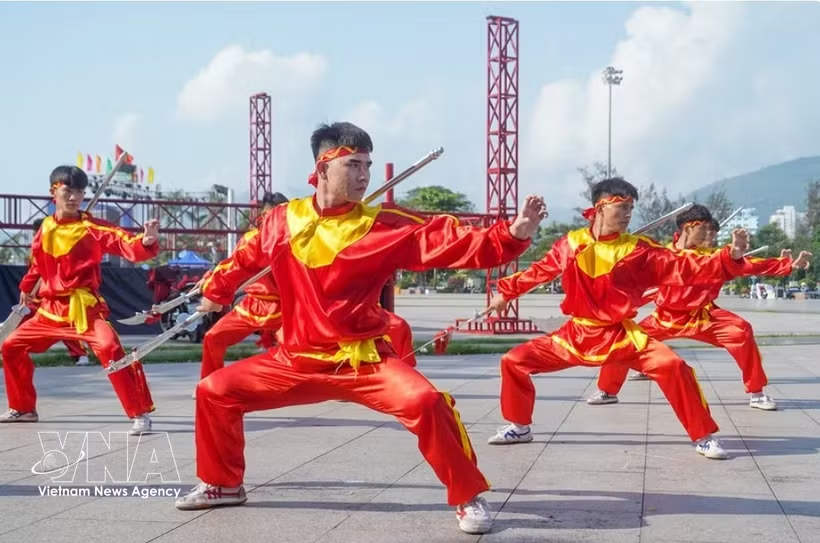
The spirit of martial arts is passed down through generations by Binh Dinh locals (Photo: VNA)

Gia Lai (VNA) - On a mission to defend its reputation as the “land of martial arts”, the central province of Gia Lai is putting the finishing touches on a bid to win UNESCO Intangible Cultural Heritage of Humanity status for Binh Dinh traditional martial arts.

Nguyen Thi Thanh Lich, Vice Chairwoman of the provincial People’s Committee, said Binh Dinh martial arts are the beating heart of Vietnam’s centuries-old martial tradition. Many of the country’s most iconic forms and techniques were born on this soil, forging a one-of-a-kind blend of history, culture and artistry that has immeasurable national value.
vnanet-n.jpg
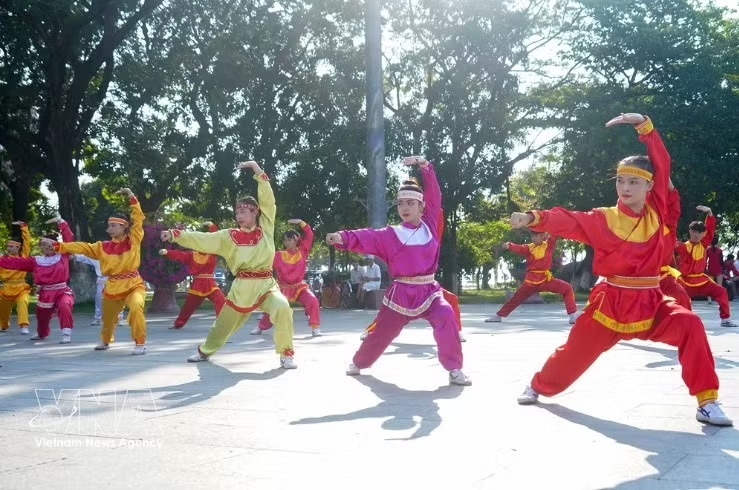
Regardless of age or gender, Binh Dinh traditional martial arts is a source of pride among its locals (Photo: VNA)

The paperwork, she said, has been painstakingly pieced together and backed by science and real-world proof. Once it checks every UNESCO box, Vietnam expects to present the nomination at the Inter-Governmental Committee for the Safeguarding of the Intangible Cultural Heritage session slated for China in late 2026.

Binh Dinh has already mapped out a 2026-2030 plan to keep its fighting spirit breathing, complete with specific targets and a clear step-by-step timeline.

Under that blueprint, martial arts masters, devoted practitioners and local schools have been named keepers of the flame. Binh Dinh will roll out a package of support policies to keep those schools operating, request masters pass down their hard-won knowledge, train the next generation and keep the traditional techniques that communities have guarded for generations.

For its part, Gia Lai wants to grow traditional martial arts into more than just a competitive sport. It’s aiming for a full-on community cultural movement. The art is already woven into local school curricula, helping kids build strength while soaking up the history of Tay Son land, its warrior code and cultural identity.
vnb.jpg
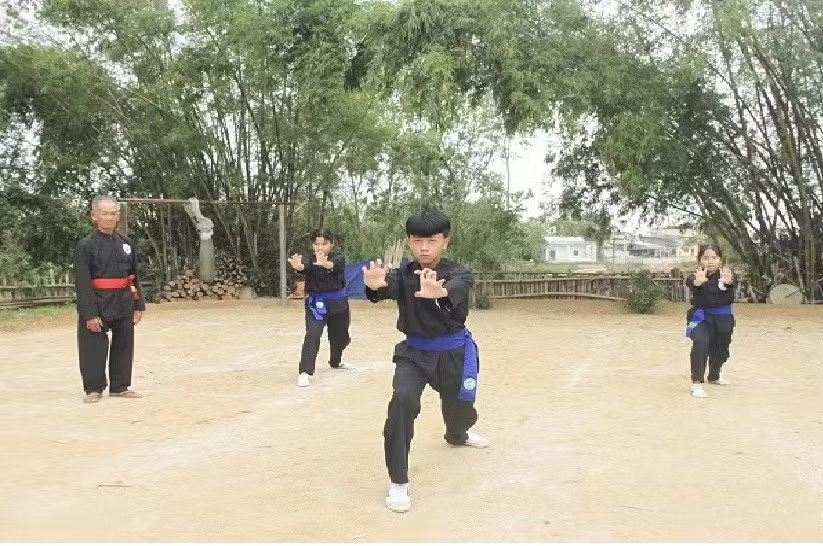
Martial arts schools are spreading Binh Dinh traditional martial arts (Photo: baovanhoa.vn)

A UNESCO accreditation would unleash a new surge of energy for local culture, tourism and sports. The nomination push has already laid the tracks for a long-haul strategy to protect the tradition’s core values for future generations, keeping the heritage alive in the neighbourhoods that raised it while beaming it out to audiences around the world.

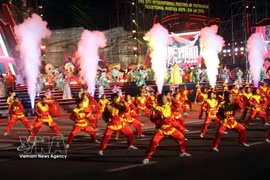
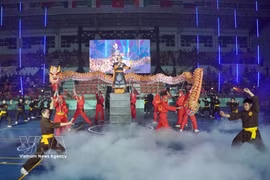
To boost the UNESCO pitch, the provincial authorities hosted the ninth International Festival of Vietnamese Traditional Martial Arts – Gia Lai 2026 from August 2-5 in Quy Nhon ward and surrounding areas. The event drew 16 foreign delegations from nine countries, 43 domestic squads and 11 local clubs./.
VNA

See more

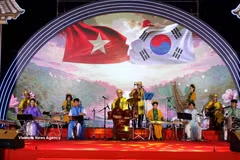
A performance at the Vietnam–Korea Festival 2026 in Da Nang city (Photo: VNA)

Vietnam–Korea Festival 2026 kicks off in Da Nang

Now in its fifth edition, the festival has cemented its place as Da Nang’s signature annual diplomatic event, spotlighting the distinct cultures of both nations, fostering friendship and driving cooperation with Korean localities and partners.

A performance at the opening ceremony of the 2026 Hanoi International Martial Arts Festival on August 7 (Photo: VNA)

Hanoi opens international martial arts festival

The event attracts about 2,000 martial artists of 66 delegations, including seven international delegations from six countries, namely Indonesia, Russia, France, Germany, Switzerland and Morocco.

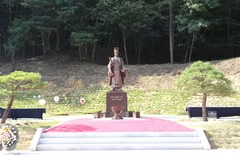
The statue of Vietnam's King Ly Thai To ( (974 - 1028) in Bonghwa county (Photo: VNA)

RoK to develop K-Vietnam Valley project linked to Ly Dynasty heritage

With the designation in place, Bonghwa will carry out eight specialised projects worth a combined 347.6 billion KRW (245.1 million USD) from 2026 to 2030 – among them the K-Vietnam Valley itself, tourism development around Changpyeong Reservoir, rental smart farms, and a Baekdudaegan healing ‘pet village.’

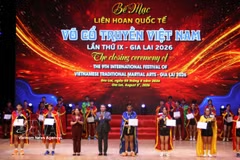
The organising committee presents awards to outstanding martial artists at the festival. (Photo: VNA)

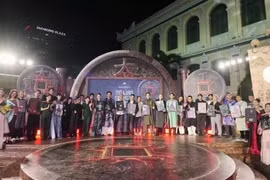
9th Int’l Festival of Vietnamese Traditional Martial Arts wraps up

The ninth International Festival of Vietnamese Traditional Martial Arts has fostered the martial spirit, strengthened national pride, promoted cultural exchanges and reinforced the aspiration to bring Vietnamese traditional martial arts to a wider international audience.

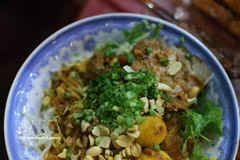
An appetising bowl of My Quang features a rich combination of ingredients. (Photo: VNA)

Da Nang to host festival honouring Quang Nam-style noodle soup

My Quang is not only a signature dish of the Quang region but also reflects the history, culture and daily life of communities in central Vietnam. With its diverse ingredients, preparation methods and distinctive flavours, the noodle soup has become one of Vietnam's best-known culinary specialities, helping strengthen Da Nang's position on the culinary tourism map.

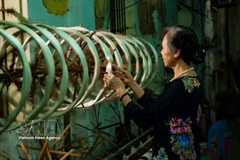
Hanoi’s traditional silk weaving craft continues to be preserved and developed today. (Photo: VNA)

Van Phuc silk weaving village officially recognised as Hanoi tourist destination

With its millennia-old heritage and growing integration of preservation and innovation, Van Phuc silk weaving village is poised to become a distinctive cultural destination, helping promote Hanoi’s sustainable cultural tourism and bring the quintessence of Vietnamese silk weaving closer to domestic and international visitors.

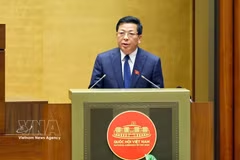
Minister of Construction Tran Hong Minh speaks at the session (Photo: VNA)

Lawmakers mull over changes to architecture law

On architectural management, the draft Law amending and supplementing several articles of the Law on Architecture clarifies the concept of “national cultural identity in architecture”, tying design to the preservation and promotion of regional heritage. It pushes architecture that mirrors local identity and fits each locality’s natural, historical and social conditions, while setting criteria to identify, assess and protect architecturally valuable buildings as a distinct form of cultural heritage.