Ho Chi Minh City (VNS/VNA) – From marathons and triathlons to golf tournaments and outdoor adventure events, sports tourism is gaining momentum in Vietnam, positioning the country as an increasingly attractive destination for travellers seeking to combine competition, wellness and leisure.
As travel trends evolve, holidays are no longer defined solely by sightseeing or beach getaways.
Increasingly, travellers are choosing trips centred on sport, wellness and immersive experiences. Sporting competitions are becoming a key driver of travel planning.
New marathon destination
Amid this trend, Vietnam is steadily establishing itself as one of the region's most promising sports tourism destinations.
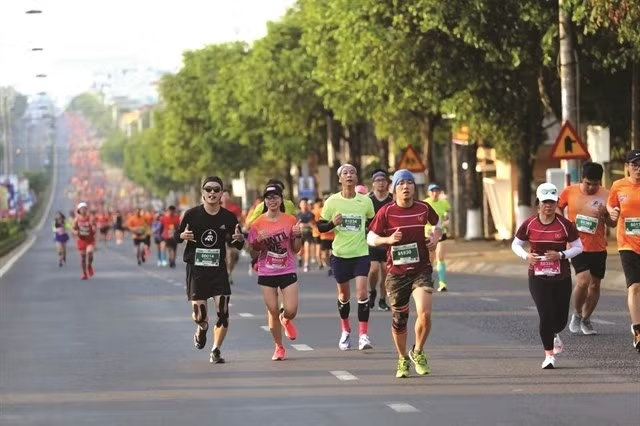
While road races once attracted mainly domestic participants, the country now hosts a year-round calendar of events in destinations including Hanoi, Ho Chi Minh City, Da Nang, Hue, Sa Pa, Da Lat, Phu Quoc and Con Dao.
Each year, dozens of races of varying scales take place across the country, from mountain trails and highlands to coastal resorts, modern cities and heritage destinations.
The diversity of terrain, climate and scenery gives every event its own character while offering participants the opportunity to discover the unique culture and natural beauty of each locality.
According to data from Traveloka, the Ho Chi Minh City Marathon, held from January 9 to 11 this year, generated interest far beyond the sporting community.
Travel searches increased across every market tracked by the platform, led by the Republic of Korea (up 206%), Japan (109%) and Singapore (107%).
The figures suggest that both HCM City and Vietnam are increasingly being recognised as attractive "runcation" destinations, where visitors combine race participation with a leisure holiday.
Beyond marathons, Vietnam also possesses the natural advantages to develop internationally recognised triathlons, ultramarathons and other outdoor sporting events.
Its diverse landscapes, relatively short travel distances, expanding flight network and combination of beaches, mountains, forests and culturally distinctive cities provide competitive advantages that few countries in the region can match.
Races inspire travel
One of the defining features of sports tourism is that the sporting event is only the beginning of the journey.
Today, many athletes and spectators plan their trips months in advance, booking flights and accommodation while setting aside extra time to explore the destination before or after race day.
A marathon lasting only a few hours can generate a three- to five-day holiday filled with local cuisine, sightseeing, shopping and cultural experiences.
This trend not only extends visitors' length of stay but also increases tourism spending, benefiting the entire tourism ecosystem of the destination.
As one of Southeast Asia's leading integrated travel platforms, Traveloka supports travellers throughout their journey, from booking flights and accommodation to discovering destinations and sporting events.
By integrating multiple travel services into a single platform, the company enables users to plan their trips more efficiently while making the most of their time at the destination rather than simply attending an event and returning home.
New tourism opportunity
Alongside traditional running events, Vietnam is gradually positioning sport as a signature tourism product across many localities.
One example is Sports Festival 2026 in Lam Dong, scheduled from August 1 to September 22. The festival is expected to attract around 17,000 athletes and visitors, providing a boost to tourism by combining sporting competitions with resort experiences, cultural activities and nature-based attractions, encouraging longer stays and higher visitor spending.
At the regional level, the ASEAN Cup 2026, taking place from July 24 to August 26, is also expected to provide fresh momentum for sports tourism.
Under the home-and-away tournament format, a strong performance by the Vietnamese national team could significantly increase both inbound and outbound travel demand as supporters travel to follow the team's matches, creating additional opportunities for football-themed holidays and destination discovery.
As travellers increasingly seek personalised, experience-driven journeys, the global sports tourism market continues to expand rapidly.
According to Grand View Research, the sector is projected to record a compound annual growth rate (CAGR) of 16.8% between 2026 and 2033, reaching a market value of 2.78 trillion USD by 2033.
With its diverse landscapes, expanding calendar of sporting events and ability to combine competition with culture, nature and leisure, Vietnam is well positioned to become one of the region's leading sports tourism destinations.
By turning each sporting event into a complete travel experience, the country has an opportunity to strengthen its competitiveness on both the regional and global tourism map./.