Hanoi (VNA) – Museums in Ho Chi Minh City are embracing digital innovation and cultural activities to showcase its rich heritage, helping boost cultural tourism, stimulate the night-time economy and attract a growing number of domestic and international visitors.
The southern metropolis is home to 25 museums, including 14 public and 11 private institutions, many of which house national treasures and valuable historical collections. In recent years, they have diversified exhibitions and public engagement programmes, strengthening their role as cultural landmarks while contributing to local economic growth.
Digital technology enriches visitor experience
Many museums have adopted digital technologies to make historical and cultural stories more vivid and engaging.
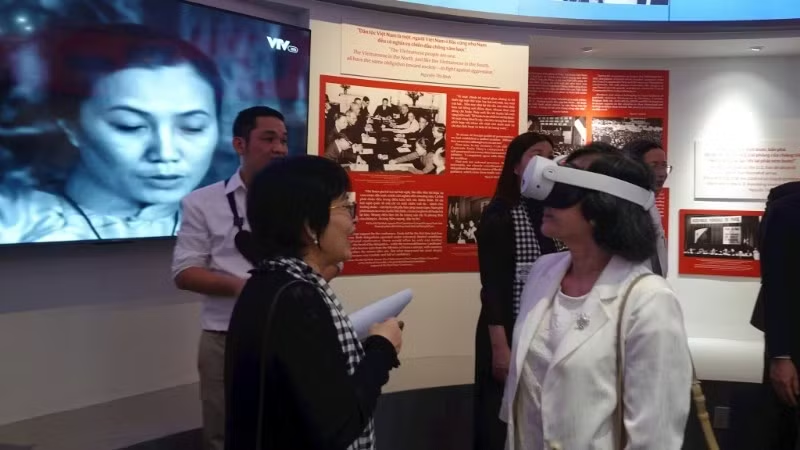
The Southern Women's Museum is among the pioneers in adopting digital exhibition technologies. Its Deputy Director Nguyen Quoc Chinh said the museum inaugurated a digital exhibition hall in 2020 featuring an expandable system that allows more artefacts to be incorporated into 3D presentations, providing visitors with immersive experiences.
Meanwhile, the War Remnants Museum, one of Vietnam's most visited museums, has also boosted the use of virtual reality and simulation technologies. Interactive displays, including a prison-simulating container with sound and lighting effects, enable visitors to understand the realities of war while reinforcing the museum's mission to preserve historical memory and promote peace.
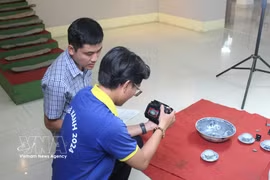
The Ho Chi Minh City Museum of Fine Arts is also digitising national treasures, including lacquer masterpieces “Vuon Xuan Trung – Nam – Bac” (Spring Garden of Northern, Central, and Southern Vietnam) by Nguyen Gia Tri, and “Thanh nien thanh dong” (The youth rampart of the nation) by Nguyen Sang, using virtual reality and artificial intelligence. The initiative is expected to make these masterpieces more accessible through modern storytelling.
Nguyen Minh Nhut, Deputy Director of the municipal Department of Culture and Sports, said local museums have renewed both content and presentation methods by displaying more original artefacts and applying modern technologies to enrich exhibitions to attract more visitors.
They have also designed specific educational programmes for students, introduced heritage education initiatives in schools and museums, and strengthened communications through social media. Several museums now offer 3D virtual tours, improving public access, particularly for young and international visitors.
The city's museums have so far completed 2D digitisation of more than 249,300 artefacts, archival materials and images, while over 2,170 objects and documents have been digitised in 3D.
Bringing arts into museums
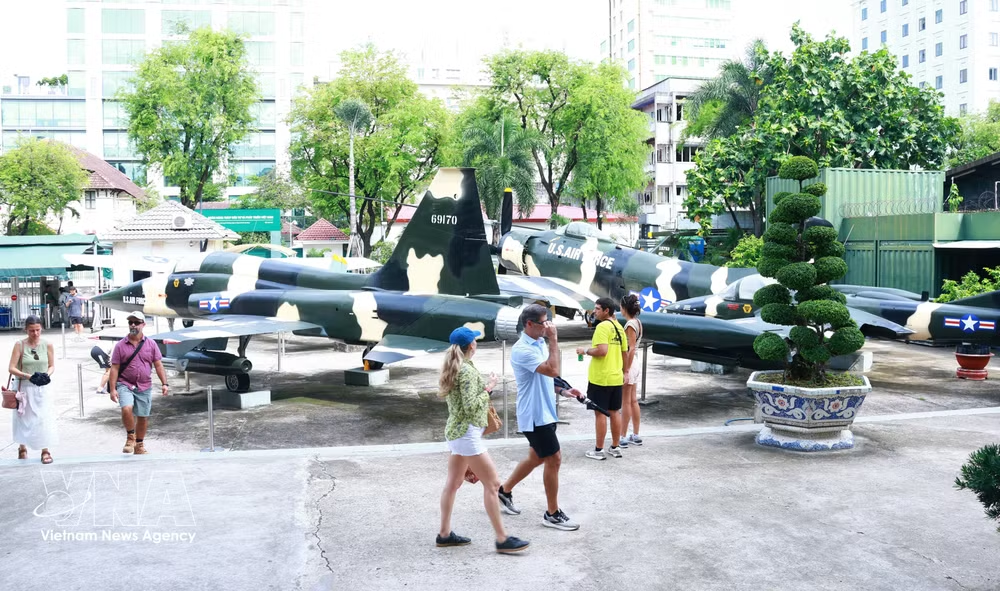
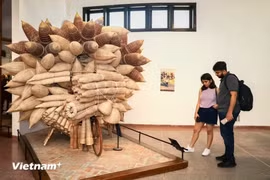
The War Remnants Museum in Ho Chi Minh City is a popular attraction for visitors. (Photo: VNA)
Alongside digital transformation, museums in Ho Chi Minh City have increasingly become venues for cultural festivals, artistic performances and community events.
The city's Ao Dai Festival, Tourism Festival, River Festival and Vietnam–Japan Festival have been held at various museums, helping introduce these cultural spaces to wider audiences while diversifying festival experiences.
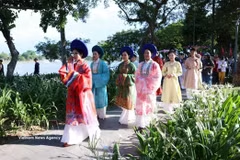
The Ao Dai Museum has established itself as a special cultural rendezvous where exhibitions, performances, educational activities and artistic exchanges promote Vietnam's traditional dress and foster international cultural understanding, according to its Director Huynh Ngoc Van.
To mark the 50th anniversary of Sai Gon – Gia Dinh being renamed Ho Chi Minh City, a series of artistic performances were staged at local museums, transforming their unique heritage architecture into vibrant cultural venues.
Among the highlights was "Village soul in the city", a programme at the Museum of Fine Arts featuring traditional folk cakes, local specialities, folk music and cultural performances. Organisers plan to develop it into a regular event combining performing arts, museum spaces, heritage architecture, and interactive cultural experiences to create a distinctive tourism product for the city.
The municipal Department of Tourism said museums in Ho Chi Minh City welcome more than 4 million visitors annually, underscoring their growing role as an important resource for cultural tourism. By combining heritage conservation with innovation and creative programming, they are helping diversify tourism products while contributing to economic development in the southern metropolis./.