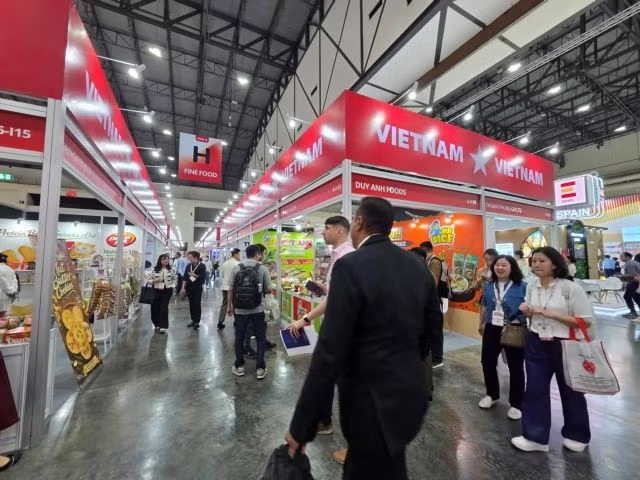
Hanoi (VNS/VNA) – Exporters need to better prepare for international trade fairs by setting clear objectives, targeting potential buyers before events and following up with contacts afterward, industry experts say as rising competition makes it harder to convert exhibition spending into export orders.
International buyers typically spend only a few seconds looking at an exhibition booth, while major trade fairs can feature up to 2,000 exhibitors, making it increasingly difficult for Vietnamese companies to stand out, they said.
Ho Thi Quyen, Deputy director of the Investment and Trade Promotion Center of Ho Chi Minh City (ITPC) said, many Vietnamese companies have invested heavily in international trade fairs and exhibitions, but the results have often fallen short of expectations.
Businesses still struggle to define their objectives, prepare marketing materials, organize exhibition booths, and approach potential customers, Quyen said.
She said many companies also failed to effectively follow up with prospective buyers after trade fairs, limiting their ability to convert contacts into orders and contracts.
Preparation key to securing buyers
Experts say companies should identify their objectives before attending a trade fair, whether to find importers, distributors, processing partners, suppliers or new technologies, and research exhibitors and visitors in advance to arrange meetings with potential customers.
Tran Nhu Trang, Vietnam country representative for the Swiss Import Promotion Program (SIPPO) said, poorly designed booths and inevitably trained staff remain common disadvantage among Vietnamese exhibitors.
According to Trang, companies should present products clearly and professionally, while exhibition staff should take a more proactive approach to engaging visitors and turning initial interest into business opportunities.
Nguyen Thi Xuan Yen, a sustainable development expert at the High-Quality Vietnamese Goods Businesses Association, said exporters also need to adapt to changing consumer preferences, with overseas buyers placing greater emphasis on health, sustainability, customer experience and emotional value in addition to price and product design.
Building long-term partnerships
Executives from Vietnamese exporters said trade fairs should be viewed as opportunities to build long-term relationships rather than venues to secure immediate orders.
"The effectiveness of an international trade fair should not be judged solely by the number of orders signed at the event," said Le Thi Dieu Thi, CEO of Sa Giang Import-Export Corp told Vietnam News.
"More importantly, it should be judged by the quality of relationships established, the ability to reach the right target customers and the opportunity for long-term market expansion."
Tran Lan Phuong, Sales Manager at I.D.I International Development and Investment Corp echoed that view, saying seafood exporters assess trade fairs by the number of potential customers reached, the quality of meetings and the opportunities to expand into new markets rather than signed orders during the events.
Trade fairs also help companies keep abreast of consumer trends, importer requirements and wider market developments, enabling them to adjust their products and business strategies accordingly, she said.
Phuong said importers now evaluate suppliers on more than price, looking closely at product quality, supply reliability, quality management systems, international certifications and corporate reputation.
She added that post-event follow-up is critical, as many deals require further exchanges, product samples and negotiations over commercial terms before they develop into long-term business partnerships.
Higher standards, greater competition
Thi said exporters are facing mounting pressure from rising exhibition costs and intensifying competition among exporting countries, while overseas buyers are demanding higher standards on sustainability, traceability, social responsibility and environmental compliance.
She said businesses should prepare thoroughly before each trade fair, understand the needs of target markets and demonstrate not only product quality but also professionalism, long-term commitment and the ability to adapt to changing customer requirements.
According to Thi, companies are also becoming more selective in choosing international trade fairs, prioritizing events that match their industries, target markets and growth strategies instead of attending as many exhibitions as possible.
She said investment in product quality, innovation, branding and compliance with international standards will play an increasingly important role in improving the competitiveness of exports and strengthening the country's reputation in overseas markets.
Phuong said I.D.I has adopted a more proactive approach by contacting prospective buyers before trade fairs to arrange meetings instead of waiting for visitors to approach its booth.
She said the company also prepares promotional materials and product samples in advance, trains exhibition staff and maintains regular contact with customers after events by providing quotations, samples and technical information.
Looking ahead, Phuong said the company plans to focus on trade fairs that best match its target markets while strengthening online engagement with customers before and after exhibitions to improve the effectiveness of trade promotion.
Proactiveness, adaptability and building trust with customers will be key to maintaining the competitiveness of Vietnamese exporters in a rapidly changing global market, Phuong noted.
Industry representatives say success at international trade fairs increasingly depends on thorough preparation, sustained engagement with buyers, and the ability to meet evolving international standards, rather than on the number of contracts signed during the events./.
VNA