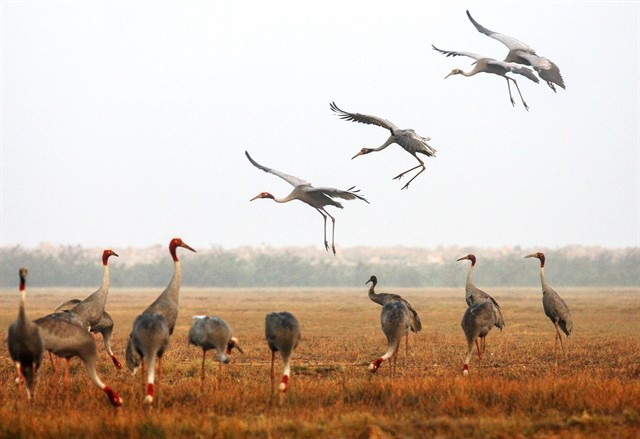
Dong Thap (VNS/VNA) - Tram Chim National Park is making an effort to restore the ecosystem to help conserve red-crowned cranes, a rare species that has long been a symbol of the park as well as the southern province of Dong Thap.
Listed in the World Red Book as endangered and in need of protection, red-crowned cranes used to return to the park in droves each year for their migration.
But over the past several years, almost none of Tram Chim's former population of around 1,000 cranes had come back — so authorities got to work.
Efforts to restore habitat and boost the birds' population are finally showing progress, with some cranes and many other rare wild birds coming back to the park.
The conservation work is being completed under a 10-year project that started in 2022.
Home for rare species
According to Director of Tram Chim National Park Nguyen Van Lam, the park is known for its biodiversity, with hundreds of rare species of plants, waterfowl and aquatic creatures living within its borders.
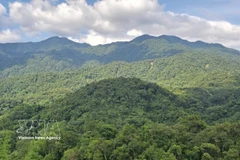
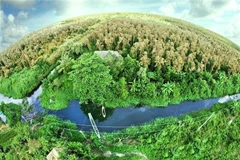
Covering an area of over 7,300ha, Tram Chim is a wetland with characteristics typical of the inland wetland ecosystem of Dong Thap Muoi (the Plain of Reeds) and is adjacent to four communes: Tram Chim, Phu Tho, Tam Nong, and An Hoa.
In 2012, the Tram Chim National Park was internationally recognised as the fourth Ramsar site in Vietnam and the 2,000th Ramsar site in the world. Ramsar sites are areas designated under the Ramsar Convention as wetlands of international importance.
This recognition confirmed the park's role in the network of wetlands with global value in ecology and nature conservation.
The ecosystem in Tram Chim includes seasonally flooded grasslands and native plants such as cajuput and wild rice, creating a particularly suitable habitat for waterfowl to live and forage.
The park was previously home to a large population of red-crowned cranes, with a recorded number of more than 1,000 birds arriving per year during their annual migration.
However, the number of cranes returning to Tram Chim dropped sharply over time. In recent years, the number of cranes returning is almost zero, according to park data.
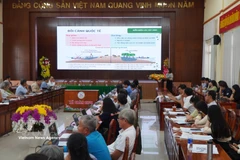
In an effort to turn things around, the Dong Thap provincial People's Committee approved a project titled "Red-crowned cranes conservation and development in Tram Chim National Park in 2022-2032".
To realise the dream of bringing the cranes back, the park authority is focusing on improving and restoring the ecosystem and habitat for the birds.
The park has tried a variety of solutions, including regulating hydrology, eliminating competing plants and tilling the soil to grow the cranes' favourite food.
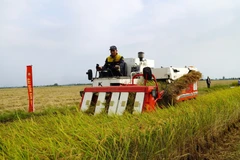
The park has also coordinated with localities in its buffer zone to invest in infrastructure and equipment for ecological rice production areas to restore balance to the local ecosystem.
The park authority has encouraged local farmers to participate in ecological rice production in order to help lure the migrant birds to come back.
Nguyen Van Man, a farmer at Tam Nong commune, said that with the encouragement of local government officials and after realising the benefits, he started growing ecological rice.
He cultivates three crops per year with modern, innovative methods, reducing the use of chemical fertilisers and pesticides in favour of organic ones.
In one of the most positive signs of a turnaround, after just a few years of implementing the project, several red-crowned cranes were seen returning last year.
This shows that birds' habitat is gradually being restored. And it's not just cranes — many other rare wild birds have also returned to the Tram Chim National Park.
Releasing cranes into the wild
Cao Thai Phong, Deputy Director of the Tram Chim National Park, said that part of the park's conservation effort had been done through breeding and re-releasing red-crowned cranes back into the environment.
The project aims to breed and release 100 cranes — of which at least 50 are expected to survive in the wild — within 10 years, forming a wild crane population that is capable of reproduction and a stable existence, living year-round in the park, according to Phong.
In other words, the ultimate goal is to successfully re-establish a long-term resident population of red-crowned cranes in Dong Thap, helping save this bird species from extinction in Vietnam.
After two years of implementation, the project has achieved encouraging initial results.
Phase one of the project was completed with making cages for raising young cranes, cages for mated pairs and semi-wild cages for adult cranes, as well as a veterinary care room, food storage and a technical room for crane monitoring.
However, the project has also encountered some difficulties, including some people illegally entering the park to graze their livestock. Funding for the project is also limited, while attracting and training staff to work at the park is difficult due to low remuneration.
In the next few years, the park authority will focus on strengthening the project management board and related groups, completing plans to bring more red-crowned cranes to the Tram Chim Park in the second phase next year and initiating the re-release of cranes into the wild.
The park will continue to send more technical staff to Thailand for training on egg incubation techniques, raising baby cranes, caring for breeding pairs and monitoring cranes after release.
It will invite international experts to the park and provide on-site training for the entire team so that in the long term, they can fully master the process of caring for, breeding and protecting the crane flock in the wild.
With the provincial authorities’ determination, the community's cooperation and the international experts’ support, the project is expected to achieve the goal of bringing this rare bird species back to Dong Thap.
The project’s success is not only significant for the environment and biodiversity, but also contributes to building the image of Dong Thap province as a unique eco-tourism destination, bringing economic benefits and pride to local residents./.

Project launched to develop red-headed crane flock in Tram Chim National Park
The Mekong Delta province of Dong Thap on December 12 launched a project to preserve and develop red-headed crane (scientifically known as Grus antigone sharpie) population in Tram Chim National Park.