Hanoi (VNA) - The spirit of national solidarity and compassion can take many forms, as underscored in the appeal issued by the Presidium of the Central Committee of the Vietnam Fatherland Front (VFF): “Every act of kindness and sharing, no matter how small, is immensely precious. Every contribution, whether modest or substantial, bolster public confidence, motivation, and capacity to rise again after the storms and floods”.
Even minor digital gestures - a Facebook “like”, a “sad” reaction, or a share on YouTube and TikTok, now carry weight, reflecting netizens’ attitude toward the entire Party, people, and army’s unified response to natural disasters that have struck Vietnam.
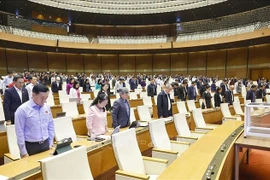
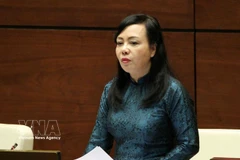
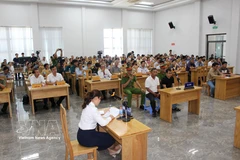
On November 24, at the national conference reviewing inspection, supervision, and discipline enforcement for 2025 and the 13th National Party Congress’s term, as well as the 15th National Assembly (NA)’s ongoing 10th session, Party General Secretary To Lam joined Party and State leaders and NA deputies in a minute of silence for victims of recent storms and floods, followed by an on-site fundraising for affected communities.
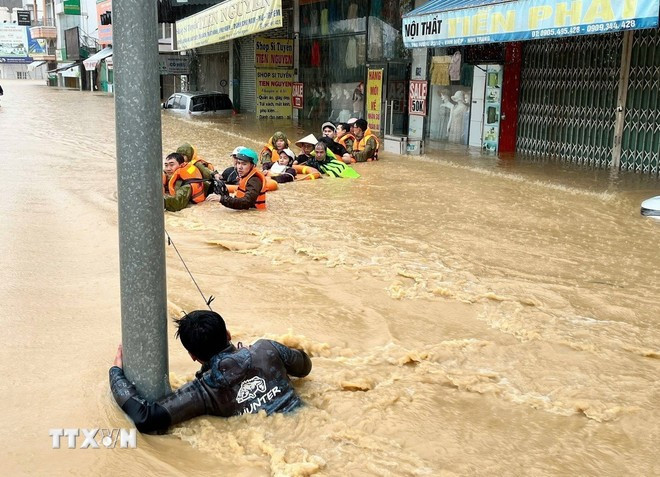
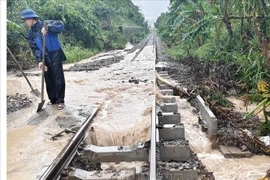
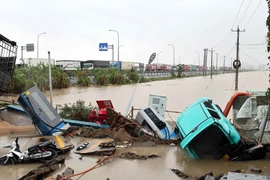
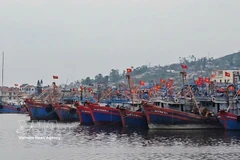
The historic flooding, the worst in decades in parts of the Central Highlands and south central coast, claimed nearly 100 lives, left many missing, submerged or heavily damaged tens of thousands of homes, destroyed hundreds of thousands of hectares of crops, and swept away millions of livestock and poultry across Gia Lai, Dak Lak, Khanh Hoa, Lam Dong, and other localities, inflicting massive economic losses and lasting trauma.
In recent days, citizens nationwide have turned their hearts and resources toward the hardest-hit areas, embodying Vietnam’s traditional spirit of mutual assistance.
The Party Central Committee’s Politburo and Secretariat have dispatched five working groups, led by Party and State leaders, to directly inspect and expedite post-disaster recovery in affected localities.
On November 23, the Prime Minister approved 1.1 trillion VND (42.3 million USD) from the 2025 central budget contingency fund for four provinces: 500 billion VND to Dak Lak, 300 billion VND to Lam Dong, and 150 billion VND each to Khanh Hoa and Gia Lai.
A day earlier, the Central Relief Committee allocated an additional 80 billion VND in public donations, channeled through the VFF Central Committee, to the same four provinces, bringing total relief distributed in 10 rounds to nearly 760 billion VND across 27 affected localities.
On November 21, the Presidium of the VFF Central Committee issued an urgent appeal to compatriots and soldiers nationwide, overseas Vietnamese, businesses, philanthropists, and foreign residents in Vietnam to support communities devastated by storms and floods in the central and Central Highlands regions.
Many localities swiftly sent relief supplies and working groups to the worst-hit areas. The VFF promptly allocated financial aid, while organisations, enterprises and citizens donated food, medicine, clothing, and truckloads of essential goods.
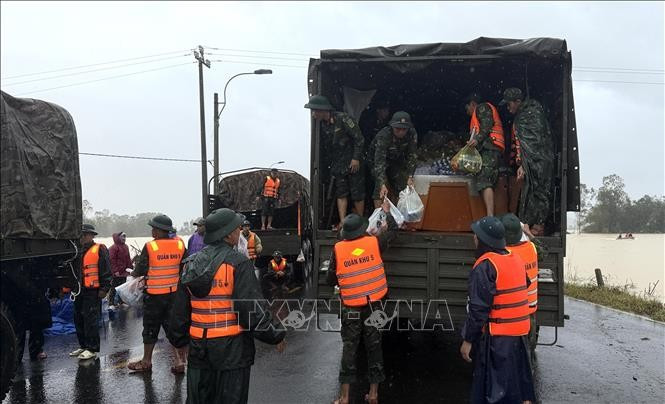
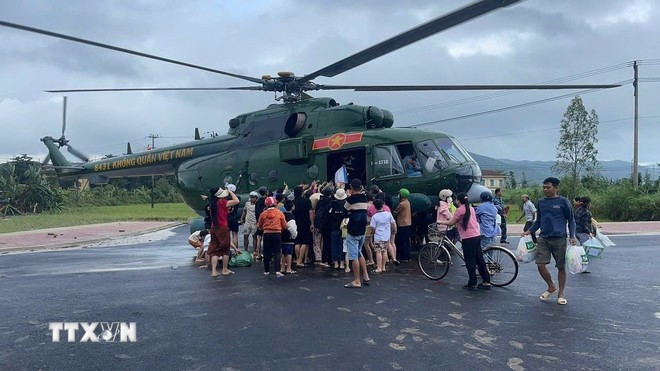
The army and police deployed tens of thousands of personnel, along with vehicles and helicopters, to reach cut-off villages, deliver aid, and assist in evacuations.
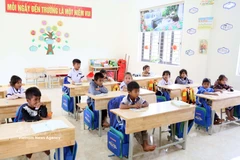
The Government instructed local authorities to stay closely on the ground, ensure timely supplies, and set deadlines for clearing debris and restoring homes, schools and roads, all to be completed by November 30. Families whose houses collapsed or were heavily damaged are to receive repair assistance this month and permanent resettlement no later than January 31, 2026.
Even as the country unites in an extraordinary outpouring of support, a minority use the crisis to exaggerate flaws in the response, downplaying the compassion of millions, undermining the endeavours of authorities at all levels and ignoring the tireless sacrifices of tens of thousands of soldiers, police, volunteers, and donors.
It comes as no surprise when hostile forces abroad openly mock Vietnam’s disaster response. For them, natural calamities are simply another weapon. The higher the floodwaters, the greater the losses, the more gleeful they become. Their feigned “sympathy for people under water” or “outrage at the Government’s slow response” is nothing more than a thin layer of paint, quickly stripped away by reality.
Others, though not intentionally opposing the State, still exploit flood imagery to chase clicks, sell products, garner praise, or vent unrelated personal frustrations.
As early as 2001, Rider University psychology professor John Suler described the “online disinhibition effect”: anonymity behind a screen lowers restraints and amplifies suppressed emotions.
Frustrations entirely unrelated to the disaster can suddenly erupt online, prompting users to hunt for shocking images. When real ones fall short, they may “imagine” or embellish them before posting on Facebook or YouTube.
Others simply act on emotion, driven by what psychologists call negativity bias - the tendency to pay more attention to, remember, and act upon negative information over positive. This imbalance is stark and often overwhelms any attempt at objectivity.
Verified footage of top officials touring devastated areas, soldiers wading chest-deep to evacuate families, and citizens queuing nationwide to donate cash and supplies is quickly eclipsed by unverified rumours circulated by anonymous accounts claiming to relay second-or third-hand information.
Social media algorithms, especially on Meta platforms, detect these patterns and feed vulnerable users an endless stream of misery while stories of resilience and solidarity disappear from view.
Individuals retain the power to choose otherwise: donate money or goods, volunteer on the ground, propose practical solutions or, at the very least, share only verified positive updates, treat dubious claims with skepticism, and refuse to amplify toxic falsehoods.
In the end, every user decides whether to bolster the national recovery effort or become a “man-made disaster”.
No disaster response is flawless, losses are unavoidable, and shortcomings must be addressed. Yet the minimum expected of citizens is to support the thousands working day and night on the front lines, while deliberate efforts to discredit the collective response deserve outright condemnation.
As the VFF Central Committee’s Presidium stressed in its November 21 appeal, the goal is to give victims “the confidence and motivation to stand up again”, a task in which every accurate, uplifting post on social media becomes, quite literally, another handful of earth to reinforce the dike./.