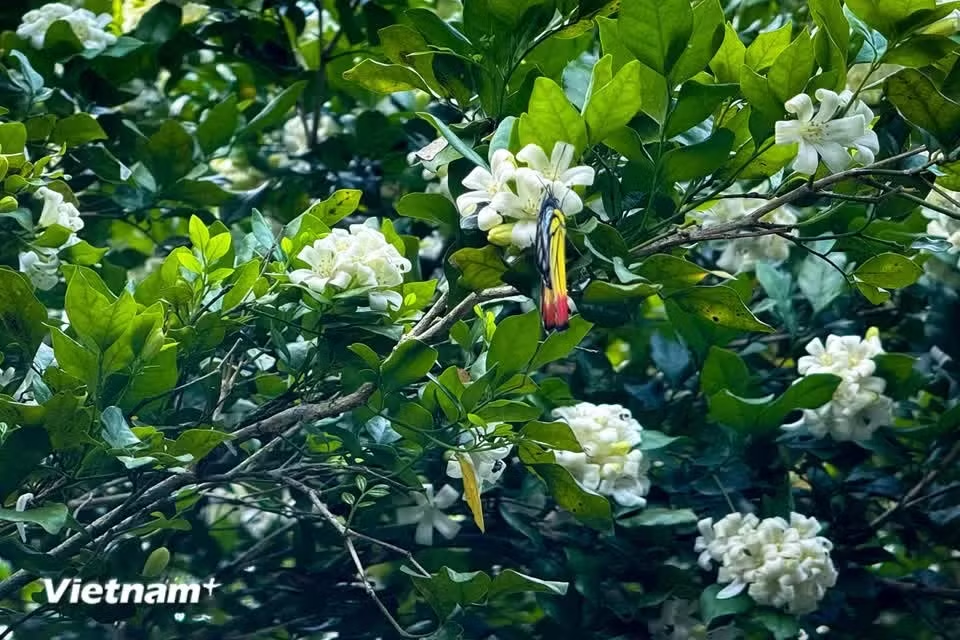
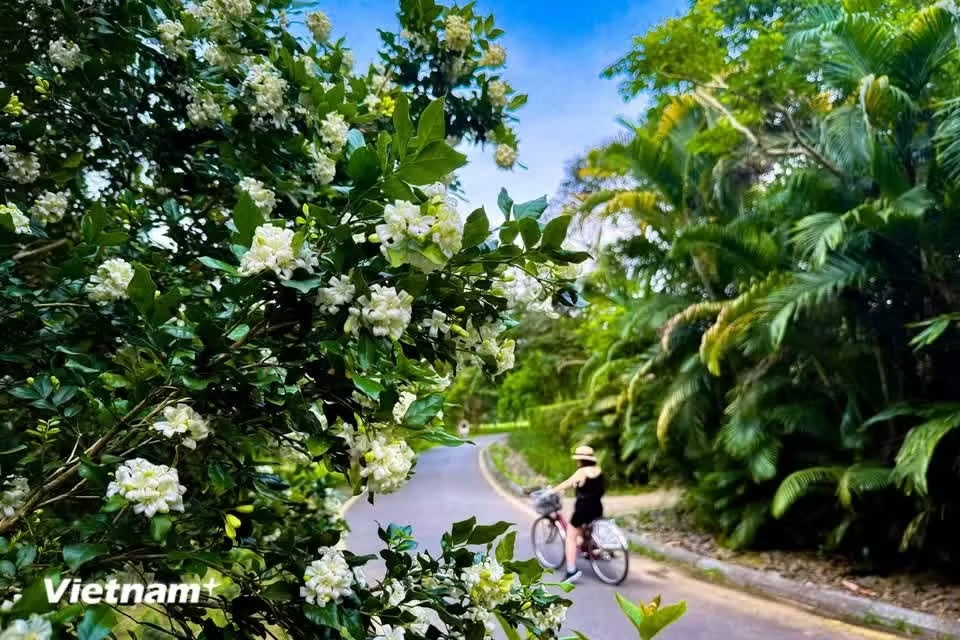
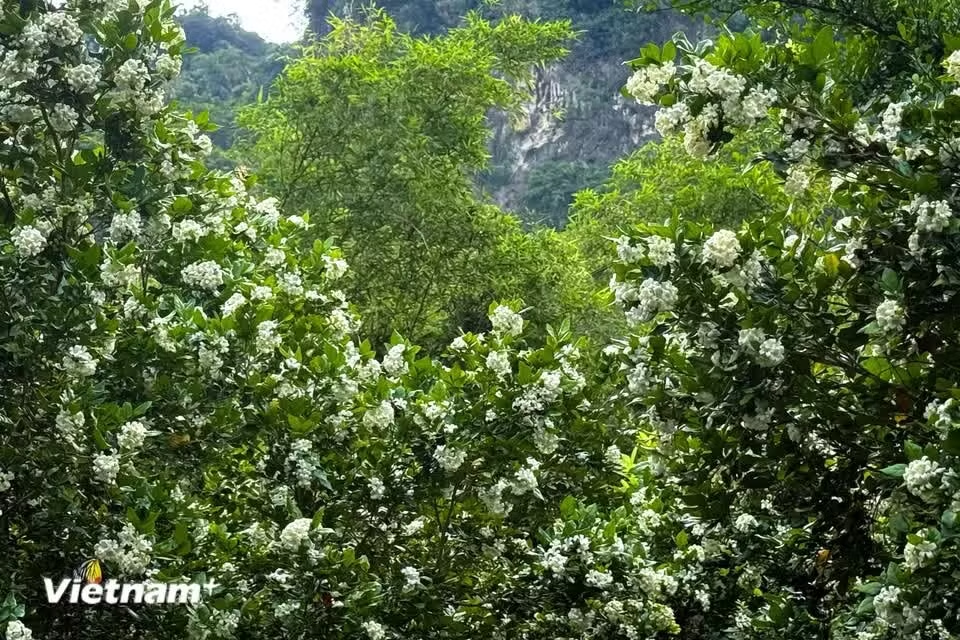
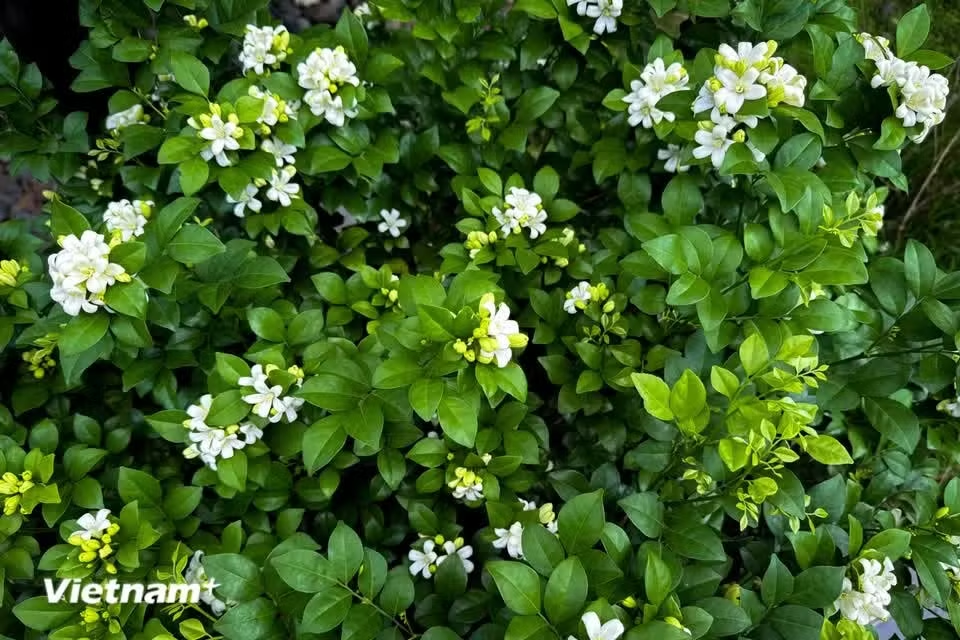
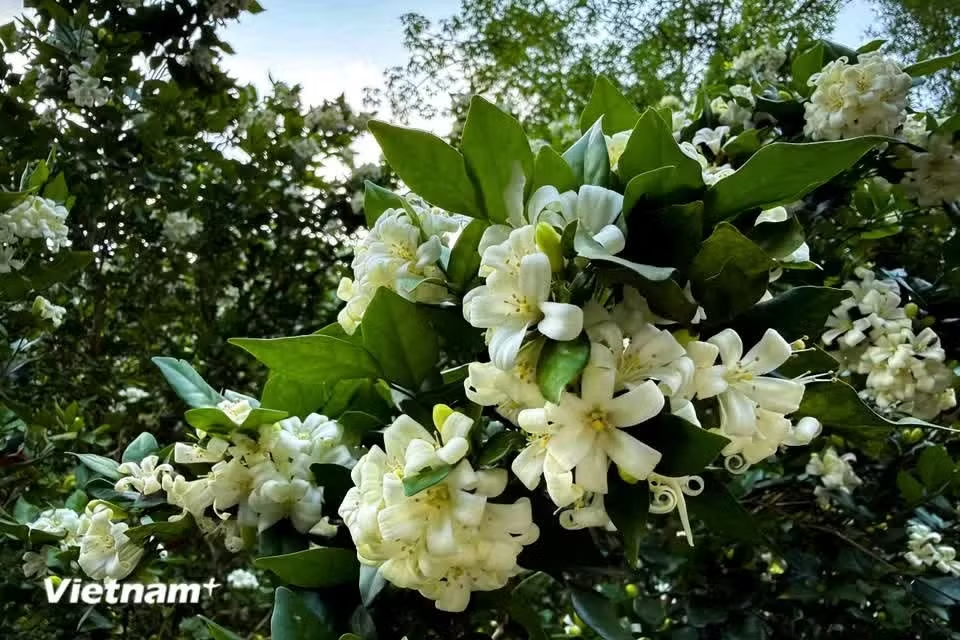
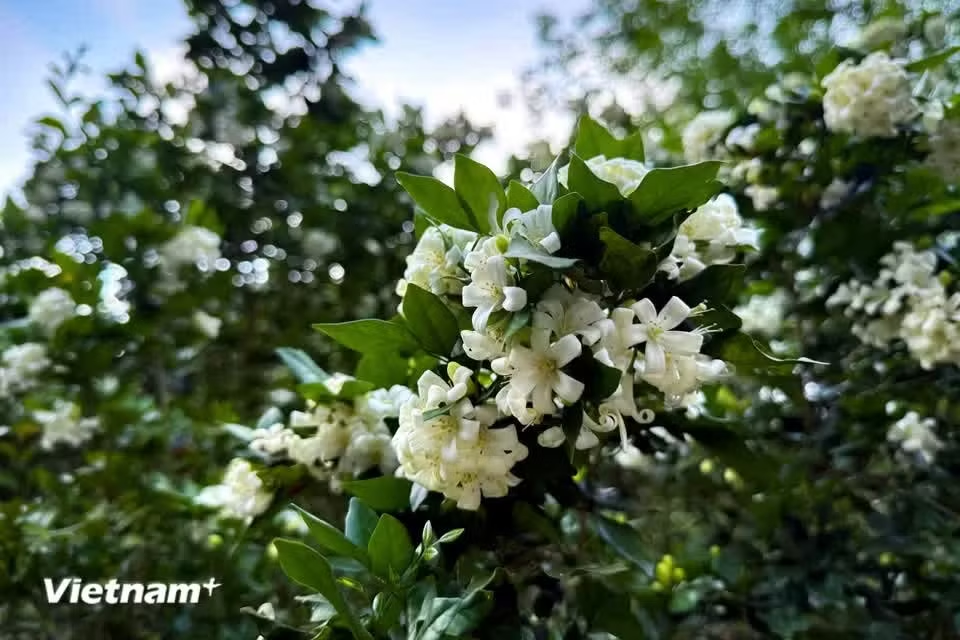
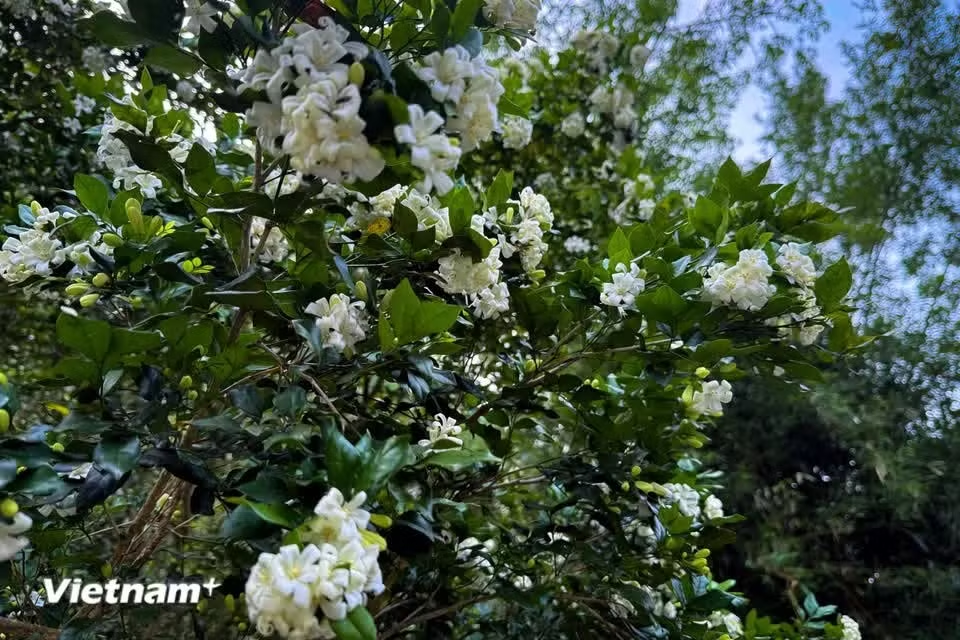
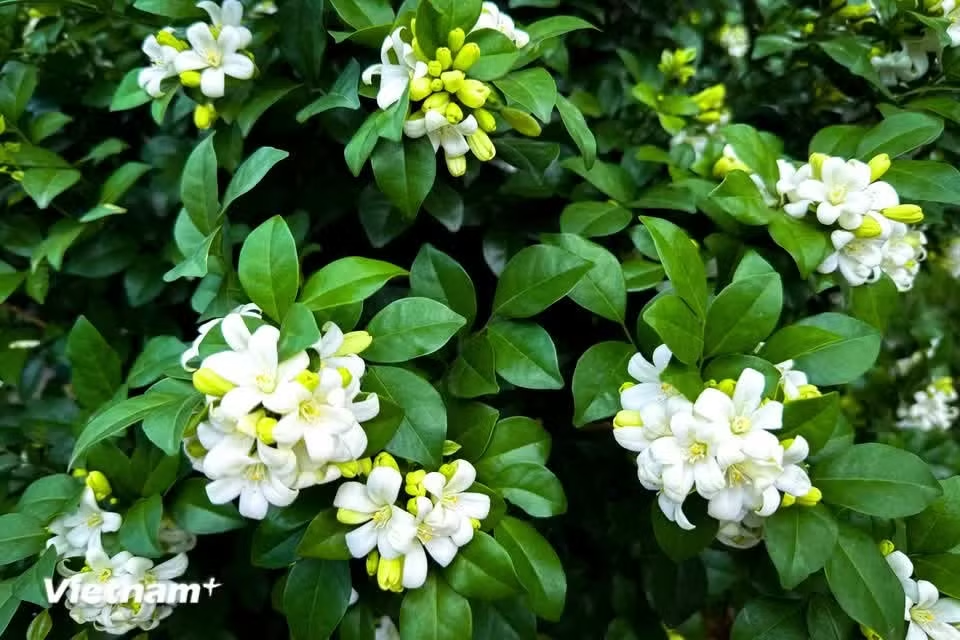
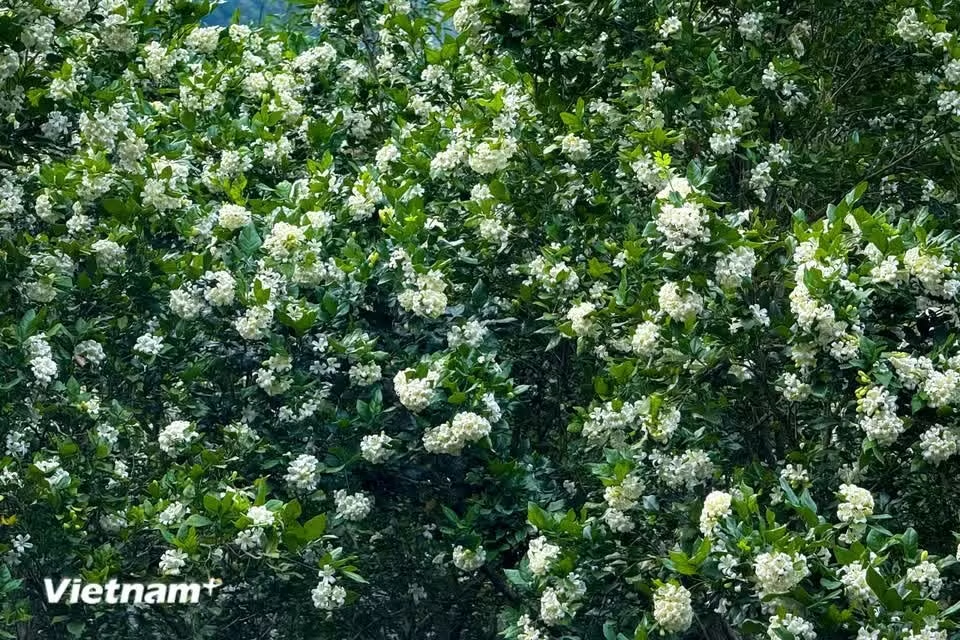
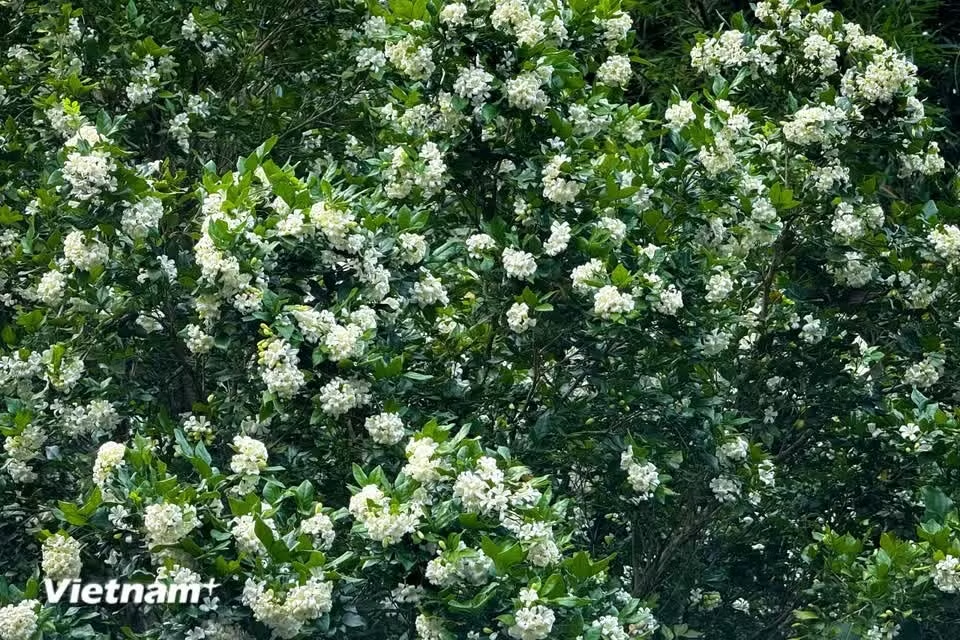
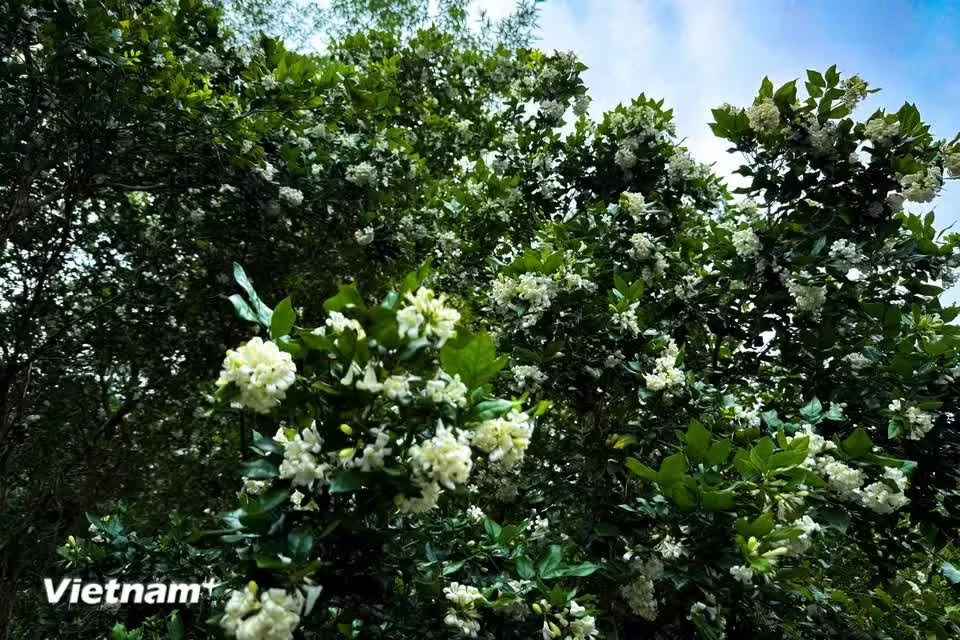


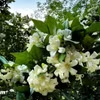
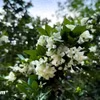
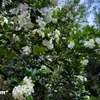
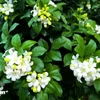
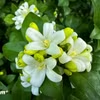
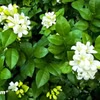
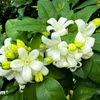
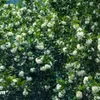
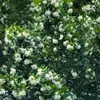
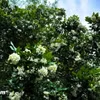
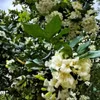
Orange jasmine, also known as mock orange or China box, has the scientific name Murraya paniculata (L.) Jack (Photo: VietnamPlus)
The tree belongs to the Rutaceae family and is native to South Asia, Southeast Asia and Australia (Photo: VietnamPlus)
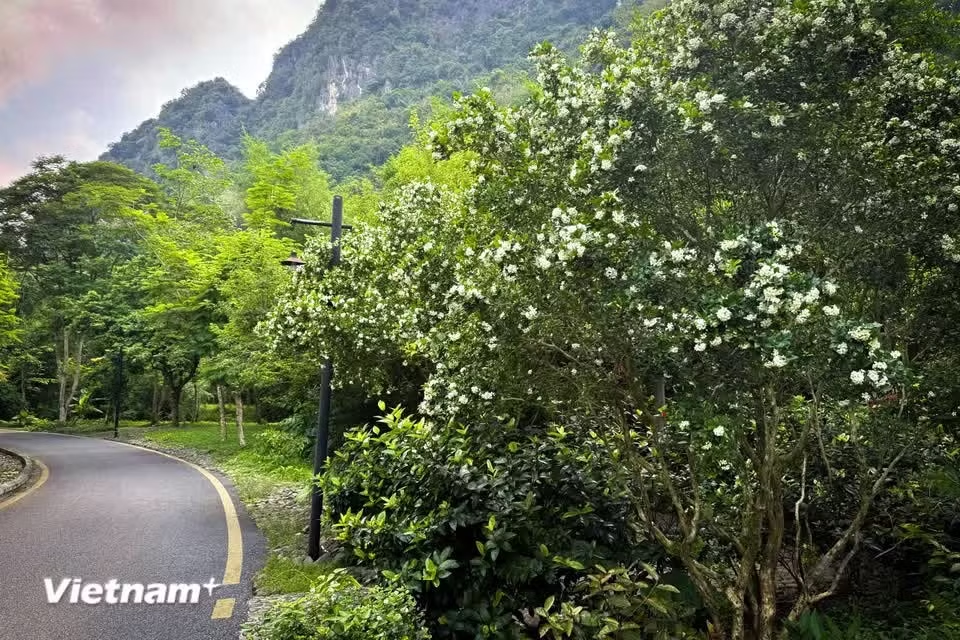
It grows as a small tree or shrub, with a straight, woody trunk covered in pale, smooth bark, and typically reaches 2–6m in height (Photo: VietnamPlus)
The three most common forms grown today are the large-leaved, the small-leaved, and the small-leaved with a twisted trunk (Photo: VietnamPlus)
In Vietnam, the small-leaved form with a twisted trunk is the most popular (Photo: VietnamPlus)
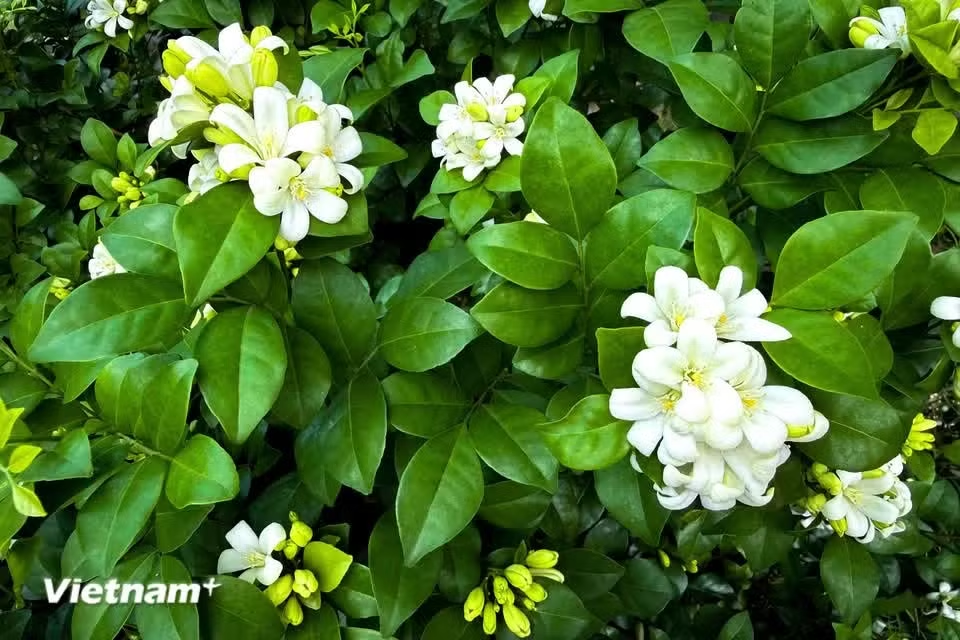
The leaves are pinnate and grow alternately along the stems, each with glossy, dark green, elliptical leaflets (Photo: VietnamPlus)
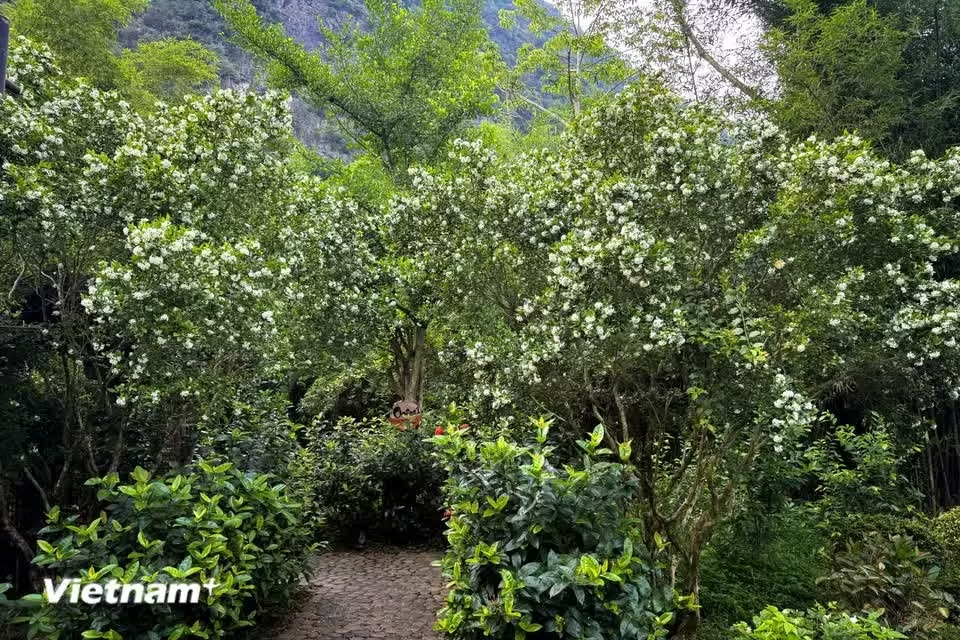
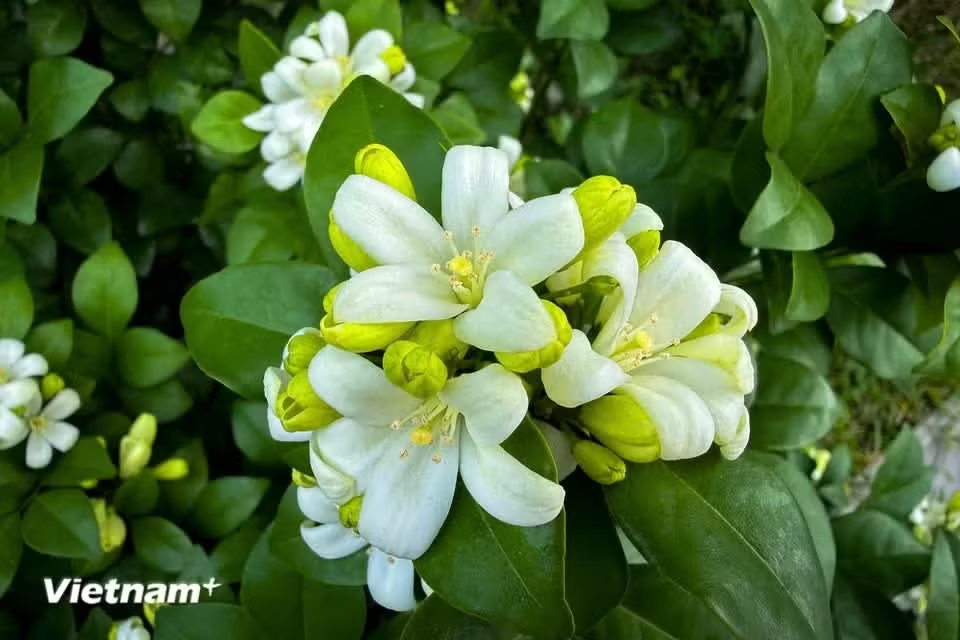
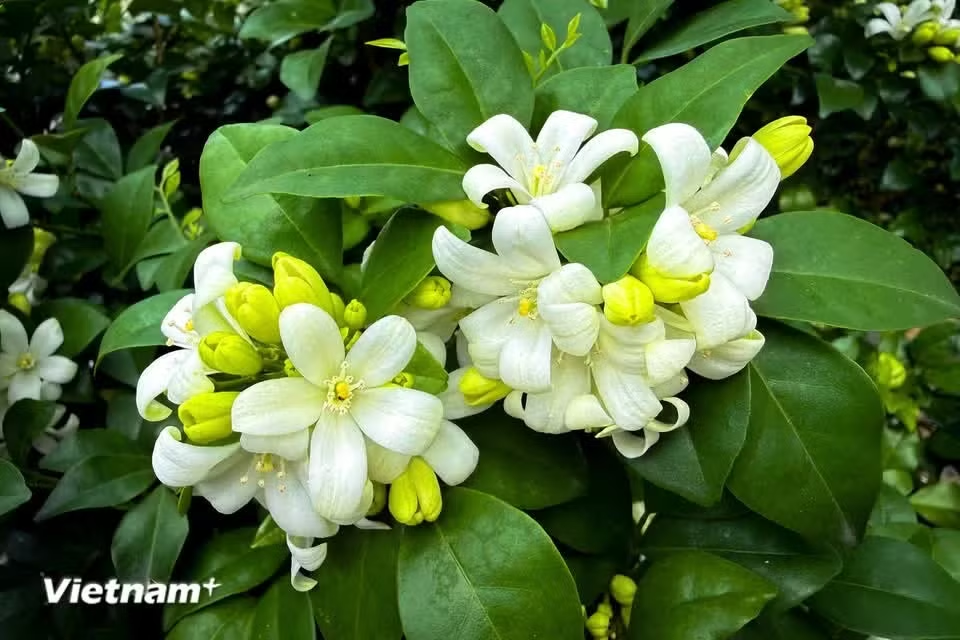
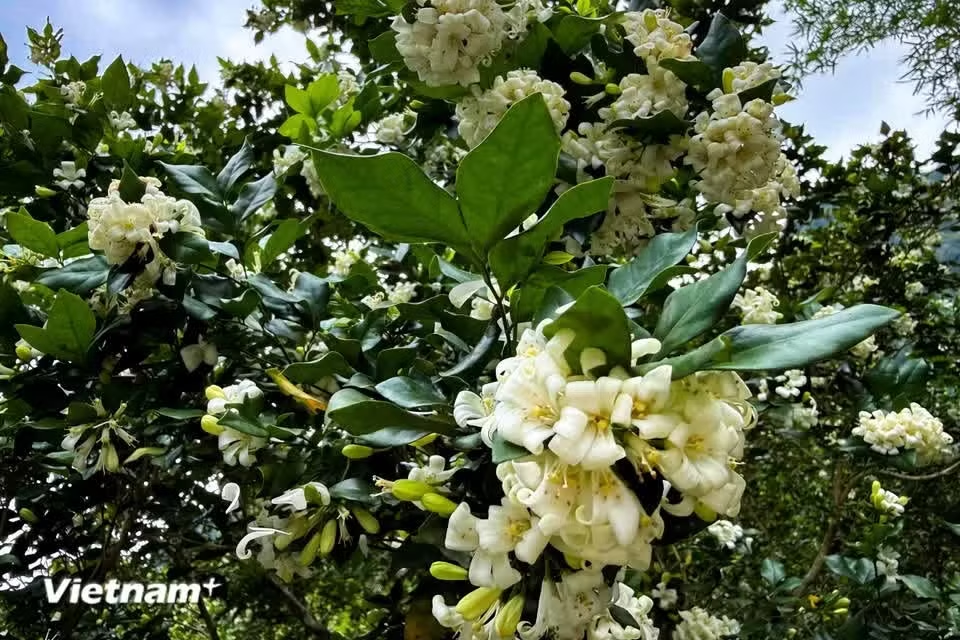
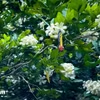
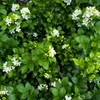
The flowers have five star-shaped petals and grow in clusters, usually at the tips of branches (Photo: VietnamPlus)
Each cluster holds several flowers, which can also emerge from the leaf axils (Photo: VietnamPlus)
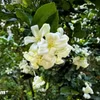
The flowers are white to creamy white, adding an elegant and graceful touch to the tree (Photo: VietnamPlus)
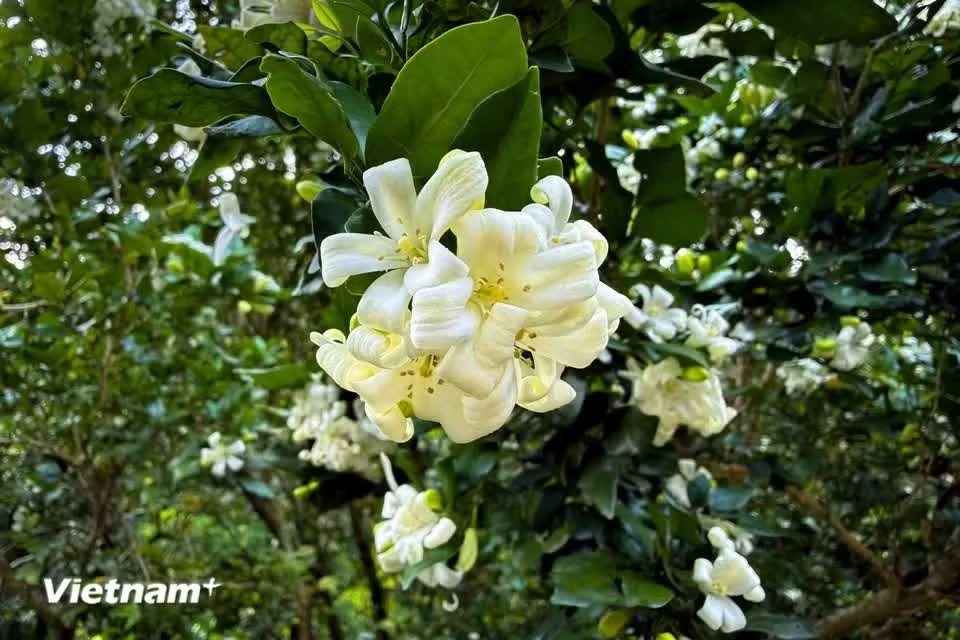
The flowers are small, with petals about 12–18mm long that curve backward (Photo: VietnamPlus)
Each flower has five small green sepals and five white petals, and it is the petals that curve backward (Photo: VietnamPlus)
At the centre are 10 stamens and a pistil with a rounded stigma (Photo:
The tree’s most distinctive feature is its clusters of small white flowers, which give off a sweet, intense fragrance, particularly at night and in the early morning (Photo: VietnamPlus)
The fresh, delicate fragrance not only creates a sense of relaxation and reduces stress but may also repel certain insects (Photo: VietnamPlus)
Orange jasmine can bloom year-round, producing a fresh fragrance and adding an elegant touch to its surroundings (Photo: VietnamPlus)
The flowers are admired for their fresh fragrance and graceful appearance (Photo: VietnamPlus)
Today, it can be found in many parts of the world, including Vietnam (Photo: VietnamPlus)
Orange jasmine is also an ideal ornamental plant for gardens (Photo: VietnamPlus)
It is also grown as a bonsai plant to decorate desks and study tables (Photo: VietnamPlus)
Many families grow orange jasmine because it is easy to cultivate and its flowers have a distinctive fragrance. The tree is also associated with various forms of harmony in Feng Shui (Photo: VietnamPlus)
Growing orange jasmine indoors is believed to bring peace and good fortune, and symbolises the hope that children and grandchildren will achieve academic and professional success (Photo: VietnamPlus)
0
1
2
3
4
5
6
7
8
9
10
11
12
13
14
15
16
17
18
19
20

Orange jasmine: Pure white blooms, enchanting fragrance

In Vietnam, orange jasmine or nguyet que is often found growing wild or cultivated as an ornamental plant and bonsai. It is also sometimes planted as a garden hedge. In Eastern culture, it is associated with Feng Shui and is believed to symbolise good luck and prosperity.