Hanoi works to unlock heritage resources

When innovation deepens understanding of traditional values rather than replacing them, heritage becomes not only something to preserve but also a resource for sustainable tourism, economic development and reinforcement of Hanoi’s position as a UNESCO Creative City.

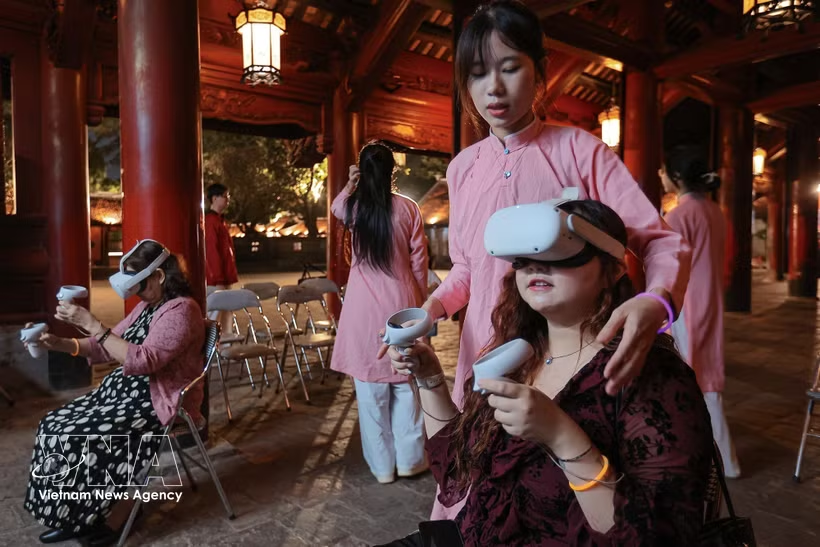
Tourists experience writing calligraphy through virtual reality at Hanoi's Temple of Literature. (Photo: VNA

Hanoi (VNA) – Hanoi, with its thousand-year cultural legacy, possesses a rich heritage of historical and cultural value and creative potential. Today, creativity and technology are opening up new ways to harness these resources, generate added value and drive the capital’s development.

Assoc. Prof., Dr Pham Duy Duc, former Director of the Institute of Culture and Development under the Ho Chi Minh National Academy of Politics, said the convergence of communities from ancient regions endowed Thang Long–Hanoi with a diverse heritage system worthy of its status as Vietnam’s heritage city.

Hanoi began exploring cultural industries in 2007–2008 and has since made them a development priority. The city’s Resolution No. 09-NQ/TU, issued in 2022, emphasised linking heritage preservation with development and promoting Thang Long–Hanoi’s cultural values to build a creative city.

In 2026, the city’s approach has further evolved, positioning culture as an endogenous resource and driver of growth. Politburo Resolution No. 80-NQ/TW on Vietnamese cultural development and the Hanoi Party Committee’s Programme No. 08-CTr/TU highlight the need to reform cultural development mindset and methods, and to connect heritage preservation with creativity, digital transformation and cultural industries.

Nguyen Doan Van, Director of the Hanoi Monuments and Landscapes Management Board, called this approach a breakthrough that can stimulate economic growth, create more jobs, increase incomes and improve living standards.

Bringing heritage into contemporary creativity

The second Thang Long–Hanoi Festival 2026, themed “Heritage Flow”, demonstrated how cultural assets can be transformed into contemporary creative products. Over 10 days, the event attracted more than 250,000 visitors, including young people and international tourists.

The “Sound of Ceramics” programme combined pottery stories with sound, lighting, movement, dance, circus and contemporary performance. Musical instruments made from traditional ceramics debuted, bringing a traditional craft into the performing arts and creating new opportunities for experiential tourism.

Another programme, “Connecting Heritage – Creating the Future”, revisited history through a musical journey across time and space. Precious musical artefacts from the Hanoi Museum’s collections were also introduced in an interactive setting.

The “Colours of Hanoi” fashion show presented heritage-inspired designs, including a collection of “Ao dai” (Vietnam’s traditional dress) by designer Cao Minh Tien incorporating materials from the nearly 400-year-old Phu Vinh bamboo and rattan weaving craft village.

Tien said young designers' growing interest in incorporating traditional culture into contemporary fashion is helping preserve heritage while creating cultural and economic value.

Digital technology and youth drive innovation

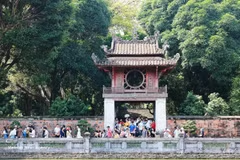
The Temple of Literature is among Hanoi’s leading examples of applying digital technology to heritage preservation and promotion.

Dr Duong Ngoc Ha, Deputy Director of the centre for cultural and scientific activities at the site, said nearly a decade of digitalisation has transformed technology from a preservation tool into a means of interpreting heritage and helping visitors explore cultural values.

Interactive touchscreens presenting designs and inscriptions on the 82 doctoral laureates’ steles, a heritage education software, and the 3D mapping film “Cultivating talents”, launched on September 18, 2026, have helped make the historic site more accessible to the public.

Young entrepreneurs are also developing new approaches. Zero Gallery, for instance, offers multisensory cultural experiences in exploring Vietnamese spices and pho. Its installations combine imaginative storytelling with projection technology and sensors that release the aromas of traditional ingredients such as cinnamon, black cardamom and coriander.

Foreigners account for 25–30% of its visitors, highlighting the potential of interactive cultural spaces. The team hopes to expand the model into cultural day tours in Hanoi and other localities, eventually introducing it to international audiences.

These initiatives show how creativity can bring heritage closer to contemporary life. When innovation deepens understanding of traditional values rather than replacing them, heritage becomes not only something to preserve but also a resource for sustainable tourism, economic development and reinforcement of Hanoi’s position as a UNESCO Creative City./.

VNA
See more

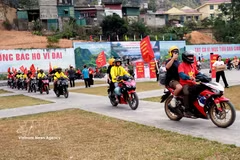
Following the launch ceremony, the 100-motorbike convoy travels from Dong Van across Ma Pi Leng Pass, taking in spectacular mountain scenery and the Nho Que River before finishing at Pa Vi Ha in Meo Vac commune. (Photo: VNA)

100 motorbikes conquer Ma Pi Leng Pass to promote safe travel

A convoy of 100 motorbikes set off on a journey across Ma Pi Leng Pass on October 21 as part of a roadshow campaign to promote safe motorcycle travel in the northern province of Tuyen Quang, home to the Dong Van Karst Plateau UNESCO Global Geopark.

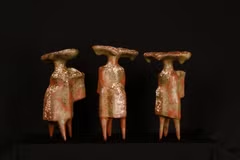
The work "Khong gian cua nui" (The Space of Mountains) by Le Lang Luong. (Photo: Published by VNA)

Vietnam-Japan sculpture exhibition to bring artists together in Kanagawa

The “Dialogue” exhibition in Japan's Kanagawa prefecture from November 8-11 will feature more than 30 works by artists from both countries, including 26 pieces by 13 contemporary Vietnamese sculptors from different generations. These artists have developed distinctive artistic languages and made their own marks on Vietnam’s contemporary art scene.

A performance at the event (Photo: VNA)

Vietnamese in Hungary stage first Great National Unity Festival

The event also served as a showcase for Vietnamese culture, customs, cuisine and traditions, in step with Vietnamese Culture Day. It encouraged Vietnamese of all generations to hold onto their cultural identity while spreading the image of Vietnam and its people among Hungarians, adding to people-to-people exchanges and mutual understanding between the two countries.

An ao dai fashion show at the festival. (Photo: VNA)

Vietnamese culture shines at festival in RoK

A celebration marking the seventh founding anniversary of the Vietnamese Migrant Women’s Association (VMWA) in Ansan, Gyeonggi province, the Republic of Korea, took place on October 18, featuring cultural exchanges and activities to mark Vietnamese Women’s Day (October 20).

Vietnam harnesses culture as growth driver

Vietnam harnesses culture as growth driver

Under a March 17, 2026 action plan from the municipal Party Committee, which follows the Politburo’s Resolution 80-NQ/TW dated January 7, 2026, on Vietnamese cultural development, the city is moving beyond preservation alone. It is now upholding heritage values while developing cultural products, spaces and markets tied to innovation and global integration.

The Ao dai parade passes through Bankstown Plaza and Bankstown Station before returning to the Bryan Brown Theatre. (Photo: VNA)

Sydney hosts first Vietnamese Ao dai street parade

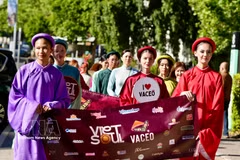
Colourful traditional Vietnamese Ao dai (traditional long dresses) brought a festive touch to the streets of Bankstown, Sydney, on October 17, as more than 20 Vietnamese people from different generations took part in an Ao dai street parade held as part of the Viet Soul 3 Festival.

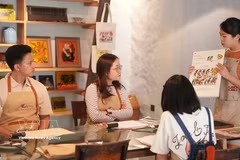
The Hangart regularly hosts 16 handicraft workshops, allowing visitors to experience a wide range of cultural activities. (Photo: VNA)

Creative space brings 12 traditional Vietnamese craft villages to life

Visitors can take part in activities associated with traditional Vietnamese life, such as making essential oils, herbal extracts, herbal soaps and traditional cakes. Each workshop is designed around hands-on experiences, enabling visitors not only to observe but also to create their own handicrafts with a personal touch.

The grand Xoe dance performance with the participation of 2,026 people. (Photo: VNA)

Muong Lo Festival 2026 opens with grand Xoe dance performance

Chairman of the Lao Cai provincial People’s Committee Nguyen Tuan Anh said the province regards culture as the spiritual foundation, an endogenous resource and a driving force for sustainable development, with people at the centre of cultural creation, preservation and enjoyment.

Local residents enjoy bathing in flooded fields during the flood season in the Cong Bung Ren area, Vinh Loi hamlet, Phu Huu commune, An Giang province (Photo: VNA)

An Giang’s flood season bathing offers unique tourism experience

Although the flood season lasts only a few months, bathing in flooded fields offers more than seasonal recreation. For residents of An Giang’s border headwaters, it is a way to strengthen community bonds, preserve childhood memories and share the distinctive riverine culture of the Mekong Delta with visitors.