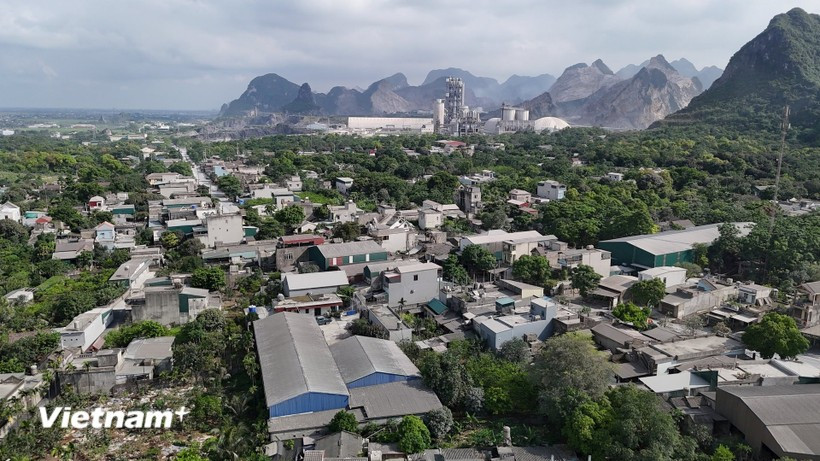
Hanoi (VNA) – Nature conservation organisations in Vietnam have recommended the establishment of a Species and Habitat Conservation Area for Delacour’s Langur in Kim Bang in the northern province of Ninh Binh. They called for more efforts to restore the environment after mineral extraction to secure ecological connectivity.
A petition was sent to Prime Minister Pham Minh Chinh, the Minister of Agriculture and Environment, and the Chairperson of the provincial People's Committee on August 1, following a series of articles titled “Designing Conservation Spaces: A Vital Imperative, a Responsibility to the Future,” posted on the Vietnam News Agency’s VietnamPlus e-newspaper.
The signatories include the Centre for Nature Conservation and Development (CCD), the Centre for Highland Natural Resource Governance Research (CEGORN), the People and Nature Reconciliation (PanNature), the Green Vietnam Biodiversity Conservation Centre (GreenViet), and the WildAct Vietnam.
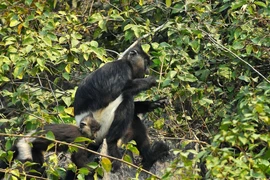
They noted that the Delacour’s Langur (Trachypithecus delacouri) is one of Vietnam’s rarest and endemic primate species. It is currently classified as Critically Endangered (CR) in both the 2023 Vietnam Red Data Book and the International Union for Conservation of Nature (IUCN) Red List. This species is also afforded the highest level of protection under Government Decrees No. 06/2019/ND-CP and 84/2022/ND-CP.
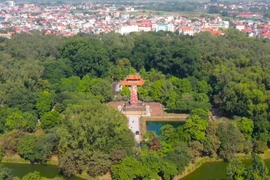
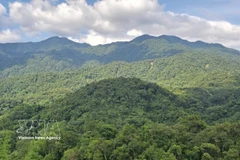
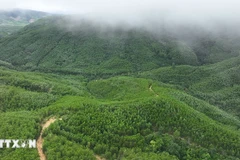
The limestone forest area in Kim Bang, merged into Ninh Binh province as of July 1, 2025, is currently home to the world’s second largest population of Delacour’s Langur, estimated at 120–150 individuals. This is second only to the population in the Van Long Nature Reserve, with this limestone forest possessing exceptional biodiversity value. It harbors species emblematic of the Red River Delta’s limestone forest ecosystem, many of which are national conservation priorities. These include the Pygmy Slow Loris, the Indochinese Serow, the Huong Son Gecko, Venus Slipper Orchids, and the Golden Camellia. It is also contiguous with Van Long, Dong Tam, Huong Son, and Tam Chuc, forming one of the most critical conservation landscapes in the Red River Delta, connecting Ninh Binh, Phu Tho, and Hanoi.
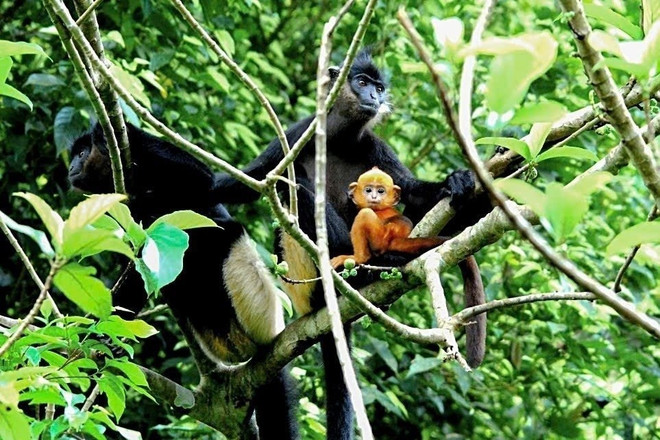
Since 2016, conservation organisations in Vietnam, the Fauna & Flora International (FFI), and relevant authorities have proposed the establishment of a Species and Habitat Conservation Area for Delacour’s Langur in Kim Bang. The People’s Committee of Ha Nam province conducted surveys, compiled dossiers for the reserve’s establishment, and consulted with relevant departments and agencies. However, to date, the conservation area has yet to be formally established. Management of the forest is still delegated to the Kim Bang–Thanh Liem Forest Protection Station, which operates with extremely limited capacity (only four rangers currently work at the station).
In the current context, threats such as hunting, trapping, and illegal timber harvesting continue to exert pressure on the survival of this species of langur and regional biodiversity. At the same time, their habitat is increasingly shrinking due to quarrying activities, noise pollution, and dust emissions that have severely affect both wildlife and nearby human communities.
Therefore, to protect the critically endangered Delacour’s Langur population and the exceptional biodiversity of the Kim Bang limestone forest, the organisations urged the establishment of the Kim Bang Species and Habitat Conservation Area for the Delacour Langur.
This move will contribute to expanding the national protected area network, fulfilling Vietnam’s commitments under the Convention on Biological Diversity. Delays in the reserve’s establishment have already allowed continued degradation of this high-value ecosystem through hunting, illegal logging, and mining, they stressed.
In their petition, the organisations also highlighted the importance of restoring the post-mining environment and securing ecological connectivity.
At present, the Kim Bang Forest Area (including parts of the newly-formed Tam Chuc and Ly Thuong Kiet wards) hosts numerous limestone quarries, many of which have either ceased operations or are nearing closure. Therefore, they called upon the Ninh Binh provincial People’s Committee to review all quarries that have ceased or are about to cease operations. The goal is to ensure they fulfill their legal obligations for environmental restoration under the 2024 Law on Geology and Minerals and the 2020 Law on Environmental Protection./.

Provincial merger – restarting conservation, promoting green growth
The merger of Ha Nam, Nam Dinh and Ninh Binh into Ninh Binh province will unlock tremendous potential for the sustainable development of natural conservation zones.

Efforts needed to elevate natural heritage to propel nation forward
After 50 years of national reunification and nearly 40 years of “Doi Moi” (Renewal), Vietnam has overcome numerous challenges to achieve remarkable accomplishments, enabling the nation to rise in the era of international integration.