Over 420 homes damaged, reservoirs overwhelmed amid Typhoon Wipha's aftermath

​Typhoon Wipha and widespread flooding have devastated northern and north-central provinces, damaging homes, crippling agriculture and triggering multiple dike failures. Emergency response teams are working around the clock as further heavy rains are forecast.

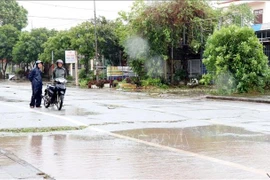
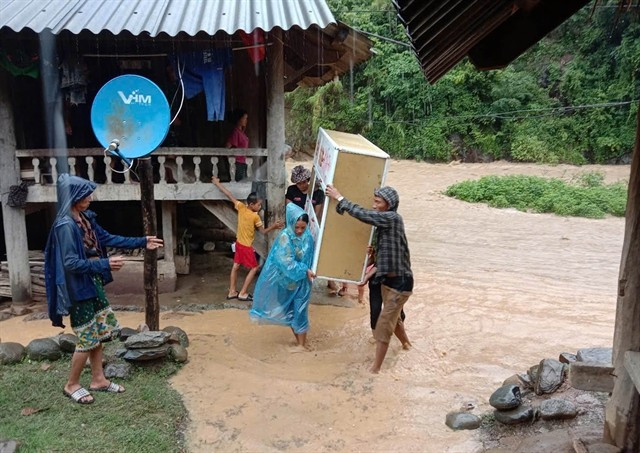
A family in Muong Xen commune in Nghe An province move their belongings to safe places amid the flooding. (Photo: VNA)

Hanoi (VNS/VNA) - Typhoon Wipha (designated as storm No. 3 in Vietnam) has caused widespread destruction across several northern and north-central provinces, damaging hundreds of homes, submerging over 119,000ha of rice paddies and triggering multiple dike incidents.

According to an initial report from the National Steering Committee for Natural Disaster Prevention and Control released in the morning of July 23, a total of 420 houses were reported damaged or unroofed. The worst-hit provinces were Thanh Hoa with 251 homes affected and Nghe An with 161.

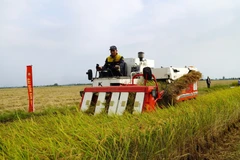
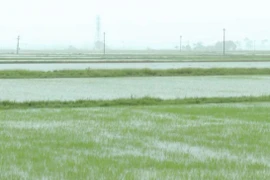
In terms of agricultural losses, the storm and subsequent heavy rains inundated 119,408ha of rice fields. Ninh Binh reported the largest area under water at 74,017ha, followed by Hung Yen (26,000ha) and Thanh Hoa (19,391ha).

Other provinces are continuing to assess the extent of the damage. Authorities in affected areas are actively deploying pumps to drain floodwaters and prevent further waterlogging.

The livestock sector also suffered losses, with nearly 3,300 cattle and poultry reported dead or swept away by floodwaters.

Wipha also triggered six dike incidents across multiple provinces. In Hanoi, a 20-metre crack appeared along the right bank of the Cau River dike in Da Phuc commune.

Local authorities quickly restricted access to the site. Another dike crack, first identified in 2024 along the right bank of the Hong River in Phuc Loc commune, has shown signs of expansion. The area has been fenced off to prevent vehicle access.

In Thanh Hoa, several sites experienced subsidence and landslides, including two sections of the western Cung River dike totaling 65m in length. Additional damage was reported at the Vuc Buu sluice gate on the Nhom River and along a 150m stretch of the Tam Diep canal dyke in Quang Trung ward.

A landslide was also reported in Ninh Binh, where a 5-m section of the southern Nam Quen Lieu dyke in Nghia Son commune gave way. Local officials responded immediately with emergency coverings and sandbag reinforcements.

Hydropower infrastructure in the region has come under pressure. The Ban Ve Hydropower Reservoir recorded a peak flood inflow of 12,800cb.m/s at 2am on July 22, surpassing the 10,500cb.m/s threshold.

By 7am on July 23, inflow had decreased to 7,347cb.m/s, while the outflow stood at 4,351cb.m/s. The reservoir water level reached 199.5m, marking a rise of 9.3m in just 20 hours. Discharge operations began at 4pm on July 22.

A separate update on irrigation infrastructure shows that from the northern region down to Ha Tinh province, there are 4,487 reservoirs – two classified as especially important, along with 446 large, 817 medium and 3,222 small reservoirs.

Current water storage levels range between 56 – 85% of design capacity. Most reservoirs in Nghe An are already full, and 91 are undergoing repair or upgrades.

Weather forecasts for July 23 indicate scattered showers and thunderstorms across the northern region, with localised rainfall of 15 to 30mm, and some areas expecting over 80mm.

A broader heavy rain event is anticipated on July 24–25 across northern provinces, Thanh Hoa and Nghe An, with rainfall of 60 to 120mm, and isolated areas potentially exceeding 200mm.

Authorities have issued warnings of intense rainfall exceeding 90mm in three hours, raising concerns of continued flooding and additional structural damage in vulnerable areas./.
VNA

See more

Tram Chim National Park and the Mekong Conservancy Foundation (MCF) organise the workshop on sustainable restoration of wetland ecosystems in the Mekong Delta on March 24. (Photo: VNA)

Solutions sought to restore Mekong Delta wetland ecosystems

Experts at the workshop described wetlands as the “ecological heart” of the Mekong Delta, playing a vital role in water storage and regulation, climate moderation, carbon sequestration, biodiversity conservation, and livelihoods for millions of people through aquaculture, agriculture, and ecotourism. These ecosystems also help reduce disaster risks and enhance climate resilience.

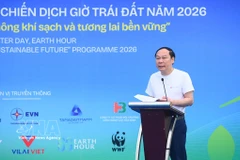
Deputy Minister of Agriculture and Environment Le Cong Thanh speaks at the ceremony to launch major environmental campaign. (Photo: VNA)

Vietnam calls for collective action on water, air, climate and sustainable future

Deputy Minister of Agriculture and Environment Le Cong Thanh underscored that water, climate, and energy are fundamental pillars of sustainable development. In Vietnam, water resources and weather patterns influence every aspect of life, from food and water security to livelihoods, ecosystem stability, and economic growth.

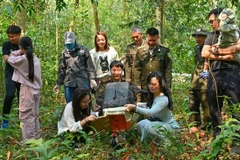
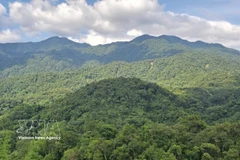
The population of trac (Dalbergia cochinchinensis) trees is strictly protected in the Dak Uy special-use forest. (Photo: VNA)

Vietnam highlights forests’ role in sustainable growth on International Day of Forests

According to Director of the Forestry and Forest Protection Department Tran Quang Bao, forests hold a strategic position in Vietnam’s development. They provide livelihoods for millions of people, particularly ethnic minorities and communities living in mountainous and forested areas, while contributing to environmental protection and disaster prevention.

The World Meteorological Day 2026 carries the theme “Observing Today, Protecting Tomorrow”. (Photo: VNA)

Ministry guides response to World Meteorological Day, World Water Day 2026

The Ministry of Agriculture and Environment urged ministries, agencies, local authorities, embassies, and international organisations to hold practical and effective activities aligned with the themes. Suggested activities include displaying eco-friendly banners, posters, and billboards in public spaces, streets, government offices, and other suitable venues to raise public awareness of the events’ importance.

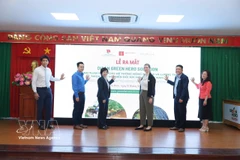
Delegates launch the Green Hero Solution project in Ho Chi Minh City on March 12, 2026. (Photo: VNA)

Vietnam, Denmark cooperate to pilot circular food model

Under the “Green Hero Solution” project, organic food waste will be collected from partner organisations and businesses and processed into compost. The compost will then be used at two Food Bank community gardens, where fresh vegetables will be grown to support disadvantaged households.

Deputy Prime Minister Tran Hong Ha meets with UNDP Resident Representative Ramla Khalidi and WHO Representative in Vietnam Angela Pratt in Hanoi on March 11. (Photo: VNA)

Vietnam steps up partnership with UNDP, WHO in tackling air pollution

Highlighting Vietnam’s close partnership with the two UN agencies, Deputy PM Ha highly appreciated their important contributions to the country’s development over the years, particularly in policy consultation, institutional reform and promoting sustainable development initiatives.

The groundbreaking ceremony for the Phu Cu waste-to-energy plant project in Doan Dao commune, Hung Yen province, on March 6 (Photo: VNA)

Hung Yen breaks ground on 4 trillion VND waste-to-energy plant

With a population of about 3.5 million, Hung Yen generates around 1,850 – 2,000 tonnes of household waste each day, along with about 1,000 tonnes of waste from production and business establishments, posing a major challenge for the locality.