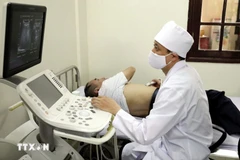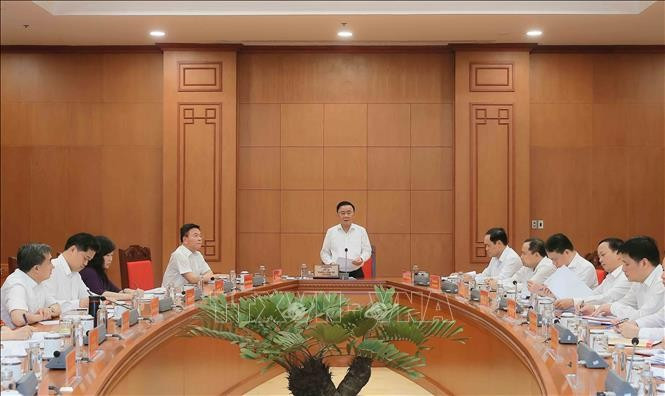
Hanoi (VNA) – Politburo member and permanent member of the Party Central Committee’s Secretariat Tran Cam Tu on October 10 chaired a working session with the Party Committee of the Ministry of Health (MoH) and representatives of relevant agencies to review the implementation of Politburo Resolution No. 72-NQ/TW, dated September 9, 2025 on breakthrough measures to strengthen protection, care, and improvement of public health.
Minister of Health Dao Hong Lan reported that immediately after the resolution was issued, the ministry’s Party Committee took proactive steps to disseminate and implement it. The Government subsequently issued Resolution No. 282/NQ-CP on September 16, outlining its action programme to carry out Resolution No. 72. The document sets out six major groups of tasks and solutions to address existing bottlenecks, strengthen the healthcare system, develop human resources, and ensure sustainable funding for healthcare services.
Following the Government’s directions, ministries, sectors, and agencies have developed their own action plans to ensure the effective realisation of the resolution’s goals, she said.
At the meeting, delegates discussed the implementation of Resolution 72, focusing on key tasks, specific mechanisms, and difficulties encountered during the process.
In his concluding remarks, Tu emphasised the importance of concretising and organising the implementation of the action programme, ensuring the resolution’s success.
He stressed the principle of “people’s supervision and people’s benefits,” saying any matter directly related to public health must be implemented promptly and public satisfaction is the most important indicator of success.
He acknowledged the MoH’s efforts in drafting legislative proposals, including the Law on Disease Prevention and the Law on Population, which institutionalise the resolution’s key contents and are scheduled for submission to the National Assembly’s 10th session. These will provide a firm legal basis for addressing institutional bottlenecks in the health sector.
The Party official requested reorganising the health system to align with the current two-tier local government model, ensuring efficiency and sustainability. Commune health stations should operate as public service units providing basic preventive, treatment, and social care services, helping to reduce hospital overcrowding.
On human resource development, he urged prioritising resource investment in preventive and grassroots health care, improving salaries and allowances to retain and attract medical staff, and enhancing the quality of training in key medical universities to better serve community health needs.
The health sector must continue developing key plans such as free hospital care, annual health check-ups for all citizens, and increase in health insurance premiums from 2027, he said, noting this should be part of the upcoming national target programme on health and population.
Regarding digital transformation, he pointed out the lack of interconnectivity among medical facilities and between the health sector, social insurance system, and national population database. He assigned the MoH to lead efforts to develop a national health database that ensures integration, interoperability, and security. Investment in digital infrastructure for commune-level facilities should be prioritised to expand electronic medical records, e-prescriptions, and personal health management.
Tu also highlighted the importance of promoting a culture of health through education and communication, stressing that disease prevention must begin with individual awareness and healthy lifestyles.
“A healthy society cannot rely solely on doctors,” he said, calling for greater public engagement in physical activity, nutrition, mental health care, and preventive practices./.
VNA