Red River Delta localities take actions to drive export growth

Provinces and cities in the Red River Delta have made significant progress in economic growth, state budget revenue, foreign direct investment (FDI) attraction, and tourism. Notably, their export turnover ranks among the highest in Vietnam.

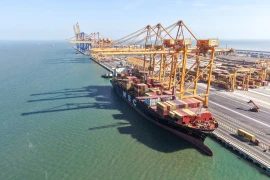
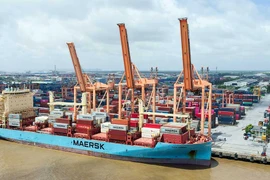
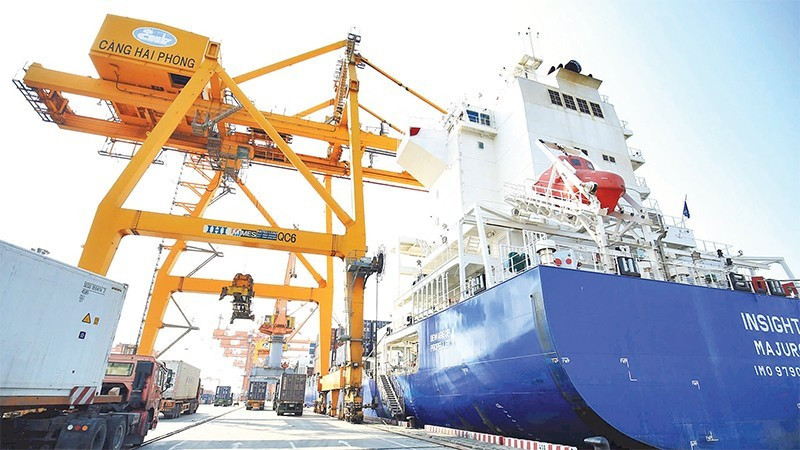
Import and export activities at Hai Phong Port (Photo: nhandan.vn)

Hanoi (VNA) – The country’s export turnover has seen remarkable growth, with localities in the Red River Delta serving as important contributors, which are still taking various measures to help realise the country’s export target set for 2025.

According to the Coordinating Council for the Red River Delta region, the regional provinces and cities have made significant progress in economic growth, state budget revenue, foreign direct investment (FDI) attraction, and tourism. Notably, their export turnover ranks among the highest in Vietnam.

The Ministry of Finance reported that in the first 10 months of 2025, Vietnam’s total foreign trade turnover reached 762.44 billion USD, up 17.4% year-on-year, with a trade surplus of 19.56 billion USD. Many Red River Delta provinces posted strong export growth during this period.

Statistics show that Bac Ninh’s exports over the last ten months exceeded 77 billion USD, up 32% year-on-year, with a trade surplus of nearly 5 billion USD. This province has consistently ranked among the top trading performers nationwide since August 2025 and also among the largest contributors to the country's total exports.

Following the administrative merger with Bac Giang, Bac Ninh’s industrial production and trade has witnessed a strong breakthrough. Its key industrial products have seen strong year-on-year expansion, including computer parts, peripheral devices, laptops, iPads, and smartphones. As a hub for hi-tech industrial production and exports, Bac Ninh now holds many advantages for scaling up export, particularly when foreign investors are still choosing the province as a production base.

So far this year, Bac Ninh has attracted about 16.2 billion USD in investment, ranking second nationwide. The export growth has been driven by core commodities such as computers, electronics, phones, and components produced by FDI enterprises.

Meanwhile, Ninh Binh ranked eighth nationwide in export turnover, with over 21 billion USD. To achieve this, the provincial Department of Industry and Trade has actively implemented plans to expand and diversify export markets and support businesses in obtaining origin certificates and self-certifying origin for exports.

Following the administrative merger, Hung Yen’s export turnover in the January–October period is estimated at nearly 10 billion USD.

The figure reflects businesses’ efforts to overcome challenges as well as the growing resilience of the local economy, which is strengthening its position through proactive innovation, technology investment, and product quality improvement. One key measure to boost exports in Hung Yen is administrative reform, with a particular focus on streamlining customs procedures.

The customs sector is actively implementing digital and smart customs models, applying artificial intelligence, blockchain, and big data to help businesses save time on cargo clearance, reduce financial and labour costs, and improve production and business efficiency.

Meanwhile, industry and trade authorities continue to support firms through many activities, including training in free trade agreements (FTAs); assisting with trade promotion and business networking; providing 100% online public services for issuing certificates of origin (C/O); and coordinating in global market forecasting to help enterprises proactively plan their production and business activities.

Experts said with 16.2% growth in the first 10 months and value exceeding 42 billion USD per month for the past four consecutive months, this year's export growth could far surpass the 12% target. However, to this end, ministries, sectors, the business community, and localities—including those in the Red River Delta—must continue to make further efforts through the end of the year.

Relevant agencies need to boost connections between domestic and FDI businesses, help local firms integrate into FDI supply chains, and run targeted trade promotion programmes in key markets, including the EU, the US, China, Japan, the Republic of Korea, ASEAN, India, the Middle East, Africa, and Latin America./.

VNA
See more

The vessel carrying the 2 millionth TEU arrives at Hai Phong Port. (Photo:VNA)

Hai Phong Port reaches 2-million-TEU milestone

Handling the 2 millionth TEU in 2025 not only demonstrates Hai Phong Port’s operational capacity and the collective efforts of its workforce, but also highlights its increasingly important role in regional and global supply chains, the confidence of shipping lines, logistics firms and the business community, and the effectiveness of policies to improve the investment climate and strengthen maritime infrastructure and services.

Melons labelled with traceability codes on display at the Song Van agricultural produce store in Ninh Binh city, Ninh Binh province. (Photo: VNA)

Tracing origins hindered by fragmented data systems

As the Government accelerates the digital economy, establishing a unified national traceability system has become a crucial move to end data fragmentation and disconnection among ministries, sectors and localities.

Hyundai unveils its new Avante Hybrid model in Seoul, the Republic of Korea, on August 13, 2020. (Photo: Yonhap/VNA)

Tax cuts poised to ignite Vietnam’s hybrid vehicle boom from 2026

Experts forecast that 2026-2030 will mark a period of strong growth for hybrid vehicles in Vietnam, a trend that will invigorate the automotive sector while supporting national objectives on emissions reduction, sustainable development and the broader transition to green mobility.

Illustrative image (Photo: VNA)

Vietnam targets 1 billion USD in banana exports

Bananas have been identified as a priority product under the Project for the Development of Key Fruit Crops to 2025, with a vision to 2030, approved in October 2022. Under the plan, banana acreage is projected to reach 165,000–175,000ha by 2030, with output of 2.6–3 million tonnes.

Deputy Minister of Foreign Affairs Nguyen Minh Hang (Photo: VNA)

Event connects Vietnamese businesses with African countries

Deputy Foreign Minister Nguyen Minh Hang held that to develop Vietnam – Africa ties more strongly and substantively, it is necessary to promote the engagement of businesses, and that the Government will create favourable conditions for them to enhance fruitful cooperation.

Deputy Prime Minister Ho Duc Phoc (R) and Independent Non-executive Chairman of AIA Mark Tucker at their meeting in Hanoi on December 12. (Photo: VNA)

AIA Group envisions long-term investment, cooperation in Vietnam

Over 25 years of operation in Vietnam, AIA has achieved positive results. Its premium revenue ranks among the top five life insurers, reaching nearly 14.83 trillion VND (563.71 million USD) in 2024 and an estimated 15.73 trillion VND in 2025, equivalent to around 10% of the market share.

A view of the 2025 Japan business roundtable in HCM City on December 12. (Photo: VNA)

Ho Chi Minh City courts Japanese investment with growth blueprint

Ha underscored the pivotal contributions of Japanese firms, which have long supported local socio-economic progress through major infrastructure projects, industrial zones and workforce training courses. To date, Japanese companies have invested more than 15 billion USD in over 2,200 projects, reflecting sustained confidence and commitment to the market.

Deputy Prime Minister Bui Thanh Son receives Kounlaphanh Vongnathy, Vice President of Phongsupthavy Group, in Hanoi on December 12, 2025. (Photo: VNA)

Lao group urged to deepen energy ties with Vietnam

Deputy Prime Minister Bui Thanh Son has commended Phongsupthavy Group as one of Laos’ leading investors supplying electricity to Vietnam, noting its pledge to ramp up power exports and actively contribute to the implementation of energy cooperation agreements endorsed by senior leaders of the two Parties and States.