State Vice President hails role of Vietnamese intellectuals

Highlighting the role of young intellectuals in solving the development challenges of the nation, Vice State President Vo Thi Anh Xuan urged them to continue promoting national pride and patriotism, and to recognise their mission, responsibility, and honour in contributing to the nation’s development as it is entering a new era.

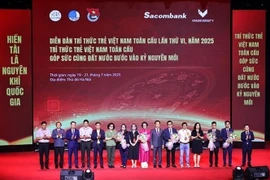
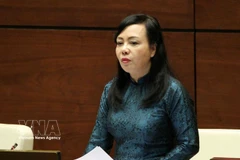
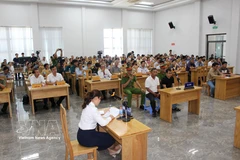
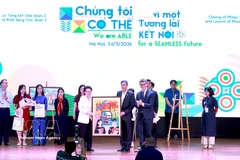
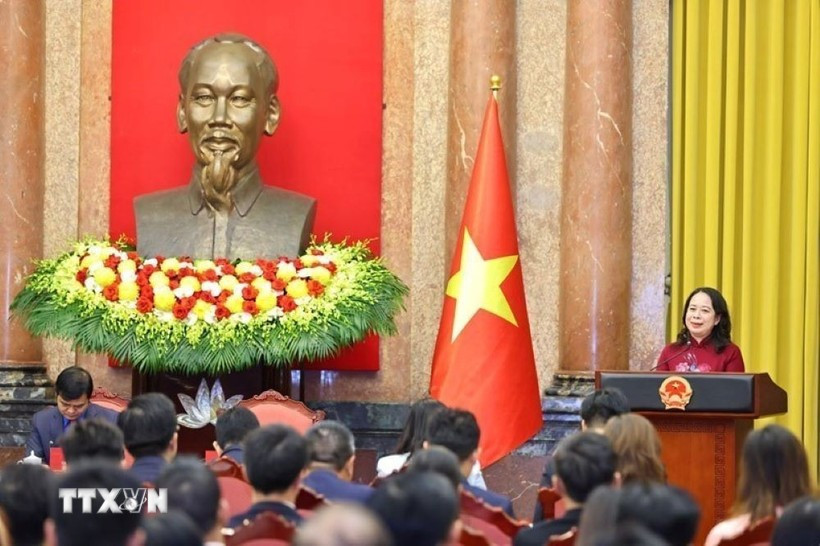
State Vice President Vo Thi Anh Xuan speaks at the meeting with delegates of the sixth Global Forum for Young Vietnamese Intellectuals. (Photo: VNA)

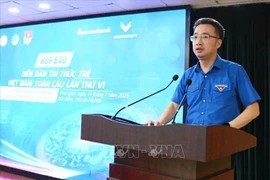
Hanoi (VNA) – State Vice President Vo Thi Anh Xuan affirmed that in any period of Vietnamese history, the country has had heroes and outstanding intellectuals who have played a special role in its development cause while meeting with delegates of the sixth Global Forum for Young Vietnamese Intellectuals in Hanoi on June 21.

Vice President Xuan stated that during her foreign trips, leaders from many countries have recognised and expressed respect for Vietnamese intellectuals, especially overseas students and Vietnamese experts.

This is proof of the resilience, capability, and patriotism of the young intellectuals, whether they are in the country or abroad, she stressed.

Highlighting the role of young intellectuals in solving the development challenges of the nation, the Vice President urged them to continue promoting national pride and patriotism, and to recognise their mission, responsibility, and honour in contributing to the nation’s development as it is entering a new era.

Young intellectuals must understand the trends of the time, be astute to both domestic and international politics, set personal goals and aspirations, and link their research projects to real life in order to make meaningful and effective contributions.

Vice President Xuan recommended they join hands in developing transport infrastructure, information technology, agricultural product processing industries, and biotechnology, building a national brand for Vietnamese rice, enhancing the physical and intellectual capacities of the Vietnamese people, and improving cultural industries, and high-value-added services such as finance and logistics.

Additionally, they should help the country proactively adapt to natural disasters and climate change, especially in vulnerable areas such as the central and Mekong Delta regions, she stated.

The leader urged the Ho Chi Minh Communist Youth Union Central Committee to continue maintaining and developing the forum as a platform to connect young intellectuals, thus creating an environment for them to exchange and spread the spirit of creativity and contribute ideas for the nation’s development.

In addition, relevant ministries and sectors need to coordinate with each other and propose policies to attract talent, as directed by Party General Secretary To Lam. Specifically, by August, they must propose outstanding policies to attract 100 Vietnamese experts currently abroad to return to work in the country, she noted, adding that this is part of a broader strategy to attract and develop intellectual resources by 2030, with a vision for 2050.

Stressing that when shared and connected, knowledge does not lose their value but rather grow richer, enriching Vietnamese intellect and creating the power to drive national development in the era of the knowledge economy, the Vice President expressed her belief that, with patriotism, determination, resilience, and intelligence, young Vietnamese intellectuals will continue to make meaningful contributions to the fast and sustainable development of the country, uphold the socialist orientation, and assert Vietnam’s position on the international stage.

The annual forum was first organised in 2018 by the Ho Chi Minh Communist Youth Union Central Committee. Over five editions, more than 1,000 young Vietnamese intellectuals at home and abroad have contributed to youth talent development programmes and policies./.

VNA
See more

A village hit by flash floods in Muong Than commune, Lai Chau province (Photo: VNA)

Floods, landslides wreak havoc on northern mountainous region

Total economic losses were estimated at about 255 billion VND (nearly 9.7 million USD), with Lai Chau accounting for the largest share of the damage with 190 billion VND, followed by Son La with 46.04 billion VND, Lao Cai with 16.7 billion VND, and Dien Bien with 2.3 billion VND.

The particularly serious coach accident, which occurrs at 00:20 in Chuong Duong commune on the Phap Van–Cau Gie–Cao Bo–Mai Son–National Highway 45–Nghi Son route. (Photo published by VNA)

PM orders urgent probe into deadly coach overturn on Hanoi expressway

An official dispatch, issued following the particularly serious coach accident, which occurred at 00:20 a.m. in Chuong Duong Commune on the Phap Van–Cau Gie–Cao Bo–Mai Son–National Highway 45–Nghi Son route, was sent to the ministers of Public Security and Construction, as well as the chairpersons of provincial and municipal People's Committees.

The story of Elza Le Floch, Celeste Perotteau-Giraud, and Wyatt Lelouche is published in the Nice Matin newspaper (Photo published by VNA)

Three young French volunteers embark on humanitarian journey to Vietnam

While many French students have just completed their secondary school examinations and are preparing for their summer break, Elza Le Floch, Celeste Perotteau-Giraud and Wyatt Lelouche have embarked on a different journey. On July 15, the three members of the Scouts and Guides of France group in Menton left Nice for Xuyen Moc in Ho Chi Minh City.

At a classroom for hearing-and-speech impaired children in Bac Ninh province. (Photo: VNA)

Legal assistance project nears finish line with 95% of goals met

Legal support policies only matter when citizens know they exist, can tap into them, and receive quality service. That’s especially true for the poor, the disabled, ethnic minorities, children, domestic violence victims, and those battered by disasters and disease outbreaks.

Efforts to safeguard religious values in digital age

Efforts to safeguard religious values in digital age

Digital transformation is changing not only how people work and communicate but also how they practice their faith. A Buddhist sermon can now attract tens of thousands of online viewers. A Protestant believer in a remote area can join a Bible study class via smartphone. Religious activities once closely tied to places of worship are increasingly taking place in cyberspace.

Delegates tour the facilities of the industrial innovation centre at Eastern International University in Binh Duong ward, Ho Chi Minh City (Photo: VNA)

Digital, AI competencies made mandatory for university graduates

Under Circular No. 54/2026/TT-BGDDT on higher education curricula, learning outcomes must be defined as measurable and assessable competencies, providing the basis for curriculum design, teaching, assessment, quality improvement, credit recognition and degree awarding.