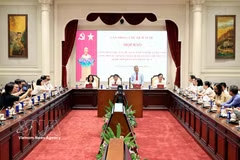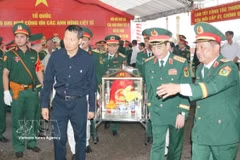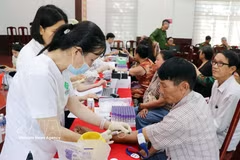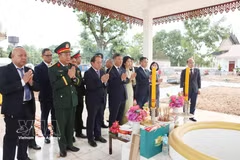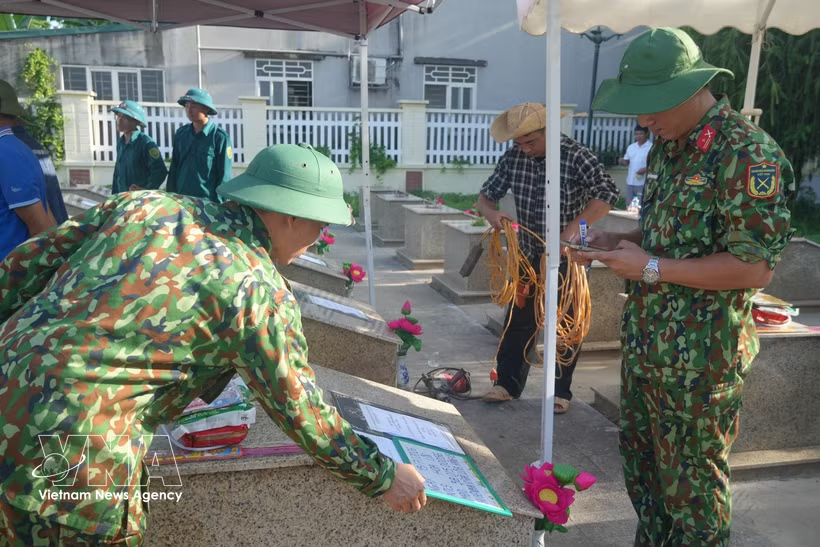
Thanh Hoa (VNA) – Authorities in the north-central province of Thanh Hoa is persevering in their efforts to identify the remains of fallen soldiers, with every DNA sample collected presenting a step toward restoring the names and identities of those who sacrificed their lives for the nation, helping heal the lingering historical pain felt by many families and the community.
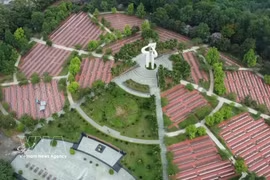
The province currently has 3,567 unidentified martyrs’ graves, including 612 with incomplete information and 2,955 with no information. In response to the 500-day campaign to recover and identify the remains of fallen soldiers lacking information through DNA testing, the provincial Military Command is collecting remains samples at local martyrs’ cemeteries.
Despite the hot weather, the forces involved continue to work at the sites, strictly following technical procedures, determined to complete the mission on schedule.
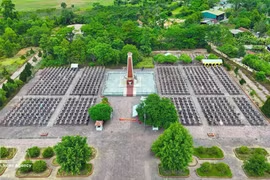
At the Hoa Loc martyrs’ cemetery, 69 of the 114 graves without identification information were selected for sampling. Each stage, from reviewing cemetery maps and records to excavation, sampling, digitising information, packaging, sealing, preserving, transporting and handing over samples, is carried out under strict procedures. The graves are restored to their original condition after sampling.
Every sample is assigned a unique code and linked to relevant information, images and records. Personnel carefully cross-check paper documents, the actual condition of graves and digital data, as even a minor error could affect the identification process.
As the head of the digitisation and data management team directly involved in the work, Senior Lieutenant Le Duc Trung Nghia from the provincial Military Command said that digitising and managing data requires absolute accuracy at every stage. Each remains sample is assigned a unique identification code and linked to relevant information, images and records to facilitate subsequent examination and cross-checking.
Personnel and soldiers involved in the work must carefully cross-check paper records, the actual condition of graves and electronic data to minimise errors, he added.
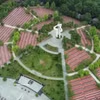
At Hoang Hoa martyrs’ cemetery, which contains 660 graves, samples are being collected from 38 unidentified graves. Each grave is carefully located and checked before excavation, while layers of soil are removed slowly and precisely to preserve the remains. After sampling, the graves are restored and carefully tidied.
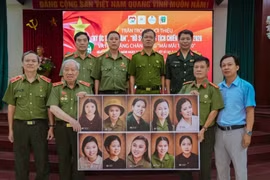
Colonel Nguyen Xuan Toan, Deputy Political Commissar of the provincial Military Command, said preparations for the work had been carried out comprehensively, with specialised equipment, materials and vehicles prepared in accordance with technical procedures. Mobile devices equipped with software for managing martyrs’ remains samples are used to ensure consistent and accurate data management.
The military, police, medical personnel and local authorities also coordinate closely to ensure security and safety at sampling sites. The work follows the “six clear” principle - clear people, tasks, responsibilities, authority, timelines and results, with the ultimate goal of ensuring accuracy at every stage and improving the effectiveness of DNA testing, he added.
Under the locality’s plan for searching for, collecting and identifying martyrs’ remains, the provincial Military Command has so far recovered 20 remains, including one in Vietnam and 19 in Laos. Sampling has been conducted at nine of 25 martyrs’ cemeteries in Thanh Hoa. Out of 2,955 unidentified graves, 457 have been excavated; 355 were eligible for sampling, while 122 were not. A total of 185 samples, including 166 from Vietnam and 19 from remains recovered in Laos, have been handed over to the Military Institute of Forensic Medicine.
Behind every sample lies the hope of restoring the identity of a fallen soldier and the longing of families who have waited for decades. The campaign is therefore not only a scientific and technical mission but also a journey of gratitude to those who sacrificed their lives for national independence and freedom.
Each properly collected sample and accurately recorded piece of information brings the search for the names of unidentified martyrs one step closer to completion, helping ease the historical pain that still weighs on many families and society as a whole./.