Thung Nham Bird Park sets example in bird conservation

Known as the “land of birds,” Thung Nham Bird Park, situated within the Thung Nham Ecotourism Area in Ninh Binh province, is the largest natural bird sanctuary in northern Vietnam and is actively managed and preserved.

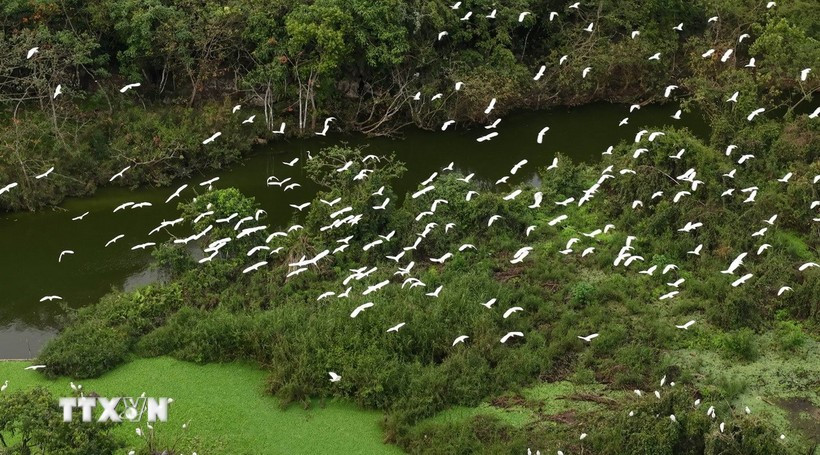
In the breeding season, from the eighth to fourth lunar months, the number of birds in Thung Nham could reach tens of thousands. (Photo: VNA)

Ninh Binh (VNA) – Known as the “land of birds,” Thung Nham Bird Park, situated within the Thung Nham Ecotourism Area in Ninh Binh province, is the largest natural bird sanctuary in northern Vietnam and is actively managed and preserved.

The park lies within the core zone of the Trang An Scenic Landscape Complex – a UNESCO World Cultural and Natural Heritage site inscribed in 2014.

Diverse bird species

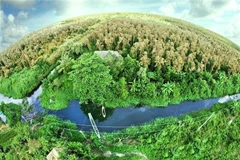
Thung Nham Bird Park is located amid the serene Tien lake, covering about 18 ha within the Thung Nham Ecotourism Area.

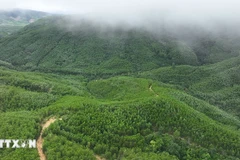
Nestled deep among the towering limestone mountains that form a natural protective wall, Thung Nham has become an ideal home for birds to settle and breed. Over the past 20 years, the park has welcomed an increasing number of bird species, including some rare wildlife, playing a crucial role in conserving and enhancing the biodiversity of the Trang An Scenic Landscape Complex.

The birds at Thung Nham are accustomed to human presence, allowing visitors to observe them up close without causing fear or disturbance. At the park, guests have the unique opportunity to witness the wild beauty of flocks soaring freely across the sky, and enjoy the serene and pristine natural environment.

Ngo Thi Minh, a visitor from Hanoi praised Thung Nham Bird Park for its pristine, fresh natural environment, noting that it is a rare ecotourism site that has preserved much of its wilderness and rich flora and fauna.

During the peak breeding season, the number of birds at the park can reach tens of thousands. In winter, only a few birds migrate south, while the majority remain in the park and thrive during spring and summer.

Sustainable conservation
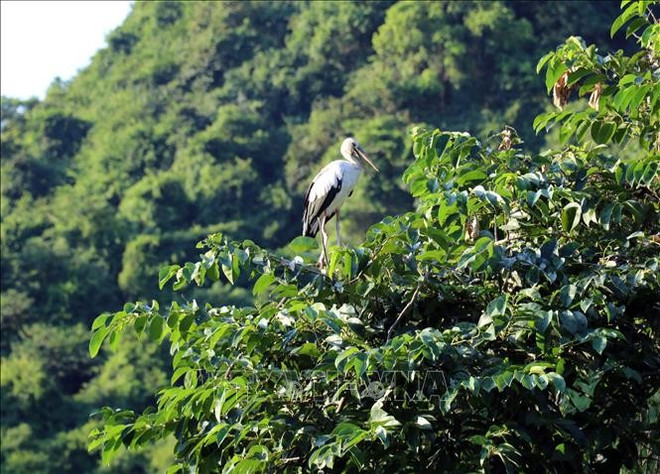
The birds at Thung Nham are accustomed to human presence, allowing visitors to observe them up close without causing fear or disturbance. (Photo: VNA)

The birds at Thung Nham are accustomed to human presence, allowing visitors to observe them up close without causing fear or disturbance. (Photo: VNA)

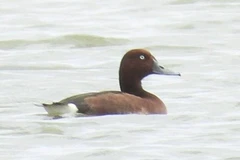
Thung Nham Bird Park is home to 46 bird species, including storks, herons, night herons, pheasants, parakeets, red-vented bulbuls, and mynas, with around 5,000 nests. Notably, it shelters two rare species listed in Vietnam’s Red Book - the sarus crane and the red-billed hornbill.

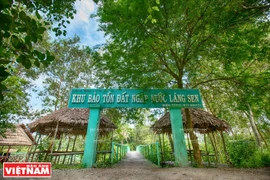
Amid shrinking natural habitats, Thung Nham Bird Park is being actively conserved and sustainably managed by local authorities and the tourism site’s management board. The park is strictly managed, with an absolute ban on hunting, harming birds, or damaging their habitats. Signage and visitor regulations are in place to ensure proper conduct around bird habitats, while strict enforcement measures minimise impacts on the park’s ecosystem.

Additionally, the management board works with local authorities to raise public awareness against hunting and to protect bird populations when they forage outside the park.

Pham Lan Huong, head of the tourism division at Thung Nham Ecotourism Park, said the site offers safe eco-tours that bring visitors into close contact with wildlife. Combining scenic exploration with environmental education, these tours promote harmony with nature and raise community awareness of ecosystem protection, reflecting the park’s commitment to sustainable and conservation-focused tourism.

In the coming period, Thung Nham Ecotourism Park will step up bird conservation by working with authorities and environmental experts to monitor behaviour and breeding, thus putting forth protection plans that preserve biodiversity and natural habitats./.


VNA

See more

Official heritage plaque i sinstalled on the 12 recognised Shan Tuyet tea trees in Dong Phuc commune. (Photo: VNA)

Thai Nguyen: 12 ancient Shan Tuyet tea trees win national heritage status

The recognition honours the biological, cultural and historical values of these centuries-old Shan Tuyet tea trees – natural treasures deeply woven into the livelihoods, traditions and identity of local ethnic communities. The title affirms the community’s commitment to preserving and promoting the value of this iconic local tea variety.

Sarus cranes at Tram Chim National Park (Photo: VNA)

Return of sarus cranes: Hope takes wing in Dong Thap wetland

Beneath the wide Mekong Delta sky, Tram Chim National Park is racing against time, pouring heart and science into a decade-long (2022–2032) plan to rescue the Eastern sarus crane – an elegant, scarlet-headed bird listed as endangered on the International Union for the Conservation of Nature (IUCN) Red List and a living emblem of both the park and all of Dong Thap province

French Ambassador Olivier Brochet speaks at the press conference in Hanoi on December 11 to mark the 10th anniversary of the Paris Agreement on climate change and highlighting the COP30 outcomes. (Photo: VNA)

International community ready to support Vietnam in energy transition, climate response

In a video message to the press conference, UN Resident Coordinator in Vietnam Pauline Tamesis said the UN is ready to support Vietnam in building a pipeline of projects capable of absorbing financing mobilised under the Political Declaration on establishing the Just Energy Transition Partnership (JETP), as well as from global climate finance sources, including the Green Climate Fund and the Loss and Damage Fund.

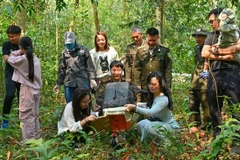
Forest rangers in Son La province apply technological devices and software to forest management, monitoring, and protection. (Photo: nhandan.vn)

Digital technology application enhances forest management, protection

With a total forest area of over 14 million hectares, including more than 10 million hectares of natural forests, forests exist in all 34 provinces and cities across the country. Given the large area and limited workforce, applying digital solutions in forest management and protection has become a top priority for the forestry sector.

Sunda pangolins (Manis javanica), also known as the Javan pangolin, are listed in Group IB – critically endangered and strictly protected from all commercial exploitation (Photo: VNA)

Quang Ngai releases rare pangolin back into nature

Initial verification showed that the animal weighed 3.7kg and measured over 60cm. It was identified as a Sunda pangolin (Manis javanica), also known as the Javan pangolin, listed in Group IB – critically endangered and strictly protected from all commercial exploitation.

Residents of Tuyen Quang province take part in the One Billion Trees Programme. (Photo: VNA)

Tree-planting programme exceeds one-billion-tree goal

The total comprises 573.9 million scattered trees and 865.2 million trees grown in concentrated plantations, equivalent to 429,125 hectares of forest. Provinces posting the strongest results include Phu Tho with 177.9 million trees, Lao Cai with 108.8 million, and An Giang with 98.5 million.

Construction activity is one of the causes of air pollution in Hanoi. (Photo: VNA)

Hanoi takes urgent measures to curb air pollution

The city requires the enhanced application of advanced technologies and remote monitoring systems, including satellite remote sensing, drones, and AI-integrated traffic cameras, to monitor, detect, and strictly address the illegal burning of garbage, straw, and agricultural by-products.