Vietnam consults stakeholders on climate change scenarios

The 2025 scenarios build on Vietnam’s 2020 projections, incorporating the latest findings from the Intergovernmental Panel on Climate Change’s sixth assessment report and insights from domestic and global partners. The focus is on extreme weather events, particularly in urban areas, and rising sea levels, which threaten Vietnam’s low-lying coastal regions. The goal is to guide policymaking, urban planning, and local adaptation strategies.

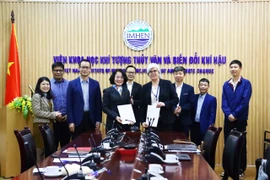
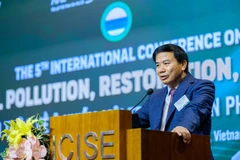
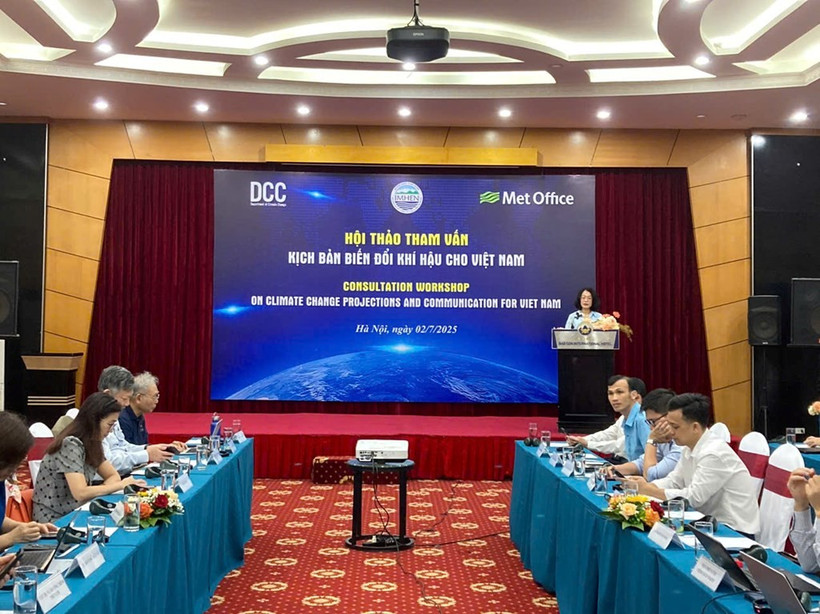
At the workshop (Photo: VNA)

Hanoi (VNA) – A consultation workshop convened in Hanoi on July 2 to present and gather feedback on climate change projections and communication for Vietnam.

Co-hosted by the Vietnamese Ministry of Agriculture and Environment’s Institute of Meteorology, Hydrology and Climate Change (IMHEN) and the Department of Climate Change, and the UK Met Office, the event formed part of the Asia-Pacific WISER (Weather and Climate Information Services) Programme funded by the UK’s Foreign, Commonwealth and Development Office (FCDO).

It drew a diverse group of stakeholders, including government officials, researchers, academics, and representatives from organisations like the Vietnam Women’s Union and the Vietnam Youth Federation, who weighed in on tailoring climate data for practical use.

In her opening remarks, IMHEN Director Assoc. Prof. Pham Thi Thanh Nga said the 2025 scenarios build on Vietnam’s 2020 projections, incorporating the latest findings from the Intergovernmental Panel on Climate Change’s sixth assessment report and insights from domestic and global partners. The focus is on extreme weather events, particularly in urban areas, and rising sea levels, which threaten Vietnam’s low-lying coastal regions. The goal is to guide policymaking, urban planning, and local adaptation strategies.

Dr. Truong Ba Kien from IMHEN outlined the use of three socioeconomic pathway (SSP) models, including SSP1-2.6, SSP2-4.5, and SSP5-8.5, mapping out sustainable, intermediate, and high-emission futures, respectively. These align with Vietnam’s commitment to net-zero emissions by 2050.

The 2025 scenarios track metrics like days exceeding 35°C, short-duration heavy rainfall, cold spells, droughts, and prolonged rains. High-resolution datasets, down to 3–5km for cities and provinces, enable precise modeling of local impacts.

A key feature is their digital accessibility. An interactive WebGIS platform allows users to search, download, and analyse data by region, sector, and timeline, boosting its utility in urban planning, agriculture, healthcare, and climate-resilient infrastructure development.

Emma Dyer from the UK Met Office shared projections from a high-resolution Convection-Permitting Model under the SSP3-7.0 pathway, forecasting a 2.0–3.7°C temperature spike by 2100 and a 0–4mm uptick in daily rainfall.

Coastal flooding risks also loomed large in discussions, alongside strategies to make complex data digestible for diverse stakeholders./.

VNA
See more

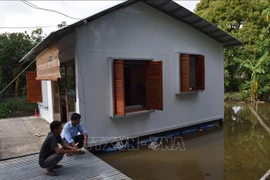
Tram Chim National Park and the Mekong Conservancy Foundation (MCF) organise the workshop on sustainable restoration of wetland ecosystems in the Mekong Delta on March 24. (Photo: VNA)

Solutions sought to restore Mekong Delta wetland ecosystems

Experts at the workshop described wetlands as the “ecological heart” of the Mekong Delta, playing a vital role in water storage and regulation, climate moderation, carbon sequestration, biodiversity conservation, and livelihoods for millions of people through aquaculture, agriculture, and ecotourism. These ecosystems also help reduce disaster risks and enhance climate resilience.

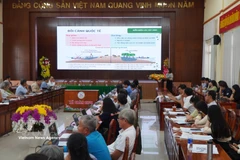
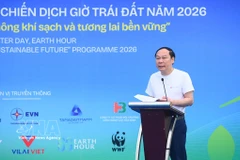
Deputy Minister of Agriculture and Environment Le Cong Thanh speaks at the ceremony to launch major environmental campaign. (Photo: VNA)

Vietnam calls for collective action on water, air, climate and sustainable future

Deputy Minister of Agriculture and Environment Le Cong Thanh underscored that water, climate, and energy are fundamental pillars of sustainable development. In Vietnam, water resources and weather patterns influence every aspect of life, from food and water security to livelihoods, ecosystem stability, and economic growth.

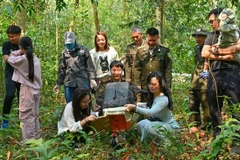
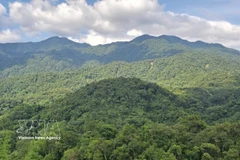
The population of trac (Dalbergia cochinchinensis) trees is strictly protected in the Dak Uy special-use forest. (Photo: VNA)

Vietnam highlights forests’ role in sustainable growth on International Day of Forests

According to Director of the Forestry and Forest Protection Department Tran Quang Bao, forests hold a strategic position in Vietnam’s development. They provide livelihoods for millions of people, particularly ethnic minorities and communities living in mountainous and forested areas, while contributing to environmental protection and disaster prevention.

The World Meteorological Day 2026 carries the theme “Observing Today, Protecting Tomorrow”. (Photo: VNA)

Ministry guides response to World Meteorological Day, World Water Day 2026

The Ministry of Agriculture and Environment urged ministries, agencies, local authorities, embassies, and international organisations to hold practical and effective activities aligned with the themes. Suggested activities include displaying eco-friendly banners, posters, and billboards in public spaces, streets, government offices, and other suitable venues to raise public awareness of the events’ importance.

Delegates launch the Green Hero Solution project in Ho Chi Minh City on March 12, 2026. (Photo: VNA)

Vietnam, Denmark cooperate to pilot circular food model

Under the “Green Hero Solution” project, organic food waste will be collected from partner organisations and businesses and processed into compost. The compost will then be used at two Food Bank community gardens, where fresh vegetables will be grown to support disadvantaged households.

Deputy Prime Minister Tran Hong Ha meets with UNDP Resident Representative Ramla Khalidi and WHO Representative in Vietnam Angela Pratt in Hanoi on March 11. (Photo: VNA)

Vietnam steps up partnership with UNDP, WHO in tackling air pollution

Highlighting Vietnam’s close partnership with the two UN agencies, Deputy PM Ha highly appreciated their important contributions to the country’s development over the years, particularly in policy consultation, institutional reform and promoting sustainable development initiatives.

The groundbreaking ceremony for the Phu Cu waste-to-energy plant project in Doan Dao commune, Hung Yen province, on March 6 (Photo: VNA)

Hung Yen breaks ground on 4 trillion VND waste-to-energy plant

With a population of about 3.5 million, Hung Yen generates around 1,850 – 2,000 tonnes of household waste each day, along with about 1,000 tonnes of waste from production and business establishments, posing a major challenge for the locality.