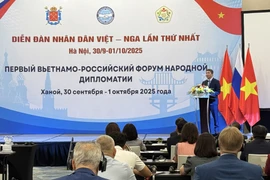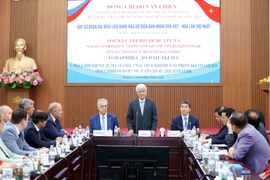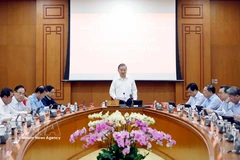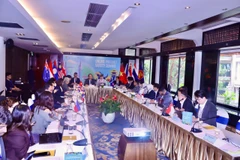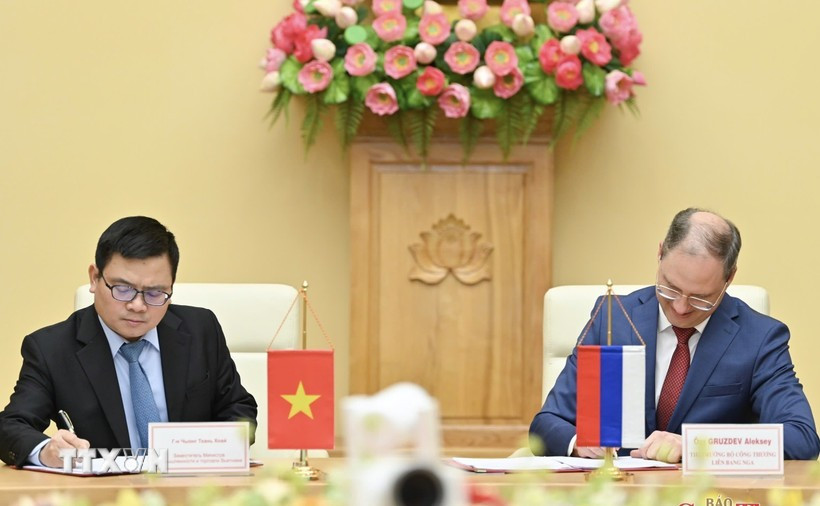
Hanoi (VNA) - Experts highlighted the importance of cooperation in clean energy and human resources development at a Vietnam-Russia science forum on industrial promotion, technology, and innovation, held by the Ministry of Industry and Trade on November 20 in Hanoi.
This not only reflects the Comprehensive Strategic Partnership between the two countries but also opens up new opportunities amid the global energy transition.
The prospects for cooperation become even clearer as Vietnam speeds up development in sectors such as renewable energy, automation, and digital transformation in the industrial sector - areas where Russia has strong training and research expertise.
Potential for expanding energy cooperation
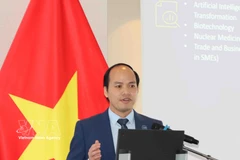
At the forum, Dr. Trinh Minh An, from the Vietnam Institute of Industry and Trade Policy and Strategy under the Ministry of Industry and Trade (MoIT), affirmed that industrial and technological cooperation in renewable energy, especially offshore wind power, not only reflects the traditional friendship between Vietnam and Russia but also opens a new chapter in bilateral economic collaboration.
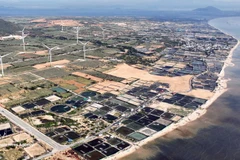
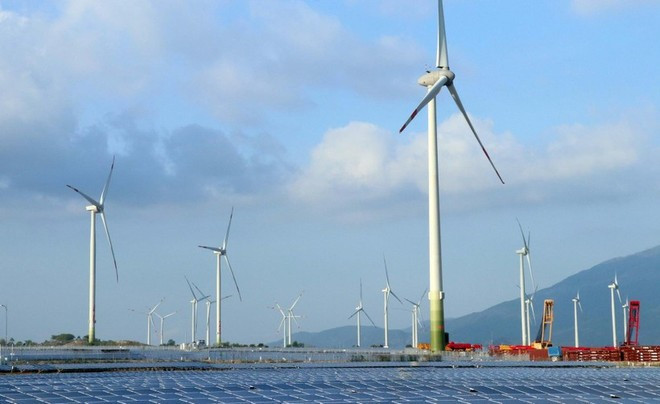
Vietnam is at a critical turning point in its energy transition, with renewable energy becoming an essential part of its sustainable development strategy. According to Dr. Anh, to achieve the target of 6 GW of offshore wind power by 2030, the two countries should focus on developing and transferring foundational technologies, particularly floating foundation technology for deep-water areas.
Vietnam and Russia can coordinate in designing, manufacturing, and testing next-generation floating foundation models, while also developing high-voltage direct current (HVDC) transmission systems and smart grid solutions, he said, adding that these technologies will enable the safe and efficient integration of large and variable wind power into the national grid.
Vietnam aims not only to generate electricity but also to build an independent and sustainable offshore wind industry. Therefore, expanding cooperation with Russian corporations to establish joint ventures for producing large-scale wind turbine components in Vietnam would increase the localisation rate, reduce production costs, and enable deeper participation in the global supply chain. Dedicated service ports are also needed to support the assembly, storage, and transport of oversize and heavy components for offshore wind power projects.
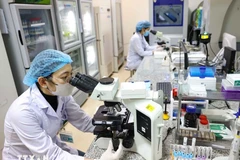
High-quality human resources are a critical factor for the success of wind power projects. Vietnam needs to train a new generation of engineers and technicians through specialised programmes in operation, maintenance, maritime labour safety, and offshore project management, leveraging Russia’s training expertise.
Research cooperation between Vietnamese institutes and Russian science and technology organisations in meteorology, oceanography, and offshore wind resource forecasting will help enhance forecasting capabilities and optimise the exploitation of renewable energy sources.
To promote cooperation, Anh proposed establishing a Vietnam-Russia green technology promotion fund, using bilateral capital sources or Russia’s financial institutions to support research and technology development projects and Vietnamese companies joining the wind power supply chain. Experience sharing in developing legal frameworks and specialised policy mechanisms would help attract international investment and facilitate complex offshore wind projects.
Human resources cooperation – motivation for breakthroughs in industrial development
Vietnam and Russia enjoy a long-standing partnership in human resource development, particularly in industry and energy – the areas that remain huge room for further cooperation.
Hoang Truong from the Vietnam Institute of Industry and Trade Policy and Strategy, said the Vietnam-Russia cooperation in science and technology human resource development for 2026–2035 will aim to build a team of experts capable of mastering, adopting, and commercialising technology in core sectors of the industry and trade. The goal is to establish a network of specialised cooperation centers, high-quality joint training programmes, and technology transfer projects with hands-on and on-site practice.
The prospect for cooperation become even clearer as Vietnam accelerates the development of renewable energy, materials technology, precision engineering, civil defence technology, automation, and industrial digital transformation, where Russia has strong training and research capabilities, he said.
Truong hoped that bilateral cooperation in science, technology, and human resource development for the industry and trade sector will achieve breakthroughs in the near future. He stressed that this is not just a plan but a necessary step given the intense global technological competition and the increasing requirements for production autonomy.
The cooperation not only contributes to enhancing state management efficiency but also creates new opportunities for sustainable development in both countries, becoming key pillars of their Comprehensive Strategic Partnership./.