Ho Chi Minh City (VNA) - A Russian crew member who suddenly suffered paralysis on one side of his body while a container ship was sailing on an international maritime route was successfully brought ashore for emergency treatment through the coordination of doctors from FV Hospital in Ho Chi Minh City.
Notably, in an effort to get the patient ashore as quickly as possible, FV Hospital’s medical team travelled more than 40 nautical miles at night, climbed a rope ladder onto the ship amid rough seas, and coordinated with other forces to safely transfer the patient to the hospital for successful treatment.
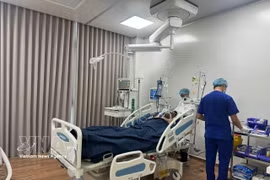
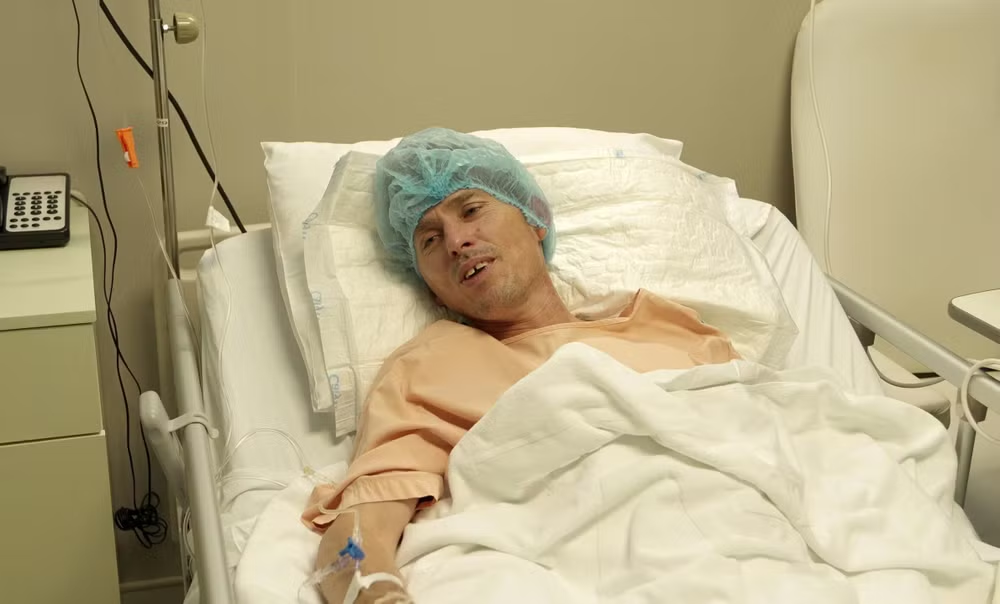
On August 4, FV Hospital said that after nearly two weeks of treatment and rehabilitation, the patient had been discharged in stable condition.
Previously, in mid-July 2026, the hospital’s Emergency and Trauma Department received an urgent call from a maritime agency. Initial information indicated that a Russian crew member aboard a container ship traveling on an international maritime route had suddenly developed weakness and paralysis on one side of his body, suspected of suffering a stroke.
As the ship lacked adequate conditions to provide emergency stroke care and could not immediately change course toward shore, the medical team and the maritime agency agreed that the vessel would continue its journey to Buoy No. 0 - the boundary between the international maritime route and Vietnamese waters - where the patient would be handed over to Vietnamese medical personnel.
That night, an FV Hospital ambulance urgently transported an emergency team consisting of Dr. Ho Chau Anh Thu and a nurse to Cau Da Port in Vung Tau area, Ho Chi Minh City, carrying essential medicines and emergency equipment. From there, the medical team boarded a speedboat arranged by the ship’s agent and traveled more than 40 nautical miles to Buoy No. 0 to bring the patient ashore amid rough seas, with waves reaching 2–3 metres high.
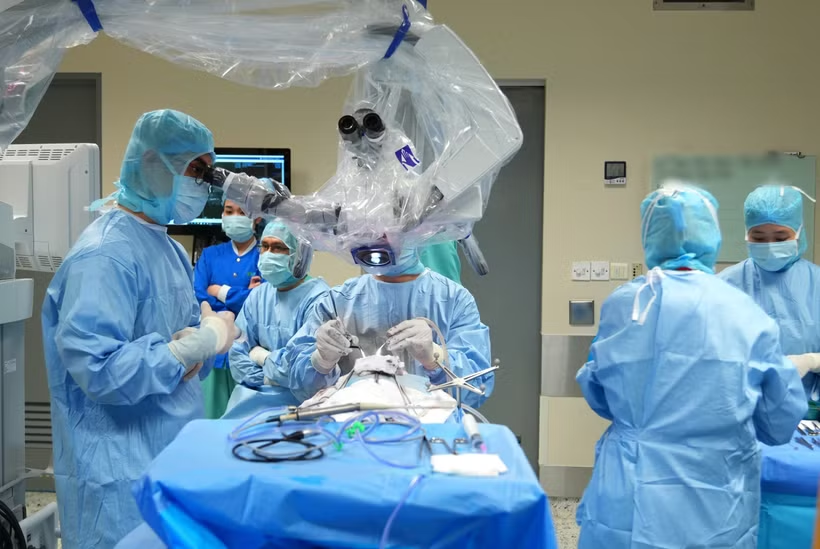
Three days later, as the patient’s headaches worsened and paralysis continued to progress, doctors decided to perform surgery to remove the hematoma. The operation lasted about 90 minutes.
After surgery, the patient remained conscious, his leg movement began to recover, and he was able to grip objects with his hand after just one day. By the third day, he could independently hold light objects. After nearly two weeks of treatment and rehabilitation, the patient was discharged on July 30 and returned to Russia in stable condition./.