Hanoi (VNA) - Under a master plan for establishing and developing a carbon market in Vietnam, approved by the Prime Minister under Decision No. 232/QD-TTg on January 24, 2025, the country aims to develop a centrally operated market in line with market principles under state management and supervision.
The roadmap targets a pilot carbon exchange to begin operating from June 2025 through the end of 2028, before full-scale operation starts in 2029.
In an interview with VietnamPlus, Dr. Tang The Cuong, Director of the Department of Climate Change under the Ministry of Agriculture and Environment, provided insights into the roadmap and potential of Vietnam’s green market.

Strong potential for greenhouse gas reduction
Reporter: What is your assessment of Vietnam’s carbon credit potential?
Dr. Tang The Cuong: International experts and partners recognise Vietnam as one of the countries with great potential for greenhouse gas (GHG) emission reduction and carbon credit generation. As a developing country with a fast-growing economy and high-emission industrial activities, yet limited application of high technology, we still have substantial room to reduce emissions and generate carbon credits.
Vietnam’s advantage lies in its early participation in carbon credit trading. Since the mid-2000s, Vietnamese enterprises have engaged in Clean Development Mechanism (CDM) projects. The country has registered over 300 programmes and projects under carbon credit standards, with around 150 of them issued over 40 million carbon credits — many of which have already been traded internationally.
These numbers make Vietnam one of the top four countries in terms of CDM project volume, following China, Brazil and India, and ninth out of 80 countries that have been issued carbon credits, with projects mainly focusing on renewable energy and energy efficiency.
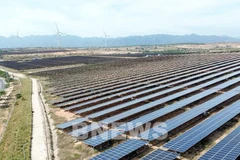
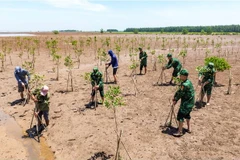
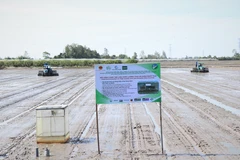
Recently, many renewable energy projects in Vietnam have been developed in line with carbon credit standards. In forestry, for instance, Vietnam has traded 10.3 million tonnes of CO₂ in emissions reductions from the North Central region. Meanwhile, the one-million-hectare high-quality, low-emission rice programme in the Mekong Delta, aimed at green growth, is also showing promise.
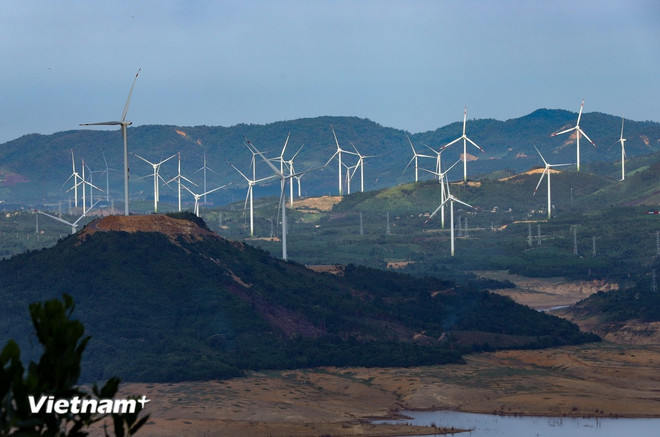
Reporter: How will carbon market development support Vietnam’s net-zero goal by 2050, as pledged at COP26? Dr. Tang The Cuong: Developing a carbon market is an irreversible trend toward green transformation. It facilitates GHG reductions at lower costs for businesses and society, promotes low-emission technologies, and enhances the competitiveness of Vietnamese enterprises.
Moreover, a carbon market is expected to play a key role in achieving Vietnam’s net-zero emissions target by 2050, as pledged at COP26. It will also create a financial mechanism for entities to trade carbon credits, opening new opportunities to attract international investment in renewable energy and green technologies.
Legal framework still under development
Reporter: How is progress going on building the domestic carbon trading platform?
Dr. Tang The Cuong: In line with Decision No. 232/QD-TTg, the Ministry of Agriculture and Environment, together with the Ministry of Finance, is implementing tasks and solutions relating to carbon market commodities, participants, a national registry and trading platform, operational mechanisms, awareness raising, and capacity building.
Key tasks being undertaken include drafting a government decree on the domestic carbon exchange; setting up and operating a national registry for GHG emission quotas and carbon credits; and developing systems for trading, depository, and payment related to carbon quotas and credits.
Reporter: What are the main challenges in building the carbon market? Dr. Tang The Cuong: This is a new market type. Many businesses still lack proper GHG inventory capabilities, which are crucial for determining emission quotas — the key commodity of the carbon market.
The legal framework also requires further development, especially regulations on trading, emission quota auctions, market security and safety, intermediary services, fees, and penalties for violations.
Currently, Vietnam also lacks its own carbon credit standards. Meanwhile, the number of qualified professionals capable of developing and verifying carbon credit projects remains limited.
Reporter: Over 2,166 businesses will be required to report GHG emissions under the carbon market scheme. Which sectors do these belong to? Dr. Tang The Cuong: The list of businesses subject to mandatory greenhouse gas inventories is updated every two years by the Prime Minister. According to Decision No. 13/2024/QD-TTg dated August 13, 2024, these are businesses operating in sectors such as thermal power, large-scale industrial production with annual energy consumption of over 1,000 tonnes of oil equivalent, cargo transportation units using more than 1,000 tonnes of oil equivalent per year, commercial buildings with energy consumption above the same threshold, and solid waste treatment facilities processing over 65,000 tonnes annually.
From now until the end of 2028, major emitting sectors — such as thermal power, steel, and cement — will be allocated GHG emission quotas based on the national emission cap. Entities with allocated quotas may buy or sell quotas and carbon credits to offset any excess emissions.
Carbon trading platform set for full operation from 2029
Reporter: Some international organisations wish to buy Vietnam’s carbon credits. Could this undermine the country’s emission reduction goals?
Dr. Tang The Cuong: Selling carbon credits has helped enterprises generate extra revenue and boost competitiveness. However, it is essential to consider domestic demand, international support (financial and technological), and timing.
Decisions on selling or retaining credits should be strategic, ensuring a balance of benefits for all stakeholders and considering future global carbon price trends.
The Ministry is currently reviewing all cooperation agreements on carbon credit trading — including bilateral, multilateral and international offset mechanisms — to align with Vietnam’s nationally determined contributions (NDCs) and national interests.
Reporter: What is needed to generate high-quality carbon credits and operate the trading platform effectively?
Dr. Tang The Cuong: First, we must finalise the legal framework including a decree on the carbon exchange and establish clear standards for carbon credits, trading, auctions, and violations.
We also need to build human resource capacity for carbon credit project development and validation, learn from more experienced countries, and strengthen technical cooperation.

Reporter: Can Vietnam begin official operation of the carbon exchange by 2029?
Dr. Tang The Cuong: With strong government efforts and inter-ministerial coordination to complete the legal framework, build capacity, and expand international cooperation, Vietnam is on track to pilot the carbon market and officially operate the exchange starting 2029.
We must also proactively address implementation obstacles to ensure the market is transparent, efficient, and supportive of the country’s green transition goals.
Thank you very much!