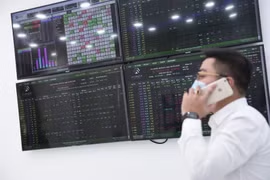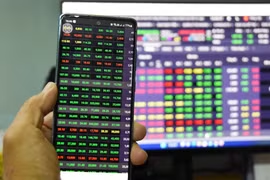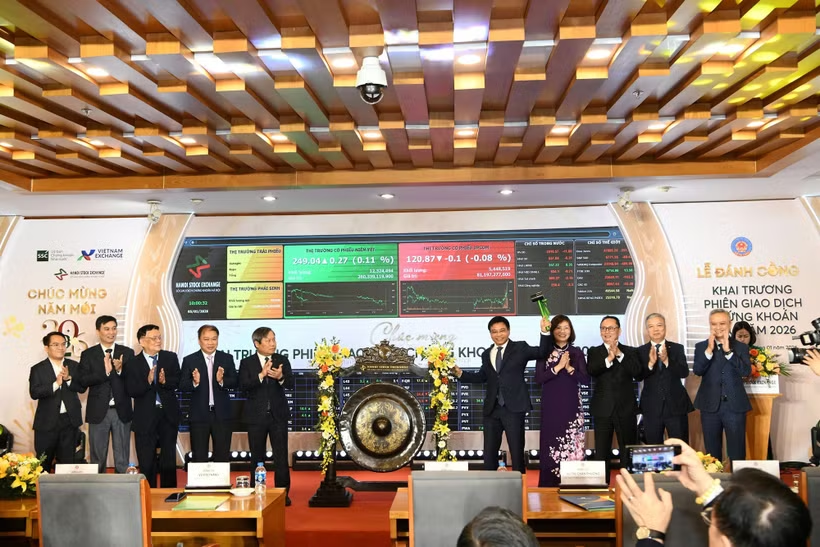
Hanoi (VNA) – Vietnam’s stock market is entering a new phase of global integration after being upgraded from frontier to secondary emerging-market status by FTSE Russell. This is a milestone widely viewed by financial observers as a turning point in the market’s long-term development.
The reclassification is expected to pave the way for large-scale portfolio inflows, particularly from exchange-traded funds, pension funds, insurance institutions, and other major financial investors.
The year 2025 marked what market participants described as a “decisive step forward,” reflecting sustained efforts over more than two decades to improve the legal framework, strengthen market infrastructure, and enhance transparency. Despite global economic uncertainty, geopolitical risks, and shifting capital flows, Vietnam’s securities market maintained stable operations while reinforcing its role as an increasingly important channel for medium- and long-term capital mobilisation.
A key highlight of this transformation was the official announcement by FTSE Russell confirming that Vietnam had met all criteria for reclassification. This underscores the structural maturity of a dynamic market that has undergone significant qualitative improvements. In parallel, technological modernisation has also progressed, with the new information technology system integrating order placement, clearing and settlement functions now operational. This platform will support the development of new products and enhance transaction-processing capacity in line with international standards.
Reforms have translated into tangible growth across market segments. By the end of 2025, stock market capitalisation had increased by roughly 39% compared with the previous year, reaching an estimated 77.6% of national GDP. The VN-Index recorded a gain of more than 40%, placing Vietnam among the best-performing markets in the region and globally. Investor confidence was reflected in strong liquidity and a surge in the number of trading accounts, which surpassed 11.8 million. These developments were supported by comprehensive legal adjustments designed to remove long-standing bottlenecks and improve market efficiency.
Authorities attributed the successful upgrade to coordinated policy direction and decisive reforms. Building a modern securities market has been identified as a key priority for the broader economy. Close collaboration among regulatory bodies, including the Ministry of Finance and the central bank, as well as technical assistance from international organisations, helped address complex issues related to foreign investor access, transparency and regulatory supervision. At the same time, listed companies and securities firms have strengthened governance standards, financial capacity and risk management practices. The growing adoption of bilingual information disclosure has further improved market accessibility for international investors.

Looking ahead, 2026 is expected to be a crucial period as Vietnam’s equities begin to be incorporated into FTSE’s emerging-market indices. Regulators have outlined a series of priorities to ensure smooth and sustainable market operations. These include continuing to refine the legal and policy framework in line with international norms, expanding the role of global brokerage institutions, and studying the introduction of omnibus accounts — a mechanism widely used by institutional investors. Infrastructure upgrades remain central to the agenda, with plans to implement a central counterparty clearing model and strengthen automated information exchange between securities companies and custodian banks.
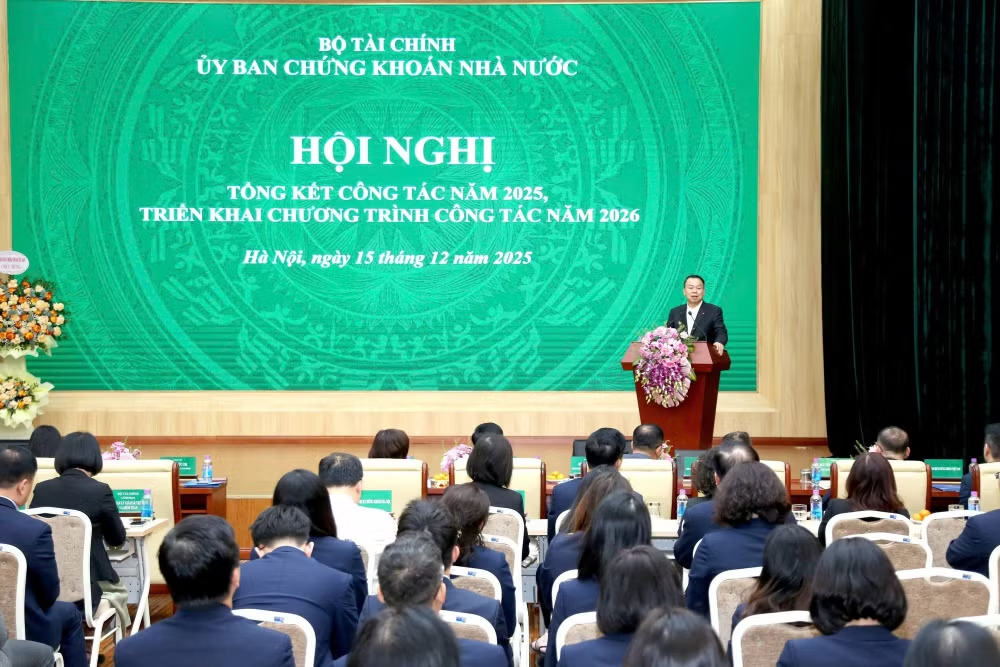
Efforts are also under way to diversify market products and improve the quality of listed companies in order to enhance market depth. Maintaining regular policy dialogue with international investors is viewed as essential for building trust and ensuring that regulatory adjustments remain responsive to evolving market conditions. In parallel, supervision and inspection activities will continue to be strengthened to safeguard transparency and market integrity.
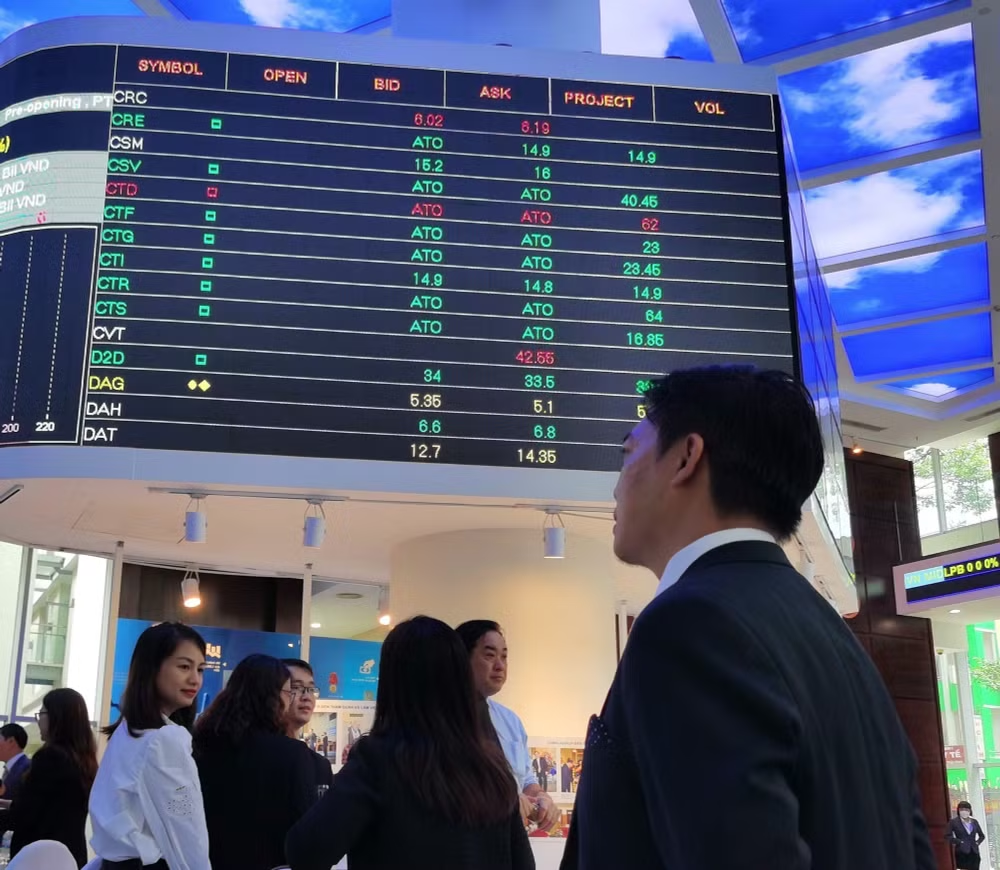
Another strategic objective is to rebalance the investor base. Individual investors currently account for a large share of daily trading value, contributing to market vibrancy but also exposing it to short-term volatility. Authorities therefore, plan to promote the development of the fund management industry and encourage retail investors to participate through professional investment vehicles rather than direct short-term trading. Enhancing financial literacy and strengthening professional standards in the asset management sector are also expected to foster a more stable and sustainable market structure.
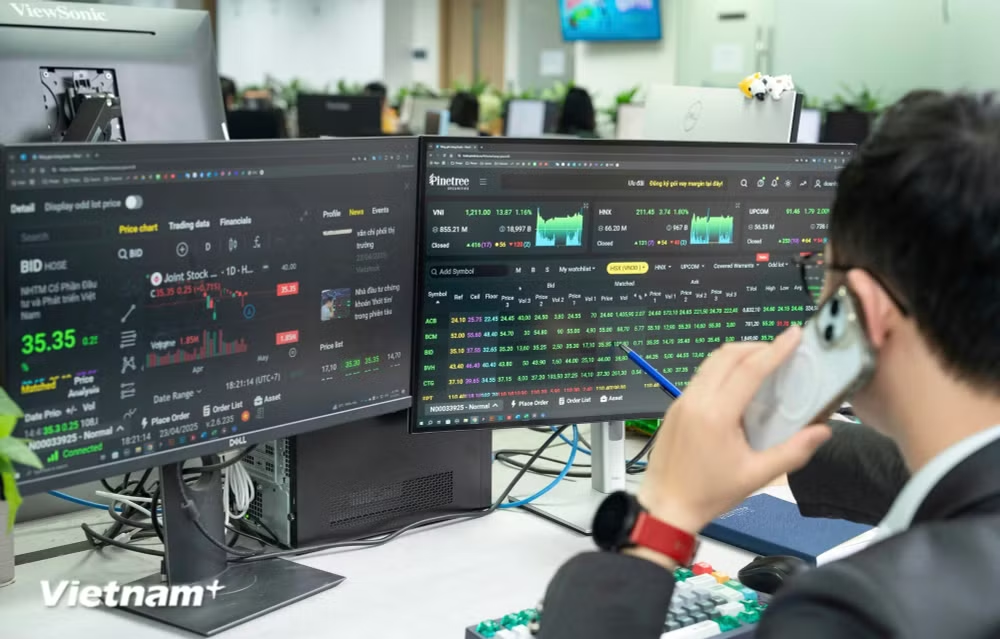
Global investment institutions have shown increasing interest in Vietnam, conducting in-depth assessments and establishing partnerships in preparation for potential capital allocations. With a stable macroeconomic foundation, improved governance, and ongoing structural reforms, the Vietnamese stock market can absorb large inflows of foreign capital. Such investment is expected to provide an important source of long-term funding for the country’s development objectives, reinforcing its position within the global financial landscape./.