Exploring three global geoparks in Vietnam

The Dong Van Karst Plateau Global Geopark in Ha Giang province and the Non Nuoc Cao Bang Global Geopark Cao Bang province, both in northern Vietnam, and the Dak Nong Global Geopark in the Central Highlands province of Dak Nong are appealing destinations for domestic and foreign tourists.

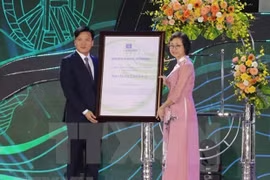
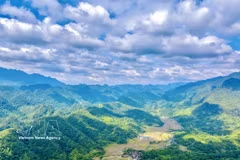
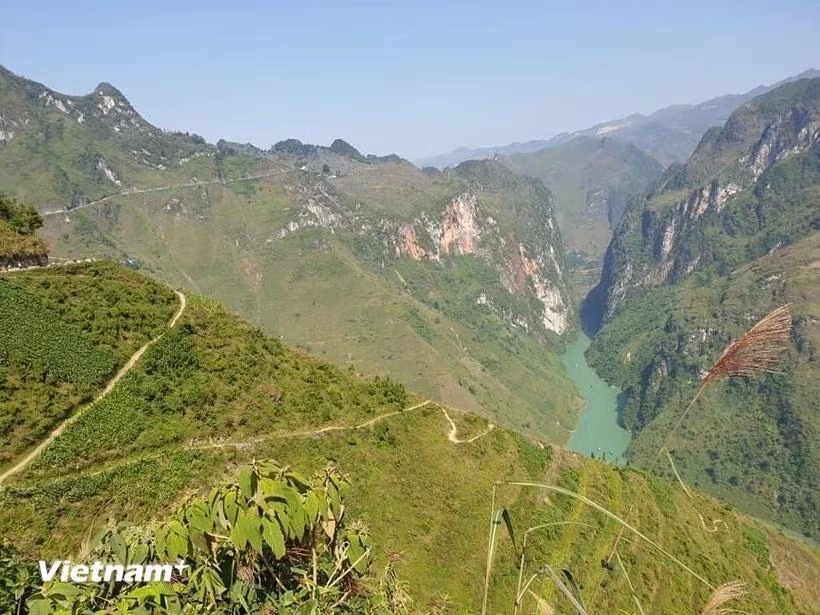
The Dong Van Karst Plateau, recognised by UNESCO as an official member of the Global Geo-parks Network (GGN) in 2010 (Photo: VNA)

Hanoi (VNA) - The Dong Van Karst Plateau Global Geopark in Ha Giang province and the Non Nuoc Cao Bang Global Geopark Cao Bang province, both in northern Vietnam, and the Dak Nong Global Geopark in the Central Highlands province of Dak Nong are appealing destinations for domestic and foreign tourists.

Dong Van Karst Plateau Global Geopark

On October 3, 2010, the Dong Van Karst Plateau was recognised by UNESCO as an official member of the Global Geo-parks Network (GGN), becoming Vietnam's first geological park and the second in Southeast Asia.

According to UNESCO, most of the Dong Van Karst Plateau’s surface is limestone (about 60%). Its landscape is spectacular, featuring high mountains and deep canyons. The highest peak is Mieu Vac Mount (1971m) while Tu San is the deepest canyon (700-800 m deep).

The geopark is located at an extension foot mount East of the Himalayas. Geoheritages date from the Cambrian (about 550 million years ago) to the present in seven different stages. They include features of palaeobiology, stratigraphy, geomophology, tectonics, karst, caves and also important faults. The geology in this UNESCO Global Geopark reflects important events in the Earth's geomorphological history.
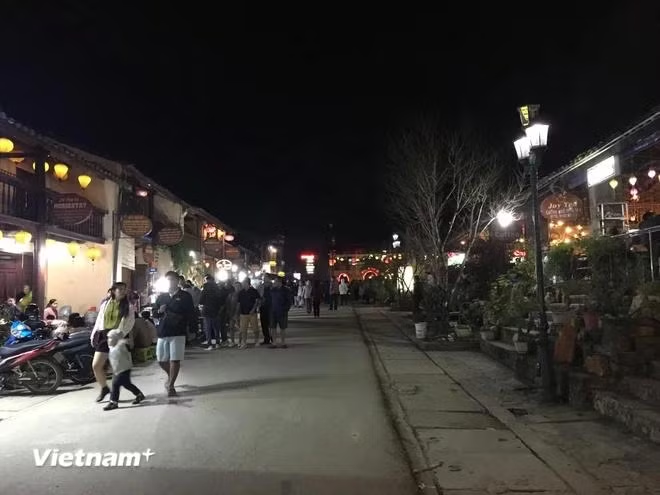
Dong Van.webp
Dong Van at night (Photo: VietnamPlus)

The geopark has two natural conservation areas rich in fauna and flora species such as conifers, Asian black bear, Southern serow (a solitary mountain goat) and many bird species. The mysterious Tonkin snub-nosed monkey is one of the 25 most endangered species of primates in the world. It is only found in Ha Giang province and was believed extinct until its rediscovery in the early 1990s. It is home to 17 ethnic groups which create the unique and rich cultural heritage of this area. UNESCO’s recognition has created new opportunities for socio-economic development in Ha Giang and four districts in the karst plateau area in particular.

The Dong Van Karst Plateau has become an attractive destination for domestic and international tourists. It is home to diverse and unique tourist products and attractions such as the Lung Cu flagpole, Vuong Mansion relic site, Dong Van ancient street, Tu San canyon, Ma Pi Leng pass, H'Mong Khen (Flute) Festival, and Khau Vai market. In 2014 and 2019, UNESCO re-recognised Dong Van Karst Plateau as a member of the UNESCO Global Geopark network in the 2015-2018 period and the 2019-2022 period.
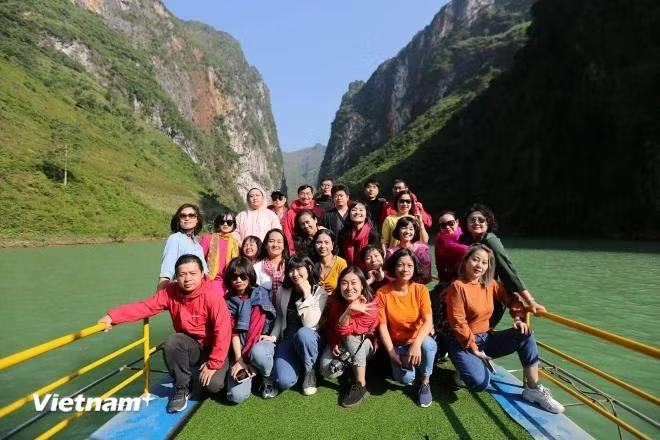
Nho Que river.webp
Visitors take a boat trip on Nho Que river. (Photo: VietnamPlus)

In September 2023, the karst plateau was recognised as a global geopark by UNESCO for the third time.

The number of visitors to Ha Giang increased sharply from just 2,000 visitors in 2010 to 2.2 million in 2022 and over 3 million in 2023.

Non Nuoc Cao Bang Geopark

Non Nuoc Cao Bang was officially recognised by UNESCO as a global geopark on April 12, 2018, becoming the second of this kind in Vietnam after the Dong Van Karst Plateau Geopark.

Located in the north of Vietnam, 300km from Hanoi, Non Nuoc Cao Bang UNESCO Global Geopark covers 3,000sq.km. It covers six districts of Ha Quang, Tra Linh, Quang Yen, Trung Khanh, Ha Lang, Phuc Hoa, and part of Hoa An, Nguyen Binh and Thach An. The geopark is home to eight ethnic groups including Tay, Nung, Mong, Kinh, Dao, San Chay, Hoa, and Lo Lo.
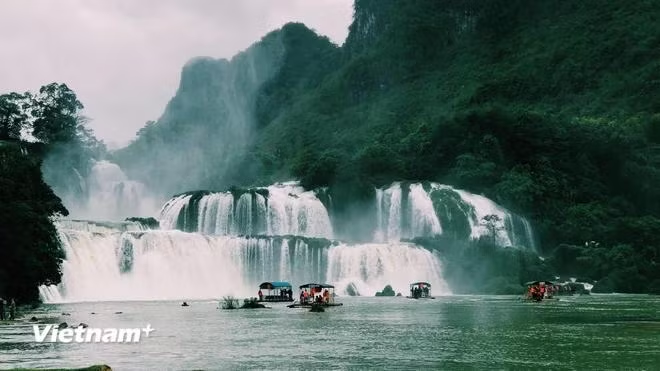
Ban Gioc.webp
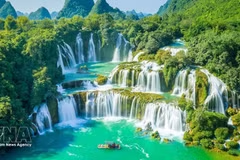
Ban Gioc waterfall (Photo: VietnamPlus)

The geopark is an exceptional territory which offers insights into the history of our planet across more than 500 million years through protected sites. Fossils, marine sediment, volcanic and plutonic rocks and minerals are witness to the remarkable evolution and changes of our planet, and they constitute an exceptional geological heritage. Mountainous landforms cover approximately 90% of the land area, with elevations ranging from 1,500 to 2,000 m in the west-northwest to 200 m in the east-southeast.

With a highland tropical monsoon climate and two distinct wet and dry seasons, the geopark exhibits a rich biodiversity, with widespread forests, endemic faunas and floras, herbs and specialty crops etc. The region has a complex drainage network that includes five major river systems and 47 lakes, according to UNESCO.
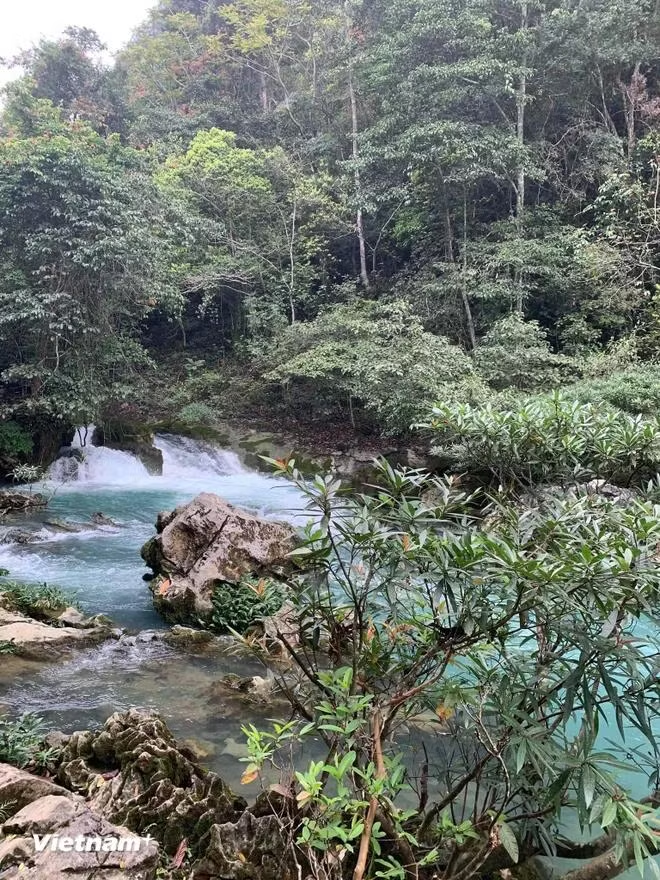
Pac Bo relic site.webp
At the Pac Bo relic site (Photo: VietnamPlus)

It is also a land of tangible and intangible cultural heritage sites and special historical monuments.

There are three main routes to explore the geopark, including going to the east to experience traditional cultures, north to see history and freedom, and west to experience Phia Oac, the mountain of transformations.

In 2023, Cao Bang province welcomed about 1.9 million visitors, an increase of 72% compared to 2022. They included 34,000 foreign tourists.

Dak Nong Global Geopark

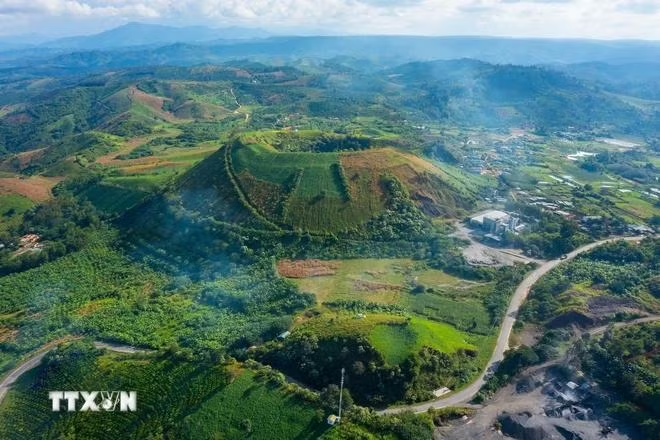
Dak Nong Geopark was recognised by UNESCO as a global geopark in July 2020, becoming the third global geopark in Vietnam after Dong Van Karst Plateau Geopark and Non Nuoc Cao Bang Global Geopark.

The park covers more than 4,700 sq.km. of land in six of the eight district-level localities in Dak Nong. These include Krong No, Cu Jut, Dak Mil, Dak Song, Dak G’Long, and Gia Nghia, equivalent to two-fifths of the province’s total area.
Dak Nong.webp
Dak Nong Geopark was recognised by UNESCO as a global geopark in July 2020 (Photo: VietnamPlus)

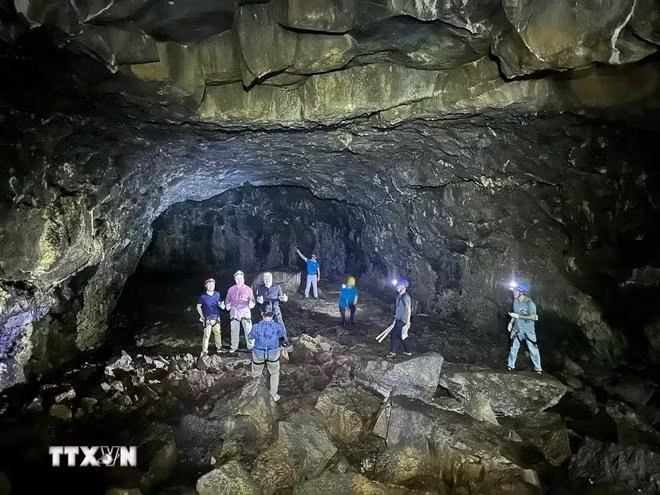
According to domestic and foreign scientists, there are 65 heritage and geomorphological sites in the Dak Nong Geopark, including volcanic craters, volcanic caves, and waterfalls. Notably, this geopark is home to the largest system of volcanic caves in Southeast Asia, with more than 50 caves and a total length of over 10,000m.

Visitors can also explore the Central Highlands’ space of gong culture – a UNESCO-recognised masterpiece of the intangible heritage of humanity, the culture of M’Nong people – the ethnic group that has the longest residence history in the province, along with the culture of other ethnic minorities.
Dak Nong volcano.webp
UNESCO experts explore Dak Nong volcano. (Photo: VietnamPlus)

UNESCO Representative in Vietnam Michael Croft said the Dak Nong Geopark boasts a combination of natural beauty and unique culture, both of which need to be preserved and capitalised upon via economic and tourism activities./.
See more

Pristine white-sand beach on Cu Lao Cham Island, Da Nang city, is a magnet for visitors. (Photo: VNA)

Vietnam – a safe destination amid global uncertainties

Despite global tourism headwinds linked to geopolitical conflicts, transport disruptions and surging travel expenses, Vietnam’s tourism sector has sustained strong growth, underscoring the destination’s resilience and rising international profile.

A border guard at the Mong Cai International Border Gate processes exit procedures for passengers at the Bac Luan 1 border gate in Quang Ninh province. (Photo: VNA)

Vietnam, China promote AI application in cross-border tourism cooperation

During the programme, participants will attend intensive courses delivered by AI technology experts, China–ASEAN policy researchers, and tourism specialists. The curriculum focuses on the application of big data in tourism policy planning, the development of cross-border tourism products, and the building of joint tourism brands.

The sea area off the southern coast of Phu Quoc Island. (Photo: VNA)

UK newspaper praises Phu Quoc’s unspoilt charm amid tourism boom

Phu Quoc is positioned as a compelling alternative – even a potential rival to Phuket – for travellers seeking authenticity in Southeast Asia. Its appeal lies not only in scenic beauty and fresh seafood, but also in the harmonious coexistence of modern tourism and enduring local culture.

At an elevation of 1,700 metres above sea level, the summit of Pu Luong is increasingly emerging as an ideal destination for trekking - a form of adventure tourism that combines hiking with nature exploration and physical as well as mental endurance. (Photo: VNA)

Vietnam eyes becoming region’s leading tourism destination

Vietnam has in recent years undergone a notable transformation in its tourism development strategy, placing a strong emphasis on nature-based and eco-tourism. This shift is not merely aligned with global trends, but represents a necessary step towards safeguarding valuable natural resources, while appealing to a growing segment of environmentally conscious travellers.

Foreign tourists in a photo with local residents. (Photo: VNA)

Vietnam serves 6.76 million foreign arrivals in Q1

China and the Republic of Korea (RoK) continued to lead as Vietnam’s largest source markets in the quarter, with 1.4 million and 1.3 million visitors respectively, accounting for around 40% of total arrivals.

Cua Viet beach is a magnet for both locals and visitors during holidays. (Photo: VNA)

Quang Tri seeks to unlock potential of marine tourism’s “golden triangle”

Cua Tung, Cua Viet and Con Co special zone are identified as three key destinations of marine tourism, and to transform this “tourism triangle” into premium and peaceful resorts, a new strategy is needed to enhance attractiveness to high-end travellers seeking private spaces as the strength of these places lies in their pristine and tranquil beauty.

A corner of the Phu Quy special zone in Lam Dong province (Photo: VNA)

Phu Quy moves to unlock potential as premier marine tourism hotspot

Under a resolution of the provincial Party Congress for the 2025–2030 term, the locality prioritises spatial planning of the marine economy, focusing on emerging sea-based industries linked with environmental protection and national defence. Located 56 nautical miles offshore, Phu Quy is a central pillar of this vision.

Khanh Hoa province pioneers green, sustainable tourism

Khanh Hoa province pioneers green, sustainable tourism

With its comprehensive transport infrastructure, world-class bays, and a diverse tourism ecosystem, Khanh Hoa is regarded as one of Vietnam’s leading coastal tourism hubs. To rise into the ranks of top destinations in the region and globally, the central province is working to complete strategic infrastructure while attracting investment to develop in-depth and high-end tourism products.

Ngu Ha River (Photo: huengaynay.vn)

Hue city to launch inland water tourism route in Imperial Citadel

The Ngu Ha River, an artificial waterway dating back to the Nguyen Dynasty (1802–1945), runs through the heart of the Imperial City and historically served as a transport route, defensive line, and key landscape axis. In recent years, it has mainly functioned for drainage and environmental regulation. The reopening of the waterway is expected not only to restore its transport role but also to unlock its cultural and scenic value as a heritage river.

Tourist boats anchored at Ha Long International Cruise Port in Quang Ninh province. (Photo: VNA)

Sea tour launched to connect Ha Long, Lan Ha bays

The new passenger transport scheme, jointly implemented by the two localities, is designed to facilitate seamless travel across the heritage zone and materialise their cooperation commitments following UNESCO’s recognition of the Ha Long Bay–Cat Ba Archipelago complex.