Hanoi (VNA) – Whales, or “Ca Ong” in Vietnamese, are a hot topic among Vietnamese photographers in recent days. Behind the vivid images and footage, however, experts have raised concerns about what they describe as inappropriate behaviour toward wildlife.
Boats approach whales too closely
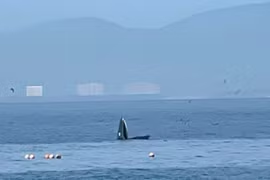
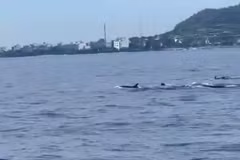
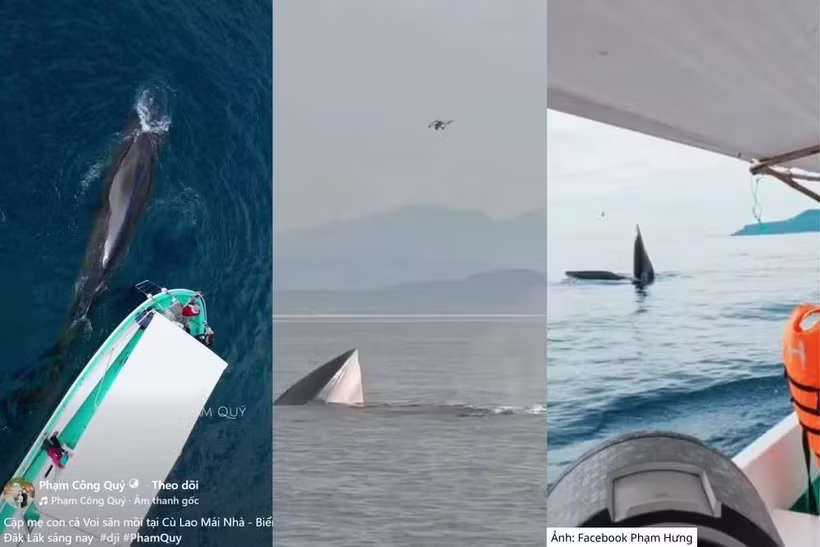
From May 15-17, two whales, one large and one small, were spotted swimming close to the surface while feeding in the waters around Mai Nha islet in Dak Lak province.
After news of the sighting spread, photographers flocked to the area and hired speedboats to go offshore and take photos and film the whales. The resulting images and videos attracted strong public interest for their rare, vivid depictions of the animals, with some posts receiving hundreds or even thousands of interactions.
However, the footage also showed some boats approaching the whales too closely.
In a video posted on social media on May 17, British tourist Alex Wright said he was excited to see whales in Vietnamese waters but noted that several boats had rushed toward and approached the animals from the front.
According to Alex, there were about five boats in the area. At first, they kept their distance. Then two suddenly accelerated and moved very close, almost overtaking the two whales, even though they had been at a perfect distance for observation. They got too close and could have injured the whales or driven them away.
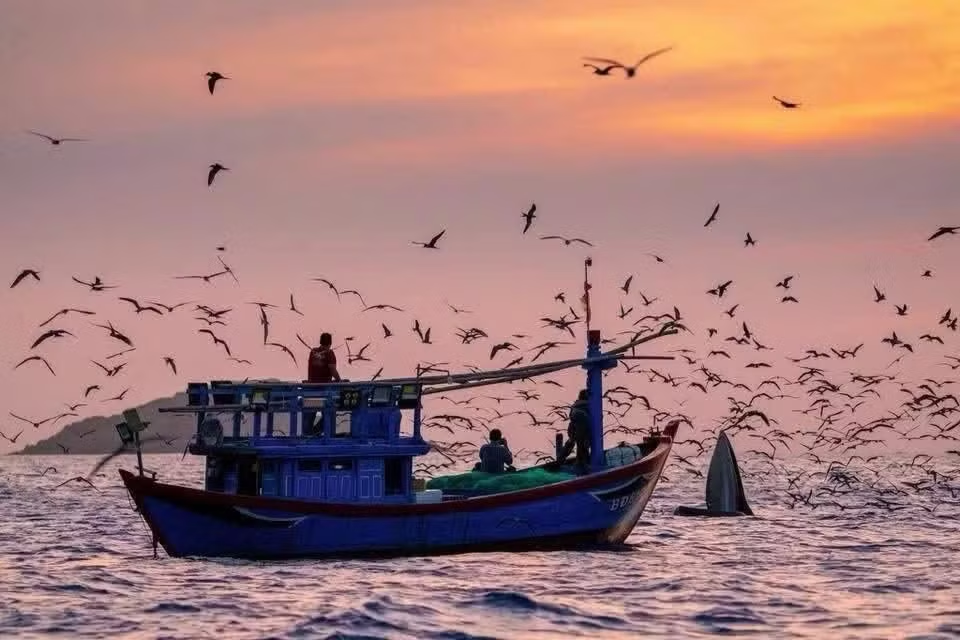
Some photographers have also voiced concerns that such efforts to film and photograph the whales could ultimately do more harm than good.
According to Dr. Vu Ngoc Long, former Director of the Southern Institute of Ecology, the species is widely distributed tropical and subtropical waters, including Southeast Asia.
He said the presence of whales in Vietnamese waters was unusual, as nearshore waters off areas such as Dak Lak and Khanh Hoa are not their traditional feeding grounds. Changes in their behaviour could be linked to climate change and shifts in migration patterns.
Long warned that if people approach too noisily or too closely, the whales could be harmed.
Flying camera drones close above them could also have negative effects, as whales are highly sensitive to sound and variations in other environmental factors, he added.
Don’t let beauty create anxiety
Photographer Nguyen Truong Sinh said the images and videos of Bryde’s whales were both beautiful and moving.
“As someone who has photographed wildlife for years, I understand that feeling. It is difficult to witness such a moment without wanting to raise your camera,” he said.
“But it also makes me wonder: Are we truly getting closer to nature, or are we simply getting closer to images of nature? These are two very different things. Looking at the videos being widely shared, I see both beauty and a sense of unease,” he added.
Sinh described the trend as a rapidly emerging wave of “content hunting.” As fleeting moments become short videos, viral clips, check-in spots and “hot” locations, nature is increasingly drawn into a cycle driven by speed and attention.
“I think this is the time for Vietnam to start talking seriously about the ethics of approaching wildlife,” he said.
Long said people should behave calmly and respectfully to avoid disturbing the whales. He urged them not to approach as closely as shown in some social media footage.
Whales are associated with “Ca Ong,” a sacred cultural symbol long revered by Vietnam’s coastal communities. They should be respected rather than excessively exploited for images, he said.
When Bryde’s whales appeared in the waters off De Gi, formerly in Binh Dinh province and now part of Gia Lai province, in 2025, the Binh Dinh Fisheries Sub-Department recommended that boats and whale-watching tours maintain a minimum distance of 100 metres.
The Centre for Biodiversity Conservation and Endangered Species (CBES) recommends that no more than three boats observe whales simultaneously within the 100-300-metre approach zone. Boats should reduce speed and, preferably, switch off their engines.
The International Whaling Commission says whale-watching activities must not alter the animals’ travel routes, feeding or breeding behaviour, or risk of separating mothers and calves. Repeated minor disturbances, such as those caused by multiple boats or drones, can have long-term impacts on the pods./.