Lam Dong steps up efforts to retain UNESCO global geopark status

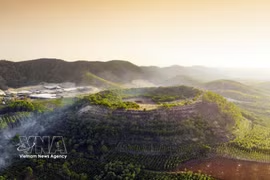
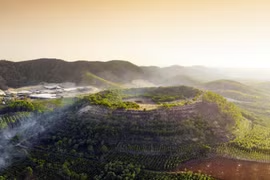
Covering nearly 4,760 square kilometres across 22 communes and wards in western Lam Dong (equivalent to 73.1% of the former Dak Nong province's natural area), the geopark was shaped by millions of years of geological activity and successive volcanic eruptions.

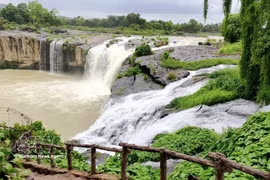
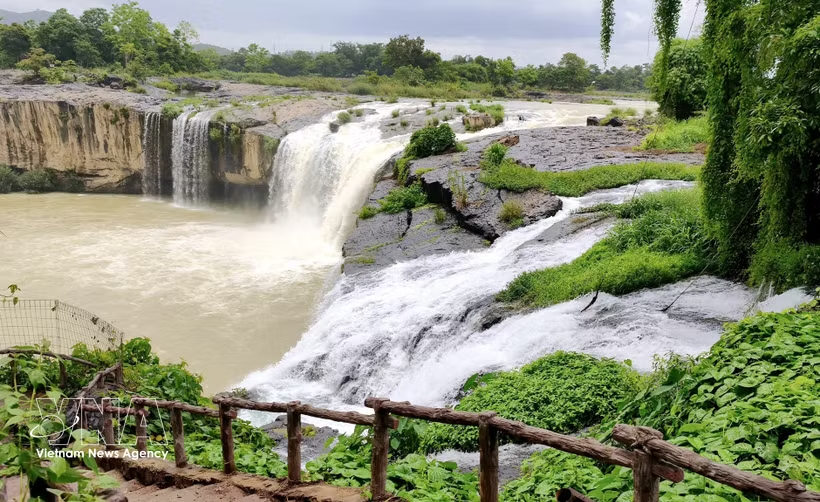
Dray Sap Waterfall lies within the UNESCO Dak Nong Global Geopark in Nam Da commune, Lam Dong province. (Photo: VNA)

Lam Dong (VNA) – The UNESCO Dak Nong Global Geopark in the central province of Lam Dong has begun preparations for its next revalidation, scheduled for July 2027, in a bid to retain its prestigious international designation while promoting its geological, cultural and biodiversity heritage through sustainable tourism.

An open-air museum in Vietnam's Central Highlands

Covering nearly 4,760 square kilometres across 22 communes and wards in western Lam Dong (equivalent to 73.1% of the former Dak Nong province's natural area), the geopark was shaped by millions of years of geological activity and successive volcanic eruptions. These natural processes created a remarkable network of basalt lava tubes, regarded as one of the most significant volcanic cave systems in Southeast Asia.

To date, researchers have identified nearly 50 volcanic caves with a combined length of more than 10 kilometres, along with around 65 geological and geomorphological heritage sites.

The caves preserve valuable evidence of Earth's geological evolution, traces of prehistoric human habitation, distinctive mineral assemblages, fossils and endemic ecosystems. These discoveries indicate that the area once formed part of an ancient ocean millions of years ago.

According to Associate Professor Dr Tran Tan Van, chairperson of the UNESCO Global Geoparks Network in Vietnam, the Dak Nong geopark possesses outstanding features that distinguish it from others of its kind in the country.

"It is an area where relatively recent volcanic activity was particularly intense, with six identified volcanic craters and an exceptional system of volcanic caves," he said, adding that the geopark is also home to numerous spectacular waterfalls.
vnanet-tran-van-tan.jpg
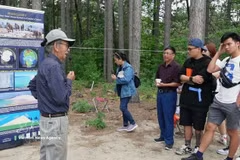
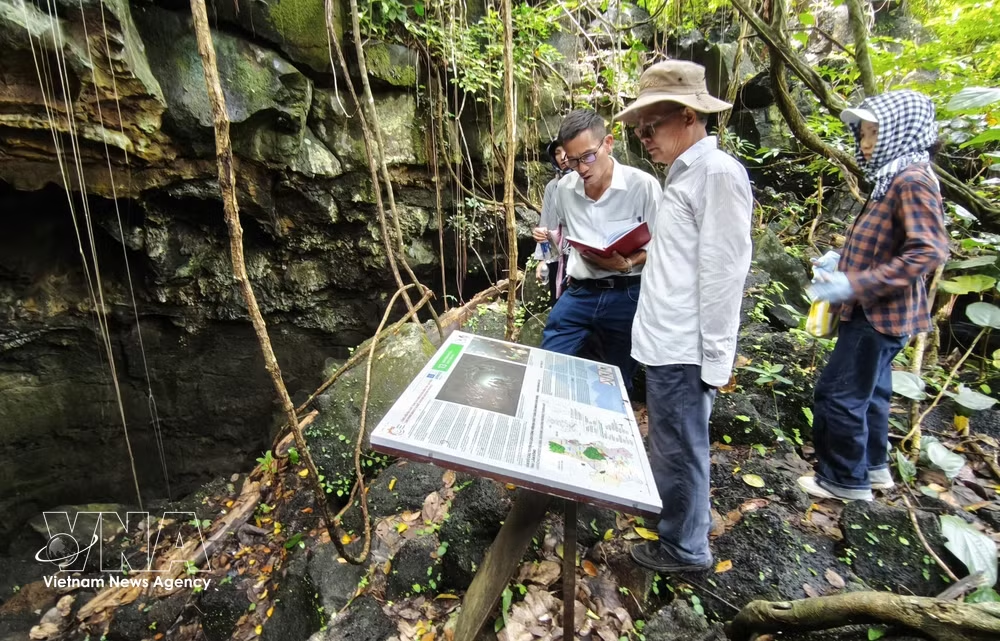
Associate Professor Dr Tran Tan Van (centre, wearing a hat), chairperson of the UNESCO Global Geoparks Network in Vietnam, surveys the C4 volcanic cave system within the UNESCO Dak Nong Global Geopark in Nam Da commune, Lam Dong province. (Photo: VNA)

Beyond its geological significance, the geopark encompasses the Central Highlands gong culture space, recognised by UNESCO as intangible cultural heritage, the special national relic of Ho Chi Minh trail, and the rich cultural traditions of more than 40 ethnic groups living in the area.

"Its cultural heritage is equally diverse and distinctive. It is home to the Ma, E De and M'nong communities, as well as dozens of other ethnic groups from across Vietnam, creating a uniquely rich cultural landscape," Van said.

The combination of geological and cultural heritage has become the geopark's defining strength and was a key focus of a UNESCO expert mission that carried out a field survey from June 8 to 11 as part of preparations for the 2027 revalidation.
vnanet-potal-lam-dong-xay-dung-quy-che-quan-ly-cong-vien-dia-chat-toan-cau-unesco-dak-nong-8699589.jpg
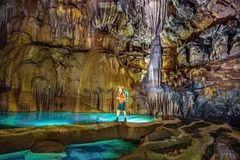
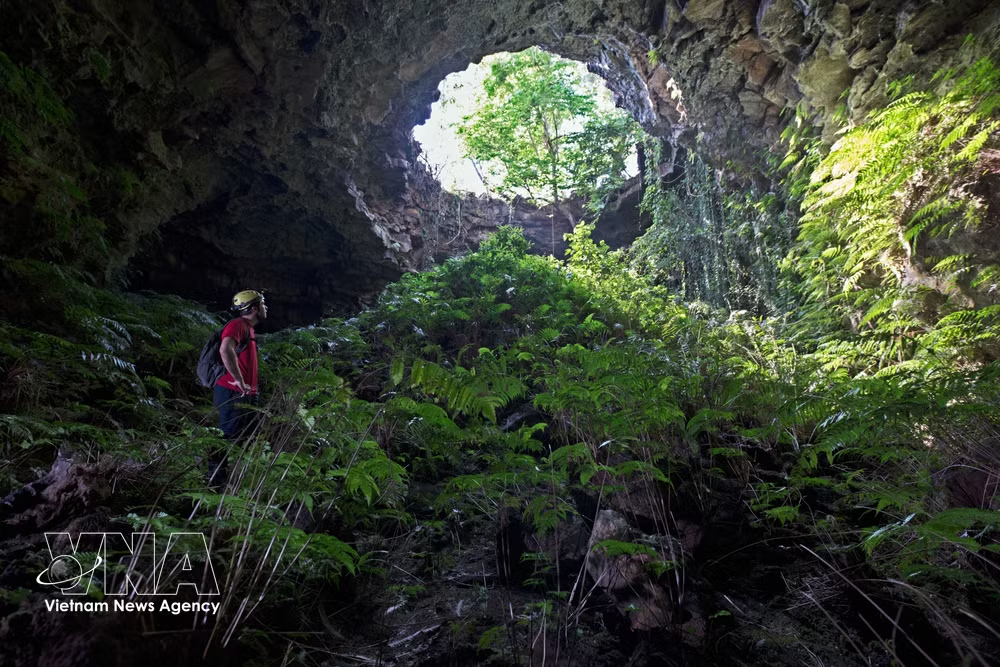
The entrance to volcanic cave C7, Dak Nong Geopark. (Photo published by VNA)

Implementing UNESCO's recommendations

The Lam Dong People's Committee has issued a comprehensive action plan to prepare for the upcoming revalidation.

The priority is to fully implement seven key groups of recommendations made by UNESCO, covering geological heritage conservation and interpretation, enhancement of the geopark's visual identity, infrastructure upgrades, geotourism development, improvements to management and staffing, expansion of partnerships, and deeper integration into the UNESCO Global Geoparks Network.

Under the plan, the provincial Department of Culture, Sports and Tourism serves as the lead agency, coordinating preparations and monitoring implementation across relevant departments and localities.

The department will review the geopark's three visitor routes, 41 heritage sites and other tourist attractions to make proper adjustments. It will also standardise signage, interpretation materials, databases and digital platforms before completing the nomination dossier for submission to UNESCO by January 31, 2027.

Alongside the documentation process, the province will strengthen the geopark's management structure, establish a broader network of domestic and international experts and partners, and expand cooperation with universities, research institutes and geoparks within the Vietnam, Asia-Pacific and global geoparks networks.

New geotourism products, community education programmes, communication initiatives and workforce training schemes will also be developed and trialled ahead of the UNESCO evaluation mission./.
VNA

See more

A stump-tailed macaque (Macaca arctoides) is handed over to the Cam Lo–Dong Ha forest ranger station in Quang Tri province on January 27, 2026 (Photo: VNA)

Rare primate handed over to Phong Nha - Ke Bang National Park

A stump-tailed macaque (Macaca arctoides) was handed over to the Centre for Rescue, Conservation, and Development of Creatures under the Management Board of Phong Nha - Ke Bang National Park in Quang Tri province on July 21, for rehabilitation and eventual release into the wild.

Two Red Lories (Eos rubra) found among the 104 wild animals being kept without documentation proving their lawful origin in Phuoc Thanh commune, Tay Ninh province. (Photo published by VNA)

Criminal proceedings launched against case of illegal keeping, trading of 104 wild animals

They recorded a total of 104 wild animals, comprising 92 African spurred tortoises (Geochelone sulcata) of various sizes, six Red Lories (Eos rubra) and six Green-cheeked Parakeets (Pyrrhura molinae). Authorities said the animals are subject to management under Vietnam's forestry legal regulations and are listed in Appendix II of the Convention on International Trade in Endangered Species of Wild Fauna and Flora (CITES).

BUYO Bioplastics' biodegradable plastic products are made from brewer's grains and sugarcane bagasse. (Photo: nhandan.vn)

Vietnam urged to shift from plastic waste treatment to full life-cycle management

For years, efforts to tackle plastic pollution in Vietnam have focused mainly on waste collection, recycling and disposal. However, as sustainable development and green trade standards become increasingly important, specialists argued that a broader approach is needed, covering everything from product design and material selection to production, consumption and recycling.

Dr. Dang Trung Phuoc (left) is introducing the history and origin of the Pinhey sand dunes (Photo: VNA)

Vietnamese Canadian scientist revives forgotten ecosystems

From restoring an ancient sand dune ecosystem in Canada to promoting the conservation of Vietnam's coastal dunes, native forests and ecological corridors, Vietnamese-born scientist Dang Trung Phuoc has remained committed to using science to revive ecosystems long misunderstood or neglected. His quiet but sustained efforts reflect both a scientist's responsibility to the communities he serves and the enduring commitment of a Vietnamese expatriate to his homeland.

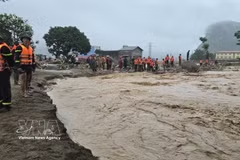
Police and military forces work together to rescue people and assist local residents in affected areas. (Photo: VNA)

PM orders proactive response to heavy rainfall in northern mountainous region

To minimise casualties and damage to public and private property, the PM instructed ministries, sectors and local authorities to strictly implement directions issued by Party General Secretary and State President To Lam, as well as the Government's directives on strengthening disaster prevention and response in 2026.

A view of the Ea So Nature Reserve in Dak Lak province (Photo: VNA)

Rare wild animals released into natural habitat in Dak Lak

Among them are two species classified under Group IB of Vietnam's protected wildlife list, namely the Bengal slow loris (Nycticebus bengalensis) and the Sunda pangolin (Manis javanica). Both are endangered forest species protected under Vietnamese law and are prohibited from commercial exploitation or use.

A large-timber plantation model in Gia Lai province (Photo: VNA)

96-million-USD project promotes agroforestry to cut emissions

The Reduction of Emissions in the Central Highlands and South Central Coast of Vietnam (RECAF) project will run from 2026 to 2031 across the provinces of Dak Lak, Gia Lai, Lam Dong, and Khanh Hoa covering about 145,000ha, according to the International Fund for Agricultural Development (IFAD).

Crested goshawks are handed over by the People's Committee of Dong Le commune, Quang Tri province. (Photo: VNA)

Quang Tri rescues six rare wild animals

The animals are now receiving quarantine, treatment and specialised care. Once recovering their physical condition and wild behaviour, they will be reassessed for release back into the wild.