Hanoi (VNA) – Vietnam's aviation and tourism industries are calling for closer cooperation to address mounting cost pressures while stimulating travel demand, as higher fuel prices, exchange rate fluctuations and rising operating expenses continue to challenge the post-pandemic recovery.
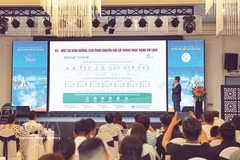
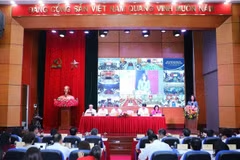
Speaking at a seminar titled "How to stimulate aviation and tourism in the new context?" held in Hanoi on May 15, representatives from government agencies, airlines, and tourism businesses agreed that stronger partnerships between airlines, travel companies, and service providers are essential to maintaining growth and enhancing the competitiveness of Vietnam's tourism sector.
Rising costs squeeze aviation and tourism
Dinh Van Tuan, Deputy General Director of Vietnam Airlines, said the global aviation industry has faced unprecedented challenges due to volatile jet fuel prices, which at times have doubled or even tripled, significantly increasing airlines' operating costs.
"The sharp rise in fuel prices has pushed many airlines around the world to the brink of bankruptcy," he said.
Despite soaring costs, Vietnam Airlines has sought to optimise its operations without transferring the full burden to passengers, aiming to keep airfares affordable and preserve travel demand.
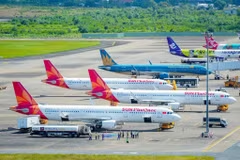
Duong Hoang Phuc, Commercial Director of Vietravel Airlines, said airlines are also grappling with rising expenses for aircraft leasing and procurement, maintenance, spare parts, operational systems, and other services. In addition, global aircraft shortages have constrained fleet expansion, forcing Vietravel Airlines to reduce the number of aircraft in operation to improve efficiency.
Besides higher costs, airlines are under increasing pressure to meet passengers' expectations for better service quality while maintaining competitive ticket prices, creating what industry representatives described as a "dual challenge."
"Aviation is highly cyclical and sensitive to market fluctuations," Phuc said. "Rather than pursuing rapid expansion or competing solely on ticket prices, airlines need to build a sustainable foundation that allows them to adapt to changing market conditions."
Tourism shifts towards quality and experience

According to Nguyen Thi Le Huong, Deputy General Director of Vietravel Holdings, domestic airfares have risen by 15–50%, depending on routes and travel periods, placing significant pressure on tour operators because transportation accounts for a substantial share of package tour costs.
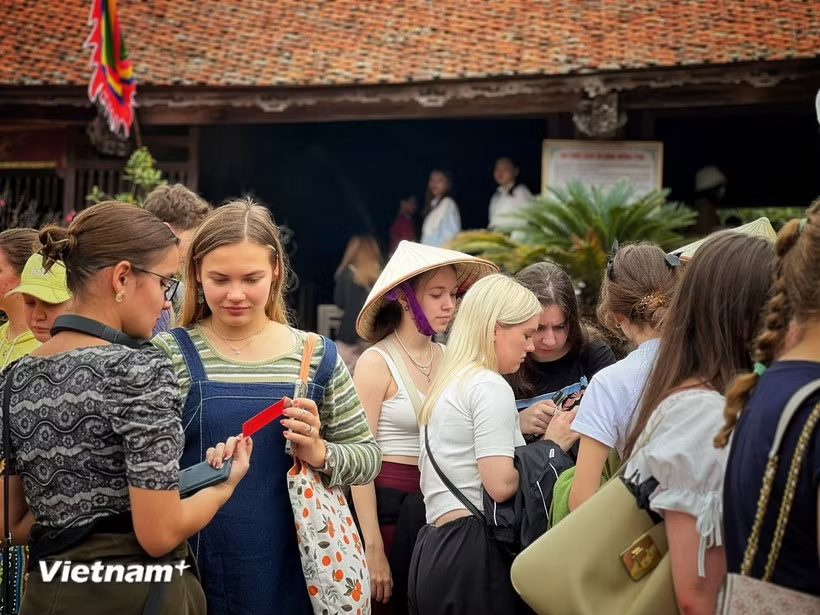
Higher airfares have not only influenced tourists' destination choices but have also reshaped travel patterns. Many travellers are opting for shorter trips to nearby destinations or adjusting their travel schedules to reduce costs. Internationally, destinations offering better value for money are attracting stronger visitor flows.
Against the backdrop of rising global operating costs, Huong said Vietnam's tourism industry should move away from price-based competition and instead focus on improving service quality and visitor experiences.
She suggested developing integrated tourism products combining air, road, and rail transport. While aviation would continue to connect long-haul destinations, road travel could support cultural, culinary and craft village tours, and rail travel could offer slower, more immersive experiences for travelers seeking to enjoy the journey itself.
Closer cooperation needed
Bui Minh Dang, head of the Air Transport Division under the Civil Aviation Authority of Vietnam (CAAV), said the current challenges should not be attributed solely to airlines or passed on entirely to passengers.
He stressed that the recovery of the aviation and tourism sectors requires coordinated efforts from the Government, businesses, and the public.
Echoing this view, Bui Doan Ne, Vice Chairman of the Vietnam Aviation Business Association (VABA), called for stronger cooperation among airlines, tourism businesses, local authorities and service providers through joint promotional campaigns, destination marketing and coordinated support policies.
"If the Government continues to provide strong support while businesses adopt flexible solutions, Vietnam's aviation and tourism sectors will be well positioned for a robust recovery and become new drivers of economic growth," he said.
Nguyen Quy Phuong, head of the International Relations and Tourism Promotion Division under the Vietnam National Authority of Tourism, noted that aviation and tourism have become increasingly interdependent, particularly in many local economies where tourism relies heavily on air connectivity.
He said stimulating tourism demand should go beyond simple price discounts and instead focus on developing integrated travel packages. He also highlighted the need to diversify tourism products, strengthen regional linkages, improve multimodal transport connectivity, and accelerate digital transformation to enhance destination competitiveness.
Such measures, he added, would not only help revive domestic tourism in the short term but also contribute to long-term economic development and strengthen Vietnam's international competitiveness.
Sustainable growth the long-term goal
Uong Viet Dung, Director General of the CAAV, said the aviation industry is implementing the Politburo's Resolution No. 59-NQ/TW on international integration, which calls for building a modern, safe, sustainable and resilient aviation sector capable of adapting to global changes.
The authority will continue improving policies and regulations to create a transparent and competitive business environment while promoting stronger cooperation among airlines, tourism authorities, and localities.
It will also support international market promotion, the launch of new air routes to potential destinations, digital and green transformation initiatives, more efficient air traffic management, lower emissions and improved passenger services, Dung said.
Industry representatives agreed that closer collaboration among stakeholders, combined with more innovative tourism products and improved service quality, will be key to sustaining travel demand and supporting the long-term growth of both the aviation and tourism sectors./.