Bac Khe 1 hydropower dam collapses, all residents evacuated

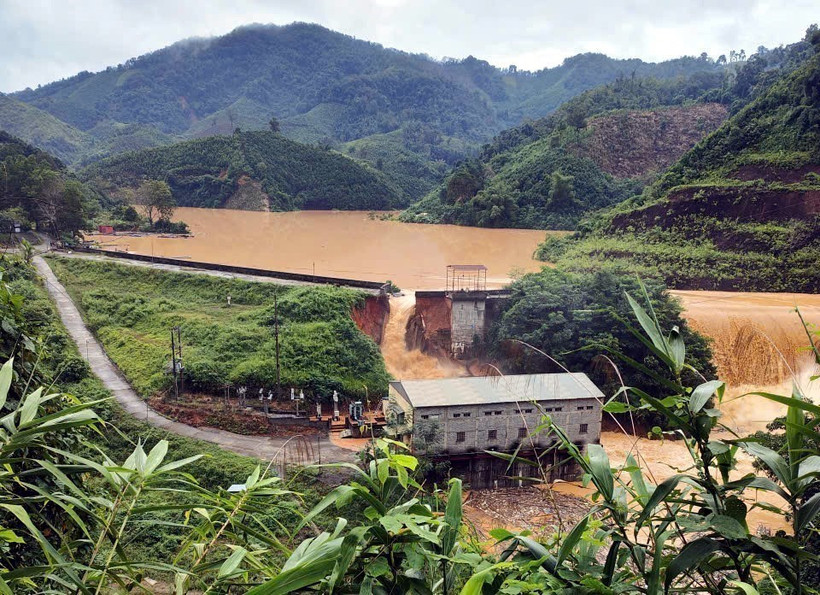
Preliminary assessments suggest the dam failure resulted from prolonged heavy rainfall, which caused the water flow to surge to 1,572 cubic metres per second, breaking a section of the concrete at the water intake. The collapse also destroyed the central control room and damaged equipment. No casualties have been reported, though property losses are still being assessed.

Bac Khe 1 hydropower dam collapses due to heavy rainfall. (Photo: VNA)

Lang Son (VNA) - Bac Khe 1 hydropower dam in Tan Tien commune of northern Lang Son province collapsed on the afternoon of October 7 following prolonged heavy rainfall brought by Typhoon Matmo, and all residents in downstream areas have been safely evacuated, local authorities reported.

According to Nguyen Manh Tuan, Vice Chairman of the Tan Tien Commune People’s Committee, torrential rains persisted from October 6–7, causing a rapid rise in water levels.

At 9:00 on October 7, water inflow and outflow at the Bac Khe hydropower plant both reached 1,181 cubic metres per second. By noon, both figures had increased to 1,562 cubic metres per second. At approximately 13:30, the Bac Khe 1 dam collapsed.

Located in Bac Khe hamlet, the Bac Khe 1 hydropower plant has an installed capacity of 2.4 MW, a catchment area of 325 sq.km and a reservoir volume of 1.572 million cubic metres. The breach was about 4–5 metres wide and 3-4 metres deep.

Preliminary assessments suggest the dam failure resulted from prolonged heavy rainfall, which caused the water flow to surge to 1,572 cubic metres per second, breaking a section of the concrete at the water intake. The collapse also destroyed the central control room and damaged equipment. No casualties have been reported, though property losses are still being assessed.

Local authorities said that earlier in the morning, competent forces had inspected the dam and detected cracks, indicating a high risk of rupture. Warnings were issued immediately, and roughly 200–300 households in four downstream hamlets were evacuated to safe areas.

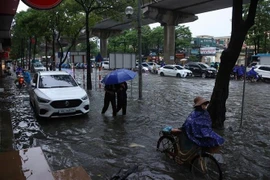
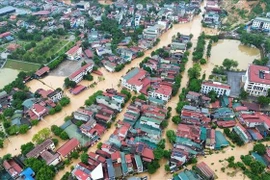
Bac Khe 1 is a small hydropower project with a reservoir capacity of about 3–4 million cubic metres. While the collapse and persistent rainfall have caused localised flooding in nearby communes, including That Khe and Trang Dinh, local authorities confirmed that flash floods and landslides have not occurred.

Provincial leaders and emergency forces are currently coordinating efforts to reach the site and implement response measures.

Police, military, medical and rescue teams have been mobilised for evacuation and emergency support. However, access to the affected area remains difficult as several sections of National Highway 3B have been cut off due to severe flooding.

Authorities are continuing to monitor the situation closely and prioritising safety while working to assess damage and prevent further risks./.
VNA

See more

White-rumped langurs are rescued and conserved at the Endangered Primate Rescue Centre (EPRC) in Cuc Phuong National Park. (Photo: VNA)

Ninh Binh establishes Kim Bang white-rumped langur conservation area

Covering a total area of 3,182ha, the conservation area comprises 3,016.81ha of natural forest, 64.25ha of plantation forest and 100.94ha of land without forest, with no water surface area. It is located in the Ly Thuong Kiet, Tam Chuc and Nguyen Uy wards of Ninh Binh province.

The forum takes place in Hanoi on August 25, 2026. (Photo: VNA)

Vietnam, RoK promote cooperation to deliver on net-zero commitments

Sectors such as semiconductor manufacturing, nuclear power, science and advanced technologies are playing an increasingly important role in national competitiveness and economic development of each country. They also offer considerable room for Vietnam and the RoK to expand professional exchanges, share experience and promote cooperation, particularly among their energy experts.

Storm Narra's projected path as of 7:00 on August 22. (Photo: National Centre for Hydro-Meteorological Forecasting)

Storm brings heavy rains to northern Vietnam

Storm Narra, the fourth to hit the East Sea this year, brought strong winds and heavy rains to northern Vietnam on early August 22, with some areas forecast to receive more than 500mm of rain as the storm moves slowly over the northern waters of the East Sea.

A view of the meeting between Phu Tho authorities and a visiting delegation from Germany's KfW Development Bank in the province on August 20, 2026. (Photo: VNA)

Phu Tho, German bank discuss wastewater treatment plan for Da River's left bank

The project is being implemented in the former Hoa Binh city, now Hoa Binh ward. It has a total investment of 688.7 billion VND (26.38 million USD), including 507.3 billion VND in ODA and 181.4 billion VND in counterpart funding. Major components include a wastewater treatment plant, pumping stations, a collection network, and connection infrastructure.

Construction workers reinforce steel and pour concrete to cover the underground drainage channel, helping collect rainwater and tackle flooding in Da Nang. (Photo: VNA)

A new “shield” against climate change

Smart urban areas are no longer simply about technology; they are becoming a tool that enables authorities to forecast risks, adapt quickly and protect their residents.

Vietnam is exerting efforts to cope with climate change. (Illustrative photo: VNA)

Vietnam approves carbon credit pact with Singapore under Paris Agreement

Signed on September 16, 2025, the Implementation Agreement on carbon credits collaboration under Article 6 of the Paris Agreement on climate change affirms Vietnam and Singapore’s pioneering role and commitment to close cooperation in the international carbon market, making a substantive contribution to global climate response.

A view of Vo Cuong ward, Bac Ninh province (Photo: VNA)

Bac Ninh earmarks over 1.7 billion USD for environmental protection

By 2030, Bac Ninh aims to ensure that all operating industrial clusters and industrial parks have centralised wastewater treatment systems meeting standards, while at least 95% of wastewater in Grade-I urban areas and 70% in Grade-II urban areas is collected and treated to required standards.