Bach Long Vi special zone - A pillar of sovereignty protection, driver of economic development

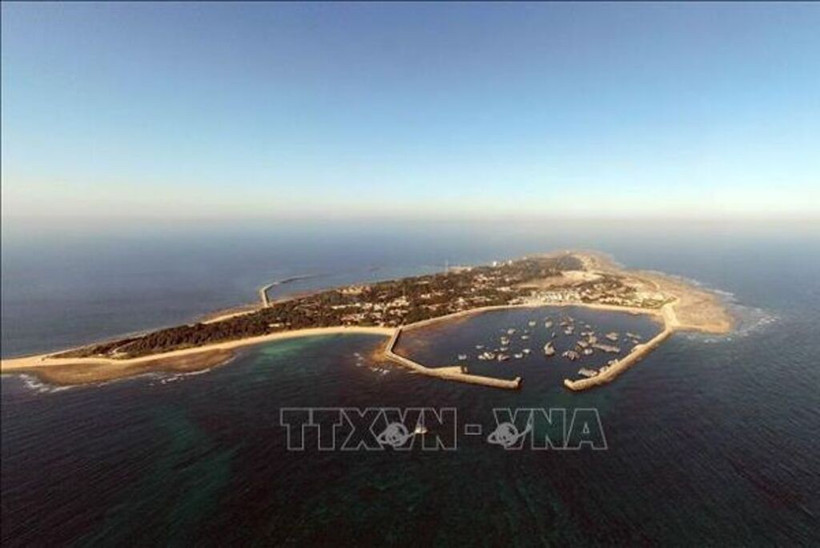
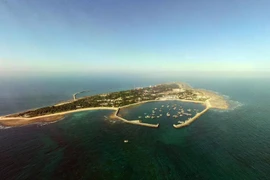
Bach Long Vi is the farthest offshore island in Vietnam's Gulf of Tonkin. Standing as a symbol of resilience and permanence in open waters, the island plays a critical role in ensuring national defence and security, and economic development.

Bach Long Vi is the farthest offshore island in Vietnam's Gulf of Tonkin (Photo: VNA)

Hai Phong (VNA) – Following the administrative mergence, Bach Long Vi Special Zone is taking on a new look, paving the way for strong momentum in development. With its strategic location and special preferential policies, it is gradually affirming its role as a maritime economic hub of the port city of Hai Phong.

A special zone at sea

Bach Long Vi is the farthest offshore island in Vietnam's Gulf of Tonkin. Standing as a symbol of resilience and permanence in open waters, the island plays a critical role in ensuring national defence and security, and economic development.

According to Bui Trung Tien, Secretary of the Party Committee of Bach Long Vi Special Zone, in the 2025 - 2030 period, the island’s transition from a district to a special zone opens up new development opportunities while also presenting distinct and emerging challenges.

The special zone holds a strategic position in terms of national defence and security as well as marine economic development. It is also one of the eight major fishing grounds in the Gulf of Tonkin. The island has received continued attention and support from the Party, State, and Hai Phong authorities through tailored development policies. With unity across the political system, the Party Organisation, administration, armed forces, and residents of the special zone are stepping into this new chapter with determination and optimism.

Nevertheless, Bach Long Vi also faces considerable challenges. The global and regional political situation remain complicated and unpredictable, while hostile forces exploit issues of democracy, human rights, religion, and ethnicity to undermine national stability. Meanwhile, global economic growth and trade are being affected by strategic competition and armed conflicts. Harsh weather, climate change, rising sea levels, marine waste pollution, and declining marine resources, as well as the devastating effects of Typhoon Yagi, have posed serious long-term threats.

Nguyen Thi Bich, former Vice Secretary of the Party Committee and former Chairwoman of the People’s Council of former Bach Long Vi district, expressed pride in witnessing the island's transformation into a special economic-administrative zone as of July 1, 2025 — a historic milestone signalling a strong shift in development.

With its new status, Bach Long Vi can attract more investment, improve living standards for both civilians and military personnel, and implement projects that simultaneously support economic growth and national defence.

Bich expressed her hope that this new status would receive greater attention from central and municipal authorities. She believed Bach Long Vi will mobilise resources, and encourage solidarity and confidence among islanders to remain steadfast in protecting the nation's sovereignty.

A pillar of sovereignty protection and a driver of economic development

Tien perceived the period from 2025 to 2030 as a pivotal moment for Bach Long Vi, transforming it from a remote island district into a central hub for the marine economy, defence and ecological sustainability in northern Vietnam. The zone is committed to strengthening the Party and political system, improving leadership effectiveness, promoting unity, and building a qualified contingent of cadres to meet future requirements.

The Party Organisation, administration, and political system of Bach Long Vi view supporting fishermen and residents in offshore fishing and economic activities as both a goal and a driving force for development. The special zone aims to unlock its full potential by developing fishery logistics, search-and-rescue services, and marine tourism.

Bach Long Vi is upgrading technical and social infrastructure, beginning with seaport facilities and anchorage zones for storm shelter. It is also increasing the frequency of transport between the island and the mainland to support socio-economic development and tourism.

The special zone is committed to the sustainable and efficient use of natural resources, especially water and land, and to protecting the environment, preserving marine biodiversity, and adapting to climate change and rising sea levels.

Bach Long Vi also prioritises cultural development, education, scientific and technological advancement, and healthcare. The island continues to uphold its principle of “social welfare ahead of economic development,” ensuring no one is left behind and continuously improving the quality of life.

By integrating economic, social, environmental, and security priorities, the special zone contributes to safeguarding national sovereignty and ensuring safe living and working conditions for people and businesses.

By 2030, Bach Long Vi aims to achieve a total economic output of approximately 502.73 billion VND (nearly 19.2 million USD), with an average annual growth rate of 4.76%. The economic structure is expected to shift towards services and trade, along with industry and construction, as well as agriculture and fisheries.

The special zone is projected to attract 20,000 visitors in 2030, and health insurance coverage is anticipated to remain at 100%.“Bach Long Vi is no longer just a sovereignty marker in the middle of the sea, it is now a symbol of Hai Phong’s aspirations to reach further into the ocean,” Tien said.

"As a special zone, the island is transforming from a defensive outpost into a dynamic engine for comprehensive development in the marine economy, national defence, and ecosystem preservation. The future of Bach Long Vi lies in harmonising sovereignty protection with the sustainable exploitation of marine potential,” he underscored./.
VNA

See more

Deputy General Director of the Vietnam News Agency Doan Thi Tuyet Nhung (fifth, right) and representatives of regional news agencies and media organisations attend the launch of the Asia-Pacific Media Partnership Organising Committee at the Asia-Pacific Media Forum. (Photo: VNA)

VNA attends Asia-Pacific Media Forum in Shenzhen

Participants in the forum highlighted the need to increase coverage of the region's rapid opening-up and integration, provide comprehensive information on the progress and achievements of cooperation among economies across various fields, and help create a favourable environment for regional development.

Ngo Phuong Ly (right), the spouse of General Secretary of the Communist Party of Vietnam Central Committee and President To Lam, and Kyu Kyu Hla, the spouse of Myanmar President Min Aung Hlaing, visit Van Phuc silk village on September 5. (Photo: VNA)

First ladies of Vietnam, Myanmar visit Van Phuc silk village

Ngo Phuong Ly, the spouse of General Secretary of the Communist Party of Vietnam Central Committee and President To Lam, said the two countries share similarities in silk weaving and can enrich their cultural heritage through exchanges and experience sharing.

Prime Minister Le Minh Hung join students and teachers of the Muong Khuong Inter-level Primary and Secondary Boarding School, Lao Cai province, in the opening ceremony of the 2026–2027 academic year on September 5. (Photo: VNA)

PM urges substantive education reform in 2026–2027 school year

PM Le Minh Hung called on the education sector to continue making strong changes in management mindset and teaching methods, putting learners at the centre, and viewing schools as the foundation, teachers as the driving force, families as a source of support and society as a resource accompanying education development.

General Secretary of the Communist Party of Vietnam Central Committee and President To Lam (Photo: VNA)

Top leader extends message to education sector on new school year

Party General Secretary and President To Lam expressed confidence that with the nation’s traditional fondness for learning, the dedication of teachers and the aspirations of the younger generation, the 2026–2027 academic year will open a new chapter of progress for the country’s education sector.

Students attend the opening ceremony for the 2026–2027 academic year at the primary school campus of the Gia Quat Primary and Secondary School in Hanoi on September 5, 2026. (Photo: VNA)

Students across Vietnam begin 2026–2027 academic year

This milestone school year marks a pivotal transition from laying the groundwork for reform to delivering substantive changes as the country pushes ahead with implementing Politburo Resolution No. 71-NQ/TW on breakthroughs in education and training development.

Team K91 members depart to carry out their mission. (Photo: VNA)

Search efforts continue for Vietnamese fallen soldiers in Cambodia

During the 2026-2027 dry season, Teams K70, K71, K72 and K73 will continue their search and repatriation mission, striving to fulfil the target based on 185 pieces of information concerning 761 graves. Each team is expected to collect at least 100 sets of remains during each deployment.

Mai Nguyen Tuyet Hoa, First Secretary in charge of education affairs at the Vietnamese Embassy in Russia speaks at the closing ceremony (Phôt: VNA)

AI application boosts Russian language training in Vietnam

The programme introduced updated methods for teaching Russian as a foreign language while focusing on the application of digital technology and AI in lesson design to enhance the professional capacity and adaptability of Russian-language teachers amid changes in modern education.

A resident accesses the iHanoi app. (Photo: VNA)

Hanoi launches real-time flood and rainfall map on iHanoi

The map uses a standard colour scale to provide a visual assessment, enabling residents to gauge the level of danger within seconds. The application is expected to strengthen the capital’s disaster response capacity while helping residents plan safer routes during the rainy and stormy season.

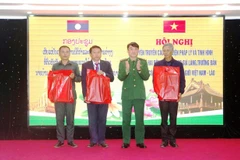
Representatives of Naval Region 4 Command present 32 gift packages to the fishermen. (Photo published by VNA)

32 fishermen rescued at sea safely return home

Thirty-two fishermen rescued after their fishing vessel, coded QNa 90859 TS, encountered an accident at sea, were safely brought back to their hometown in Nui Thanh commune, the central city of Da Nang.

Dr. Do Xuan Hoang, Chairman of the Union of Vietnamese Organisations in Russia. (Photo: VNA)

Resolution marks new policy approach toward overseas Vietnamese

Chairman of the Union of Vietnamese Organisations in Russia Dr. Do Xuan Hoang said the Politburo’s Resolution 23-NQ/TW on overseas Vietnamese (OV) affairs is timely and more comprehensive, better aligned with the rapid evolution of the Vietnamese community abroad after more than two decades under the Politburo’s Resolution 36-NQ/TW issued on March 26, 2004.

Vietnamese companies showcase tourism in Beijing (Photo: VNA)

Hanoi pitches tourism in Beijing to deepen travel ties

Deputy Director of the Beijing Municipal Bureau of Culture and Tourism Guo Zhuqing said Beijing and Hanoi are key gateways for bilateral cultural and tourism exchange, with conditions in place to boost visitor numbers, build trust and expand business cooperation, thus supporting people-to-people ties.

Students contemplate paintings at the exhibition (Photo: VNA)

Vietnamese in Laos, Singapore honour President Ho Chi Minh on National Day

The display features 50 paintings by the late overseas Vietnamese artist Dao Trong Ly created between 2018 and 2024. Co-hosted by the Vietnamese Embassy in Laos, the Vietnam Cultural Centre in Laos and the Vietnam Fine Arts Museum, it serves as both a cultural highlight for Vietnam’s 81st National Day (September 2) and a bridge for Vietnam-Laos special solidarity.