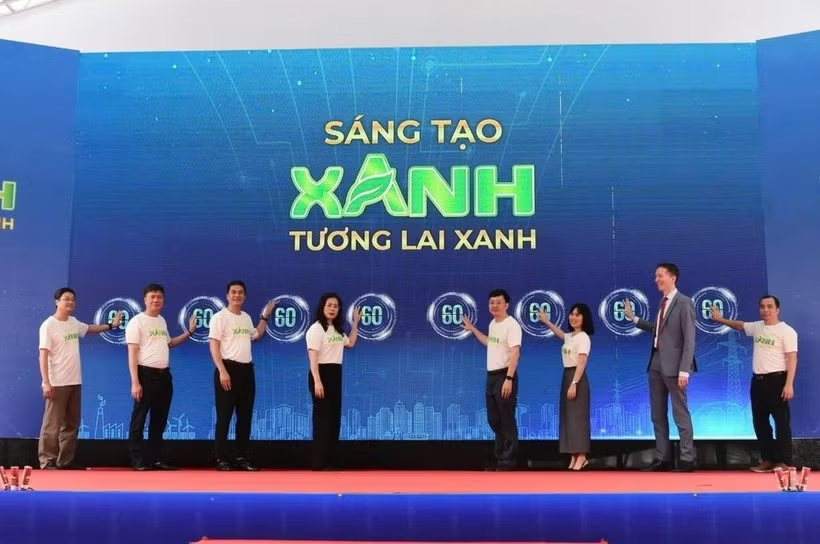
Hanoi (VNA) – With the 2026 message “Green Innovation – Green Future”, the Earth Hour campaign in Vietnam has evolved beyond a simple call to save electricity to become a broader effort to ensure energy security and support sustainable development.
From symbolic lights-off hour to daily green habit
The year 2026 marks 18 years since Vietnam joined the global Earth Hour movement, during which public awareness has shifted significantly. What began as a symbolic act of turning off lights for 60 minutes has gradually transformed into a call to make energy saving a daily habit.
Households are increasingly prioritising energy-efficient appliances, maximising natural light, and reducing standby power use. Messages on energy efficiency are also gaining stronger traction among younger generations, contributing to a more widespread culture of responsible energy consumption.
These behavioural changes have delivered measurable results.
Vietnam Electricity (EVN) reported that electricity savings during the annual lights-off hour have fluctuated but generally trended upward, reaching a record 448,000 kWh in 2025, equivalent to about 942.2 million VND (35,700 USD). While this accounts for a small share of total national consumption, the campaign’s significance lies in its long-term impact on public habits and awareness.
Wave of green initiatives
In response to this year’s campaign, businesses have moved beyond simply switching off signage lights, launching creative communication initiatives that resonate strongly with young people.
Major F&B and service brands have brought a fresh, youth-oriented spirit to the Earth Hour. Starbucks dimmed lighting across all its stores from 8:30 pm to 9:30 pm on March 28, creating a calm space for customers to slow down, reconnect, and allow the planet to “breathe”. Meanwhile, Vietnam Airlines quickly caught the trend by calling on the community to “become a green flag for the Earth”.
Shopping centres have also been transformed into green experience hubs. The Vincom retail system organised recycling workshops, tree-planting activities, and mascot parades under the theme “Green Vietnam Journey”. On a larger scale, the Vietnam Electricity Northern Power Corporation (EVNNPC) launched a wave of engagement through running events and online competitions, attracting nearly 460,000 participants in Quang Ninh, alongside vibrant activities in Lai Chau, Tuyen Quang, and Dien Bien provinces.
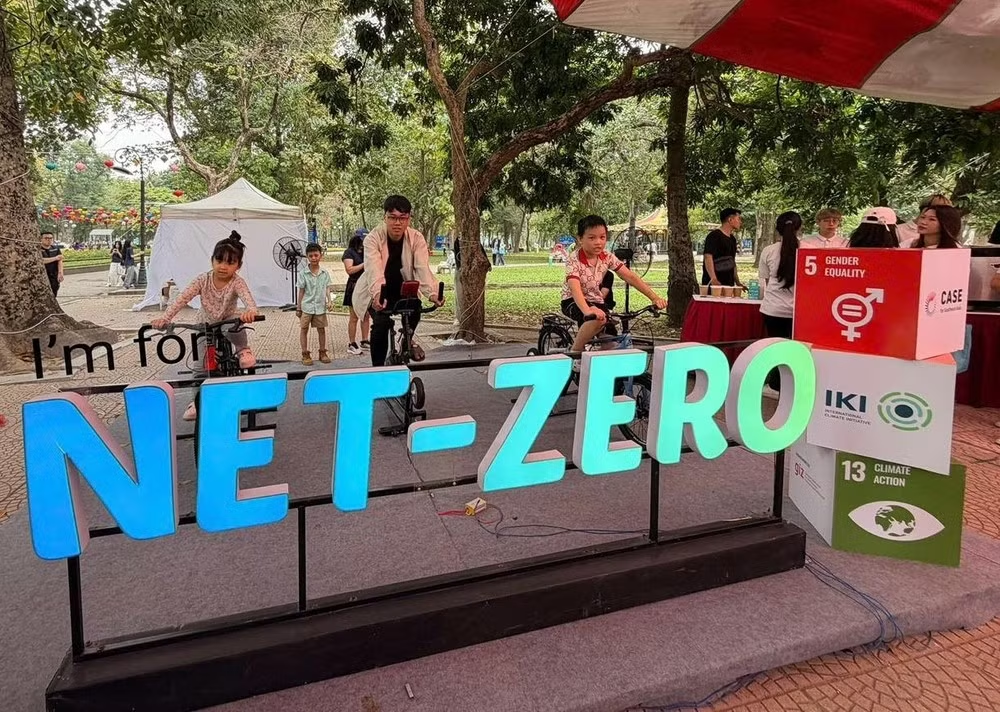
Beyond communication efforts, many manufacturing enterprises are making substantial investments in inverters, high-efficiency LED lighting, rooftop solar power, and circular economy models. These are not only environmental commitments but also critical steps to obtain “green certification” and meet stringent export market requirements
Energy security: Major issue resolved by small actions
Earth Hour 2026 also highlights the growing role of innovation and technology in promoting sustainable energy use. Small but consistent actions can collectively contribute to ensuring stable power supply, particularly during peak periods.
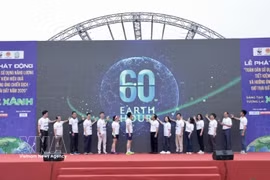
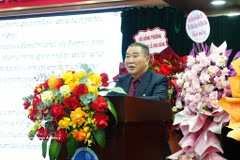
At the campaign’s launch ceremony in Hanoi on March 28, co-organised by relevant ministries and agencies, officials emphasised that electricity saving has become an urgent requirement from the reality.
Data from 2025 showed that Hanoi alone saved 45,705 kWh during the one-hour lights-off event, accounting for over 10% of the national total.
The city aims to reduce electricity consumption by 1.6–1.8% in 2026 compared to the projected demand while continuing to recognise households and organisations with exemplary green energy practices, said Deputy Director of the municipal Department of Industry and Trade Nguyen Dinh Thang.
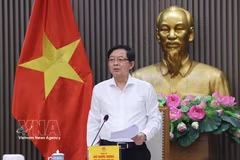
Dang Hai Dung, Deputy Director of the Agency for Innovation, Green transition and Industry Promotion Department under the Ministry of Industry and Trade, noted that Vietnam is entering a new development phase in which energy is not only about meeting demand but also serves as a foundation for macroeconomic stability. In this context, improving efficiency through digital transformation and modern governance is seen as essential.
Ensuring energy security is becoming increasingly urgent as the country pursues fast growth. Key policy documents, including Resolution No. 70-NQ/TW, issued by the Politburo in August 2025, and Directive No. 09/CT-TTg in 2026 by the Prime Minister, identify efficient energy use as a central solution to safeguarding national energy security and achieving net-zero emissions by 2050.
Against this backdrop, Earth Hour 2026 serves as more than a symbolic campaign. It represents a call for sustained action, encouraging individuals, businesses, and communities to adopt smarter energy practices and contribute to long-term climate solutions./.