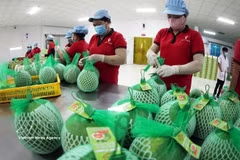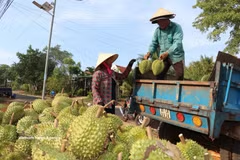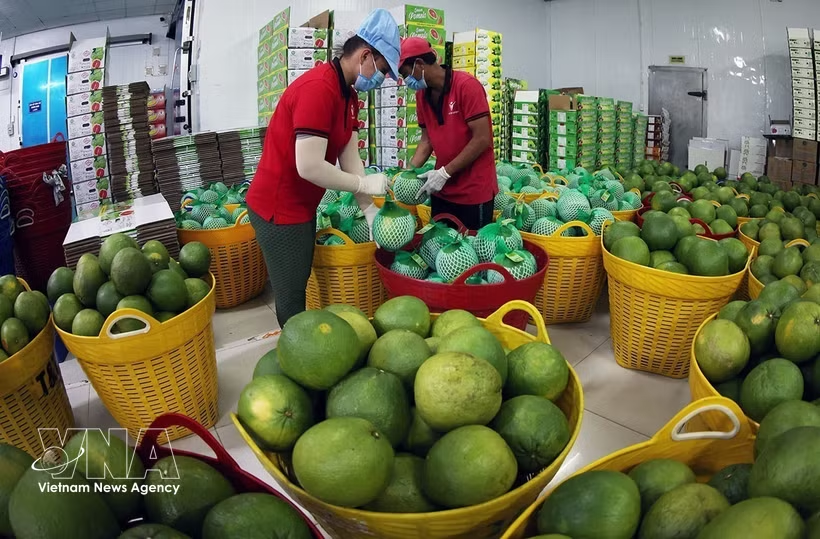
Hanoi (VNA) – With exports to China reaching about 5.5 billion USD in 2025, Vietnam's fruit and vegetable sector has ample room for further growth, provided it strengthens quality control, traceability and fast-track "green lane" customs clearance.
Standardising growing areas, expanding deep processing
Nguyen Quoc Manh, Deputy Director of the Plant Production and Protection Department under the Ministry of Agriculture and Environment (MAE), said China's tighter controls on production unit codes, packaging facilities and phytosanitary standards require Vietnam's fruit and vegetable industry to shift from volume-driven growth to a model focused on quality, value addition and low emissions.
As of May 2026, Vietnam had issued more than 9,500 production unit codes and over 1,500 packaging facility codes for export. Of these, China had approved 4,323 production unit codes and 1,332 packing facilities.
However, the MAE stressed that expanding the number of approved codes is only the first step. Maintaining strict compliance and ensuring consistent quality are even more important as import markets continue to tighten requirements. In recent years, several Vietnamese production unit codes have been suspended or revoked by Chinese authorities due to non-compliance.
Beyond strengthening traceability, experts say Vietnam should accelerate investment in deep processing to reduce dependence on fresh fruit exports, minimise risks during peak harvest seasons and better meet changing consumer demand in China.
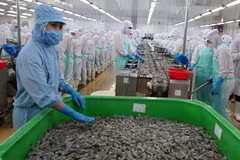
Dinh Cao Khue, Chairman of the Dong Giao Foodstuff Export JSC (DOVECO), said the company's surveys at logistics centres and processing facilities in China showed strong demand for Vietnamese tropical fruit products, including concentrated juice, fruit juice, puree, frozen fruit and vegetables, and canned products.
These processed products generate significantly higher added value than raw exports while creating new growth opportunities as fresh produce exports face increasingly stringent technical barriers and stronger regional competition, he noted.
Improving customs clearance efficiency
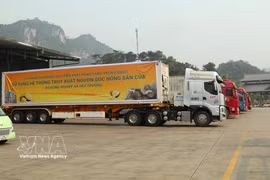
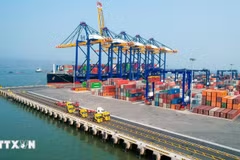
Experts said faster customs clearance and lower logistics costs will be crucial for Vietnam to fully capitalise on opportunities in the Chinese market.
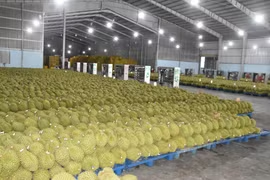
A representative of the Southwest branch of the China Certification and Inspection Group (CCIC) said it has introduced an artificial intelligence (AI)-enabled traceability system for Vietnamese durian exports to China. The system digitalises the entire supply chain, from growing areas and packaging facilities to transportation and customs procedures.
As a result, customs clearance has been reduced to around 24 hours, with some shipments processed in as little as three hours, laying the groundwork for expanding the model to other agricultural products.
However, industry representatives said Vietnam must first address bottlenecks in the assessment and approval of production unit codes.
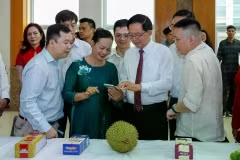
Nguyen Dinh Tung, CEO of Vina T&T Group, proposed that Chinese authorities increase the frequency of online inspections or work with reputable inspection organisations in Vietnam to accelerate the approval of production and packaging unit codes.
He also suggested establishing a "green lane" mechanism for exporters with strong compliance records, green production practices and robust traceability systems, allowing faster customs clearance while ensuring product quality upon arrival.
According to the Agency of Foreign Trade under the Ministry of Industry and Trade, China's retail fruit market is projected to reach around 1.8 trillion RMB (265 billion USD) in 2026, with demand continuing to grow for durian, banana, dragon fruit, mango and other tropical fruits. Removing procedural, logistics and technical bottlenecks will therefore be key to helping Vietnamese fruit and vegetable exports reach new milestones in the Chinese market./.