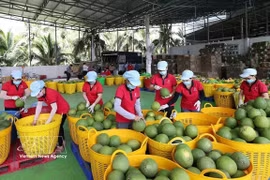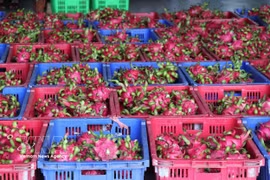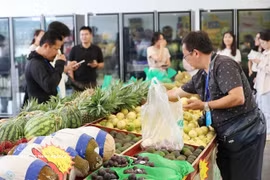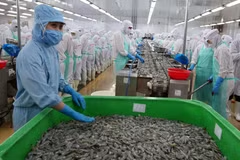
Hanoi (VNA) – Vietnam's fruit and vegetable export turnover reached 3.65 billion USD in the first six months of 2026, up 17.8% year-on-year, making the sector one of the fastest-growing export groups in the agriculture and environment sector.
According to the Ministry of Agriculture and Environment (MAE), fruit and vegetable exports were estimated at 2.18 billion USD in the second quarter.
The ministry forecast that supplies would remain sufficient and the domestic market would stay stable, with no shortages or unusual price fluctuations in the second quarter. However, as many fruits enter their peak harvest season, some localities may face temporary price pressure if storage, processing and consumption capacity fail to keep pace with rising output.
With abundant supplies and stable market demand, fruit and vegetable exports are expected to sustain their growth momentum throughout 2026 while exerting little pressure on domestic consumer prices.
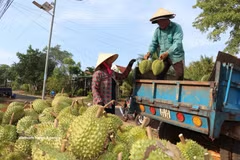
Growth continues to be driven by major fruit products. According to the Vietnam Fruit and Vegetable Association, durian exports generated nearly 562 million USD in the first five months of the year, an increase of nearly 46% from the same period last year, making it the country's top fruit export by value.
Meanwhile, exports of coconuts and lychees also posted double-digit growth thanks to strong demand from major markets, including China, the US and the Republic of Korea (RoK).
Vietnam currently has about 192,000 hectares of durian plantations, according to the Crop Production and Plant Protection Department. Output reached about 1.8 million tonnes in 2025 and is expected to increase to between 2 million and 2.1 million tonnes this year. Vietnamese durian is now exported to 28 markets worldwide.
Nguyen Quoc Manh, Deputy Director of the department, said China remains Vietnam's largest fruit and vegetable export market. In recent years, exports to China have recorded annual growth of around 65–70%, making the industry's development closely linked to maintaining and expanding market access there.
At the same time, the ministry is actively negotiating market access for more fruits in high-value markets such as the US, Japan, the RoK and Australia to reduce dependence on a single destination and diversify export markets.
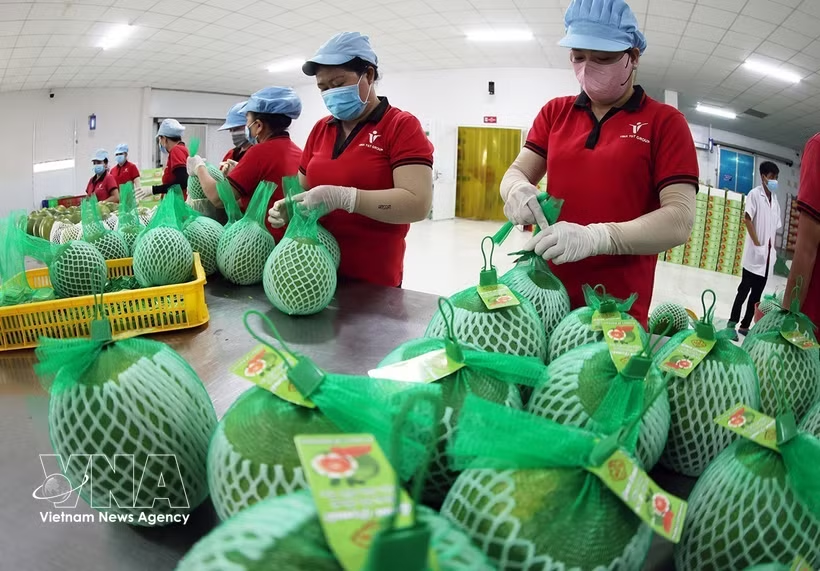
Manh said Vietnam's fruit and vegetable industry has undergone a fundamental shift in its growth model. Instead of expanding cultivation areas, the sector is now focusing on improving quality, increasing added value and promoting sustainable development, as the scope for further expansion of cultivation areas has become limited.
He noted that increasingly stringent quality and food safety requirements imposed by importing markets, particularly the European Union, China and other high-end markets, pose the biggest challenge.
"To enter overseas markets, Vietnamese products must fully comply with the regulations and standards of importing countries. This is a mandatory requirement," he stressed.
In addition, rising input costs caused by global economic and geopolitical uncertainties are placing pressure on producers and businesses, Manh said. Improving the management of growing-area codes, soil nutrition, production standards and product traceability has become essential to enhancing competitiveness.
Over the next five years, the MAE will step up research and breeding of fruit and vegetable varieties suited to domestic production and market demand. The sector will also promote deep processing, expand export markets and implement a low-emission crop production strategy for 2025–2035, with a vision to 2050, aiming to build a greener, more competitive and sustainable fruit and vegetable industry while improving farmers' incomes, he added./.