Hanoi forum targets green energy infrastructure for smart cities

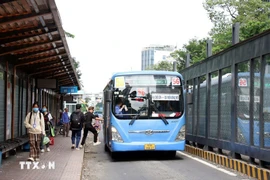
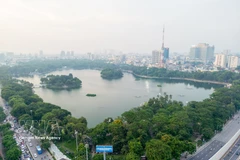
In megacities like Hanoi, Ho Chi Minh City, Hai Phong and Da Nang, curbing vehicle exhaust, scaling clean energy infrastructure and embedding tougher environmental rules into urban planning form the backbone of “clean city” ambitions.

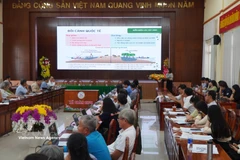
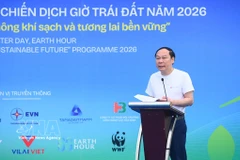
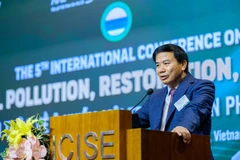
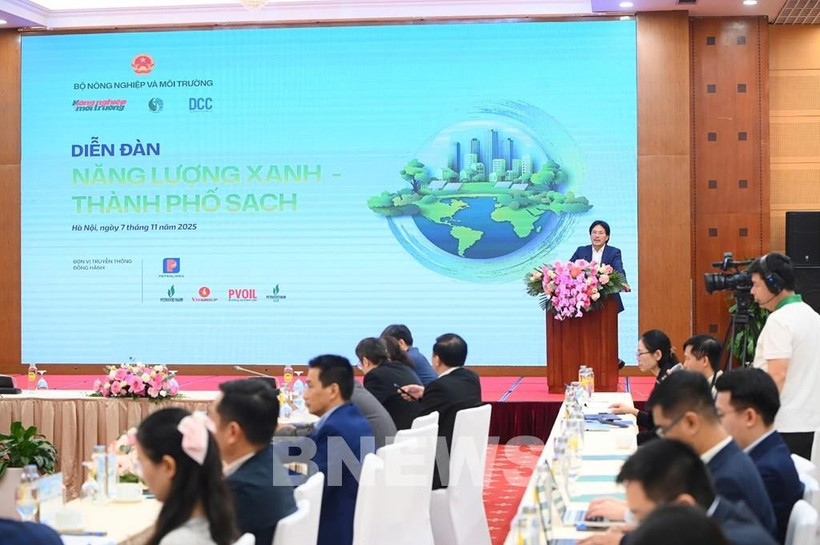
At the Hanoi forum on green energy and clean city development on November 7 (Photo: VNA)

Hanoi (VNA) - The Ministry of Agriculture and Environment hosted a forum on green energy and clean city development in Hanoi on November 7, gathering officials, scientists, businesses and international organisations to outline solutions for green energy adoption and sustainable urban planning.

Deputy Minister of Agriculture and Environment Le Cong Thanh, in his speech, said mounting global pressures from climate change, pollution, resource depletion and ecological imbalance have made green growth and clean energy transition a global trend.

Green energy is central to cutting greenhouse gases, ensuring energy security and driving Vietnam’s long-term pivot to a more sustainable energy system, he said.

In megacities like Hanoi, Ho Chi Minh City, Hai Phong and Da Nang, curbing vehicle exhaust, scaling clean energy infrastructure and embedding tougher environmental rules into urban planning form the backbone of “clean city” ambitions, he added.

Tran Hoai Trang, Deputy Director of the Electricity Authority under the Ministry of Industry and Trade, said the revised Power Development Plan VIII targets a just energy transition and aggressive renewable buildup, increasing their share to 28–36% by 2030 and 74–75% by 2050. Power-sector emissions are slated to hold at 197-199 million tonnes by 2030 before dropping to about 27 million tonnes by 2050, with a ceiling of 170 million tonnes if the Just Energy Transition Partnership (JETP) pledges are met in full.

The plan also calls for the construction of a smart grid capable of efficiently integrating renewable sources, plus accelerated adoption of wind, solar, biomass, hydrogen and green ammonia, while encouraging on-site power generation and consumption, including rooftop solar.

Nguyen Hung Dung, Vice Chairman and Secretary-General of the Vietnam Petroleum Association, said global innovation, finance and trade hubs require smart, low-carbon energy ecosystems - a trajectory already underway in advanced economies via liquefied natural gas (LNG), compressed natural gas (CNG), liquefied petroleum gas (LPG), green hydrogen and low-emission mobility.

Dung laid out five pillars to scale clean fuels and new energy: building transitional ecosystems around LNG and CNG backed by flexible pricing, tax breaks and infrastructure spending; funding research into green hydrogen, biofuels, carbon capture utilisation and storage (CCUS), and green refining; forging supply chains and delivery networks through public-private partnerhips and global tech transfers. He also called for public awareness campaigns and local allocation of land to integrate renewables into smart urban development.

Delegates discussed clean energy ecosystems, standardised fuel adoption, green tech use in transport, urban construction and management, and policy frameworks to speed the shift and back Vietnam’s net-zero 2050 pledge. They urged ongoing regulatory changes, tighter emissions caps, incentives for clean energy uptake, deeper private capital in efficiency and renewables, plus broader industry-group coordination to link policymakers, businesses and the public, coupled with stepped-up outreach to mobilise society toward a low-carbon future./.
VNA

See more

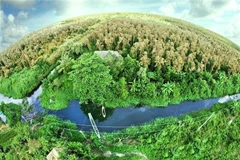
Tram Chim National Park and the Mekong Conservancy Foundation (MCF) organise the workshop on sustainable restoration of wetland ecosystems in the Mekong Delta on March 24. (Photo: VNA)

Solutions sought to restore Mekong Delta wetland ecosystems

Experts at the workshop described wetlands as the “ecological heart” of the Mekong Delta, playing a vital role in water storage and regulation, climate moderation, carbon sequestration, biodiversity conservation, and livelihoods for millions of people through aquaculture, agriculture, and ecotourism. These ecosystems also help reduce disaster risks and enhance climate resilience.

Deputy Minister of Agriculture and Environment Le Cong Thanh speaks at the ceremony to launch major environmental campaign. (Photo: VNA)

Vietnam calls for collective action on water, air, climate and sustainable future

Deputy Minister of Agriculture and Environment Le Cong Thanh underscored that water, climate, and energy are fundamental pillars of sustainable development. In Vietnam, water resources and weather patterns influence every aspect of life, from food and water security to livelihoods, ecosystem stability, and economic growth.

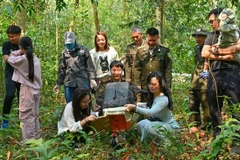
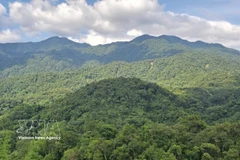
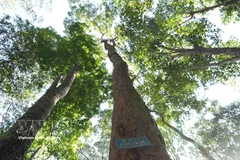
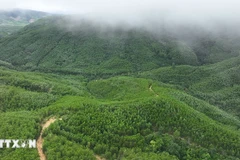
The population of trac (Dalbergia cochinchinensis) trees is strictly protected in the Dak Uy special-use forest. (Photo: VNA)

Vietnam highlights forests’ role in sustainable growth on International Day of Forests

According to Director of the Forestry and Forest Protection Department Tran Quang Bao, forests hold a strategic position in Vietnam’s development. They provide livelihoods for millions of people, particularly ethnic minorities and communities living in mountainous and forested areas, while contributing to environmental protection and disaster prevention.

The World Meteorological Day 2026 carries the theme “Observing Today, Protecting Tomorrow”. (Photo: VNA)

Ministry guides response to World Meteorological Day, World Water Day 2026

The Ministry of Agriculture and Environment urged ministries, agencies, local authorities, embassies, and international organisations to hold practical and effective activities aligned with the themes. Suggested activities include displaying eco-friendly banners, posters, and billboards in public spaces, streets, government offices, and other suitable venues to raise public awareness of the events’ importance.

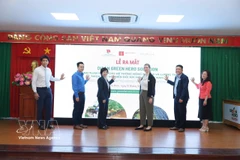
Delegates launch the Green Hero Solution project in Ho Chi Minh City on March 12, 2026. (Photo: VNA)

Vietnam, Denmark cooperate to pilot circular food model

Under the “Green Hero Solution” project, organic food waste will be collected from partner organisations and businesses and processed into compost. The compost will then be used at two Food Bank community gardens, where fresh vegetables will be grown to support disadvantaged households.

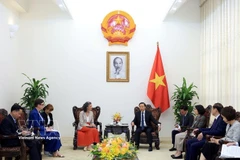
Deputy Prime Minister Tran Hong Ha meets with UNDP Resident Representative Ramla Khalidi and WHO Representative in Vietnam Angela Pratt in Hanoi on March 11. (Photo: VNA)

Vietnam steps up partnership with UNDP, WHO in tackling air pollution

Highlighting Vietnam’s close partnership with the two UN agencies, Deputy PM Ha highly appreciated their important contributions to the country’s development over the years, particularly in policy consultation, institutional reform and promoting sustainable development initiatives.

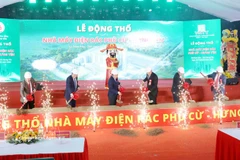
The groundbreaking ceremony for the Phu Cu waste-to-energy plant project in Doan Dao commune, Hung Yen province, on March 6 (Photo: VNA)

Hung Yen breaks ground on 4 trillion VND waste-to-energy plant

With a population of about 3.5 million, Hung Yen generates around 1,850 – 2,000 tonnes of household waste each day, along with about 1,000 tonnes of waste from production and business establishments, posing a major challenge for the locality.