Hanoi inaugurates modern waste-to-energy plant

Seraphin is the first modern waste-to-energy plant in Vietnam fully invested, designed, built, and supervised by a domestic private enterprise, demonstrating the ability of Vietnamese companies to master advanced technologies.

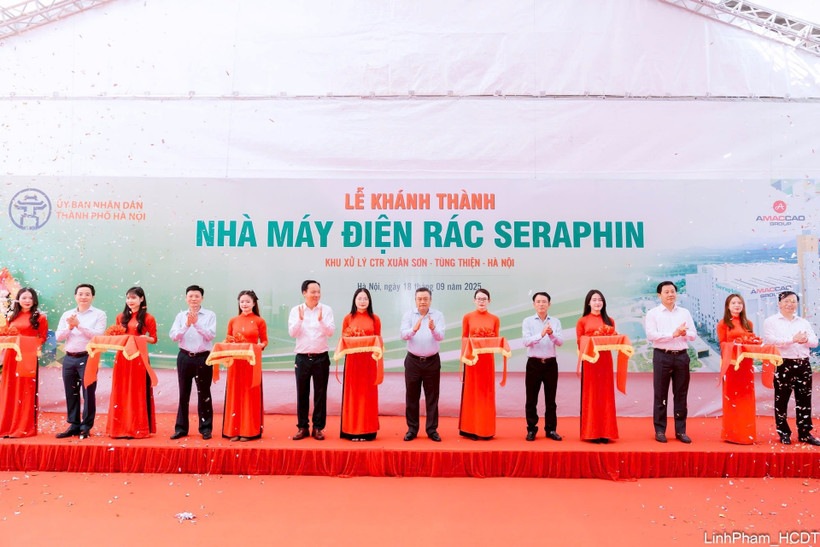
At the inauguration (Photo: VNA)

Hanoi (VNA) – The Hanoi People’s Committee and AMACCAO Group on September 18 inaugurated the Seraphin waste-to-energy plant at the Xuan Son solid waste treatment complex in Tung Thien ward, marking a significant step towards sustainable waste management in the capital.

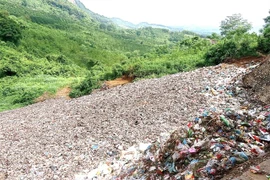
Hanoi currently generates around 7,600 tonnes of household waste each day, placing immense pressure on infrastructure, the environment, and residents’ quality of life. Landfilling has long been the dominant method, but it is outdated and carries significant risks of soil, water, and air pollution. Against this backdrop, the launch of the Seraphin plant is seen as a breakthrough solution.
5-seraphin.png
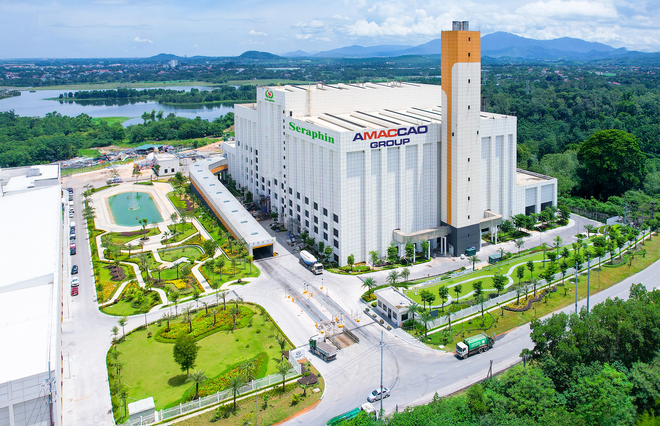
The Seraphin waste-to-energy plant (Photo: VNA)

The facility is capable of treating 2,250 tonnes of waste daily – equivalent to roughly one-third of the city’s total household waste – and generating 37 MW of electricity per hour, enough to supply for tens of thousands of households.

It applies the Martin technology from Germany, reducing the landfill volume by 97–98% while ensuring exhaust gas and fine dust emissions meet the stringent EU2010 standards.

A notable feature is the circular economy approach, with by-products such as slag and ash reused to produce precast concrete and non-fired bricks.

With a total investment of around 5 trillion VND (nearly 190 million USD) and covering 6.28 hectares, Seraphin is the first modern waste-to-energy plant in Vietnam fully invested, designed, built, and supervised by a domestic private enterprise. This demonstrates the ability of Vietnamese companies to master advanced technologies.

The project received investment approval from the Hanoi People’s Committee in late 2021 and began construction in March 2022. After more than three years of continuous work, the plant started receiving and treating waste on May 1, 2025 and began commercial power generation on July 1, 2025. The timeline is considered a “record” as similar projects worldwide often take 5–8 years to be completed.

Speaking at the inauguration, Vice Chairman of the Hanoi People’s Committee Nguyen Trong Dong praised the proactive role of city departments and agencies – particularly the departments of construction, finance, and agriculture and environment – in removing obstacles and ensuring the project was completed on schedule, with high quality and efficiency.

He stressed that the Seraphin plant is only the beginning as the city aims to end the landfilling of household waste entirely in the coming years, replacing it with advanced treatment technologies such as waste-to-energy, recycling, and reuse.

To achieve this, Dong said, Hanoi will continue to expand modern waste-to-energy plants, develop centralised waste treatment zones, and promote waste sorting at source, a key solution linked with raising public awareness. The city also pledged to create the most favourable conditions for enterprises to invest in waste treatment, working towards a cleaner, greener, and more modern Hanoi./.
VNA

See more

Tram Chim National Park and the Mekong Conservancy Foundation (MCF) organise the workshop on sustainable restoration of wetland ecosystems in the Mekong Delta on March 24. (Photo: VNA)

Solutions sought to restore Mekong Delta wetland ecosystems

Experts at the workshop described wetlands as the “ecological heart” of the Mekong Delta, playing a vital role in water storage and regulation, climate moderation, carbon sequestration, biodiversity conservation, and livelihoods for millions of people through aquaculture, agriculture, and ecotourism. These ecosystems also help reduce disaster risks and enhance climate resilience.

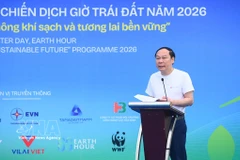
Deputy Minister of Agriculture and Environment Le Cong Thanh speaks at the ceremony to launch major environmental campaign. (Photo: VNA)

Vietnam calls for collective action on water, air, climate and sustainable future

Deputy Minister of Agriculture and Environment Le Cong Thanh underscored that water, climate, and energy are fundamental pillars of sustainable development. In Vietnam, water resources and weather patterns influence every aspect of life, from food and water security to livelihoods, ecosystem stability, and economic growth.

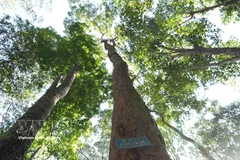
The population of trac (Dalbergia cochinchinensis) trees is strictly protected in the Dak Uy special-use forest. (Photo: VNA)

Vietnam highlights forests’ role in sustainable growth on International Day of Forests

According to Director of the Forestry and Forest Protection Department Tran Quang Bao, forests hold a strategic position in Vietnam’s development. They provide livelihoods for millions of people, particularly ethnic minorities and communities living in mountainous and forested areas, while contributing to environmental protection and disaster prevention.

The World Meteorological Day 2026 carries the theme “Observing Today, Protecting Tomorrow”. (Photo: VNA)

Ministry guides response to World Meteorological Day, World Water Day 2026

The Ministry of Agriculture and Environment urged ministries, agencies, local authorities, embassies, and international organisations to hold practical and effective activities aligned with the themes. Suggested activities include displaying eco-friendly banners, posters, and billboards in public spaces, streets, government offices, and other suitable venues to raise public awareness of the events’ importance.

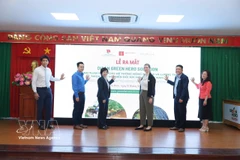
Delegates launch the Green Hero Solution project in Ho Chi Minh City on March 12, 2026. (Photo: VNA)

Vietnam, Denmark cooperate to pilot circular food model

Under the “Green Hero Solution” project, organic food waste will be collected from partner organisations and businesses and processed into compost. The compost will then be used at two Food Bank community gardens, where fresh vegetables will be grown to support disadvantaged households.

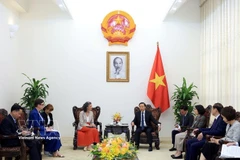
Deputy Prime Minister Tran Hong Ha meets with UNDP Resident Representative Ramla Khalidi and WHO Representative in Vietnam Angela Pratt in Hanoi on March 11. (Photo: VNA)

Vietnam steps up partnership with UNDP, WHO in tackling air pollution

Highlighting Vietnam’s close partnership with the two UN agencies, Deputy PM Ha highly appreciated their important contributions to the country’s development over the years, particularly in policy consultation, institutional reform and promoting sustainable development initiatives.

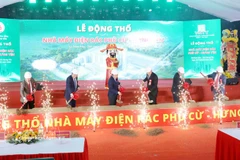
The groundbreaking ceremony for the Phu Cu waste-to-energy plant project in Doan Dao commune, Hung Yen province, on March 6 (Photo: VNA)

Hung Yen breaks ground on 4 trillion VND waste-to-energy plant

With a population of about 3.5 million, Hung Yen generates around 1,850 – 2,000 tonnes of household waste each day, along with about 1,000 tonnes of waste from production and business establishments, posing a major challenge for the locality.