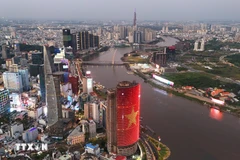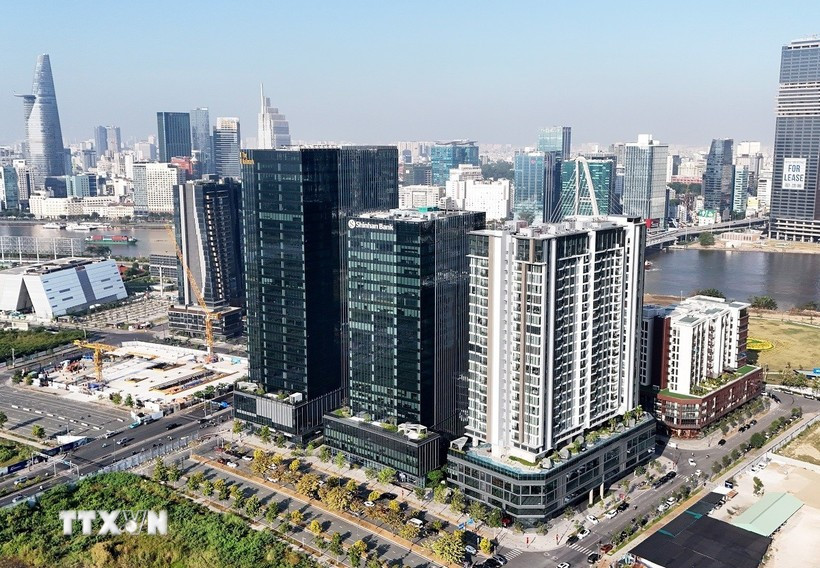
Ho Chi Minh City (VNA) — The Vietnam International Financial Centre in Ho Chi Minh City (VIFC-HCMC) has been structured around four pillar product groups, which are seen as the foundation for gradually building Ho Chi Minh City into a competitive financial hub in the region and the world.
According to the draft Strategy for the Development of VIFC-HCMC, the four pillars are the international capital market, financial services supporting international trade, digital banking and fintech, and new financial products and services targeting niche market segments. Among them, the international capital market serves as the core pillar, focusing on traditional, fundamental and specialised financial services, while the remaining pillars aim to enhance competitiveness and facilitate deeper integration into global financial networks.
The strategy is being led by the VIFC-HCMC Management Authority, with advisory support from the Boston Consulting Group (BCG). At the “VIFC-HCMC Development Strategy” workshop held recently, Arnaud Ginolin, Managing Director of BCG, recommended that in the international capital market pillar, priority be given to developing debt capital markets, including international bonds and cross-border lending, alongside equity capital markets.
Ginolin noted that although Vietnamese enterprises can access international capital markets, transaction costs and intermediary layers remain high. The core value of an international financial centre lies in reducing costs, simplifying procedures and lowering dependence on intermediary hubs such as Singapore or Hong Kong (China), he said.
In parallel, the development of supporting service ecosystems covering legal, tax and advisory services is considered crucial to assisting foreign investors and improving transparency and compliance in Vietnam’s markets.
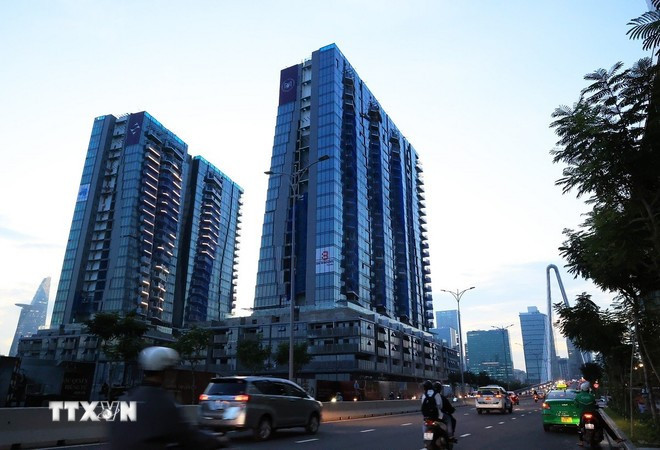
For international trade finance, BCG identified transactional banking, cross-border payments and trade and supply chain finance as products that can be rolled out early. These services are expected to support both foreign-invested and domestic enterprises expanding globally, to form a regional trade finance hub in the next few years.
In digital banking and fintech, the focus is on building digital banking centres where international banks can establish development hubs for digital platforms and applications. Combined with regulatory sandbox mechanisms, this approach is expected to create favourable conditions for foreign investors to participate more deeply in Ho Chi Minh City’s fintech ecosystem. In niche segments, areas such as commodity finance, excluding gold, green finance and maritime finance are considered suitable for implementation over the next three to five years.
BCG’s proposed roadmap prioritises core products such as bonds and IPOs, cross-border payments, digital transactions, fintech and selected permitted commodities in the initial phase, with product expansion following once market foundations gain sufficient credibility.
Emphasising the need for a clear roadmap, Can Van Luc, Chief Economist of BIDV, stressed that priority should be given to traditional financial products that can be implemented immediately.
He also highlighted the role of investment funds, particularly those supporting science, technology and startups, to address funding gaps for innovation, alongside accelerating green finance products such as green bonds, equities and credit.
Contributing to the draft strategy, Nguyen Phuong Ly, Project Director at the Tony Blair Institute, said that while the product portfolio aligns with market potential, clearer targets are needed for each development phase. In the short term, she emphasised institution-building, governance, human resources and policy frameworks as key to establishing investor confidence. In the medium term, VIFC-HCMC should be positioned as a regional financial and capital market centre, gradually expanding its ecosystem to meet cross-border investment demand and move closer to international financial centre status./.