Indonesia, Philippines show interest in Russian oil, gas, fertilisers

Amid ongoing complexities in the Middle East conflict, several Southeast Asian countries, including Indonesia and the Philippines, have expressed interest in cooperation with Russia in oil, gas and fertiliser supplies to help safeguard energy security and agricultural production.

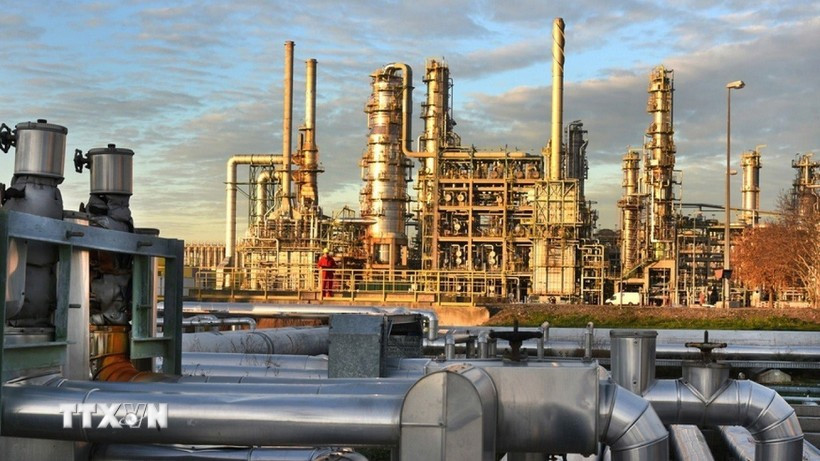
A Russian oil refinery. (Photo: The Moscow Times/VNA)

Moscow (VNA) – Amid ongoing complexities in the Middle East conflict, several Southeast Asian countries, including Indonesia and the Philippines, have expressed interest in cooperation with Russia in oil, gas and fertiliser supplies to help safeguard energy security and agricultural production.

Indonesian Energy and Mineral Resources Minister Bahlil Lahadalia said on March 18 that the Indonesian Government’s priority is to ensure sufficient energy supply at competitive prices for households and industries, as geopolitical risks threaten global oil flows.

Bahlil said Indonesia is not limiting its options to specific suppliers, signaling openness to deeper engagement with Russia if it supports national energy resilience.

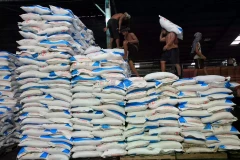
Meanwhile, the Philippines has intensified talks with key fertiliser producers, including Russia, due to the risk of disruptions. Philippine Agriculture Minister Francisco Tiu Laurel said the main problem is not a shortage, but a sharp increase in prices.

Due to transportation restrictions and rising gas prices, fertiliser prices are soaring. In Southeast Asia, the cost of urea has jumped by approximately 40% since the beginning of the conflict./.
VNA

See more

Malaysia considers establishing strategic petroleum reserve

Malaysia considers establishing strategic petroleum reserve

Malaysia, which was previously a net exporter, has now become a net importer due to declining domestic production and rising consumption, with demand estimated at around 800,000 barrels per day compared to production of about 400,000 barrels per day.

Indonesia to halt diesel imports from July

Indonesia to halt diesel imports from July

The move is part of the Indonesian Government’s efforts to strengthen national energy independence by utilising palm oil as an alternative fuel, said Agriculture Minister Andi Amran Sulaiman.

Malaysia’s growing microplastics crisis is largely self-inflicted, driven by domestic waste, weak recycling practices and everyday plastic use, said experts. (Photo: New Straits Times)

Malaysia seeks solutions to microplastic crisis

Microplastics originating from domestic waste and wastewater are increasingly entering the food chain, posing serious threats to seafood safety and the livelihoods of coastal communities.

The new mass emergency alert system SG Alert, which will be used during emergencies such as major fires, chemical or terror incidents, seen on an Apple and Android device on Apr 17, 2026. (Photo: CNA)

Singapore launches new national emergency alert system

SG Alert in Singapore uses cell broadcast technology, enabling alerts to be delivered within seconds without requiring mobile data or collecting personal information. Unlike conventional SMS, which may be delayed during network congestion or depend on internet connectivity, the system ensures fast and reliable message delivery. Alerts can be sent islandwide or targeted to specific affected areas.

Malaysia establishes ‘war room’ to ensure water security

Malaysia establishes ‘war room’ to ensure water security

The establishment of the war room reflects the Malaysian government’s commitment to shift from a reactive approach to a more proactive, data-driven one in managing national water challenges, particularly amid increasingly unpredictable weather conditions caused by global climate change

Indonesia diversifies supply sources to ensure energy security

Indonesia diversifies supply sources to ensure energy security

Indonesia is facing significant supply pressure as crude oil consumption reaches approximately 1.6 million barrels per day, much lower than the domestic production at only around 600,000 barrels per day, forcing the country to rely heavily on imports.