Opportunities for Indonesia’s fertiliser export

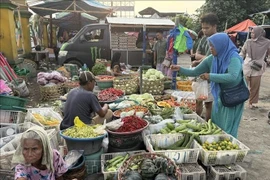
Deputy Agriculture Minister Sudaryono said several countries have approached Indonesia seeking large volumes of urea, showing how the geopolitical crisis could create unexpected export opportunities for Southeast Asia's largest economy.

Jakarta (VNA) – Indonesia is seeing rising international demand for urea fertiliser as geopolitical tensions in the Strait of Hormuz threaten to disrupt global supply chains, creating potential export opportunities for the country’s fertiliser industry.

Deputy Agriculture Minister Sudaryono said several countries have approached Indonesia seeking large volumes of urea, showing how the geopolitical crisis could create unexpected export opportunities for Southeast Asia's largest economy.

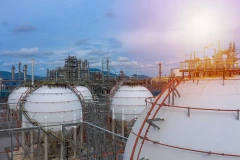
The Strait of Hormuz is a crucial shipping route for agricultural inputs. Qatar, Saudi Arabia, Oman and Iran are among the world’s major suppliers of urea and phosphate fertilisers. Any prolonged disruption could trigger a global shortage of nitrogen-based fertilizers widely used in agriculture.

State-owned fertiliser company Pupuk Indonesia said it has the capacity to maintain domestic supply while responding to rising international demand.

Corporate Secretary Yehezkiel Adiperwira said the Pupuk Indonesia Group currently has a total fertiliser production capacity of 14.5 million tons per year.

The company’s urea production capacity alone is sufficient to meet Indonesia’s domestic needs. Sudaryono said the spike in demand could also temporarily extend the lifespan of several older fertilizer plants that were previously scheduled for gradual replacement due to inefficiency.

Pupuk Indonesia is currently the largest urea producer in the Asia-Pacific, Middle East and North Africa regions, positioning the state-owned firm to help stabilise domestic fertiliser supplies even as geopolitical tensions reshape global markets./.
VNA

See more

Thailand’s capital rolls out “Phone off, learning on” programme. (Photo: nationthailand.com)

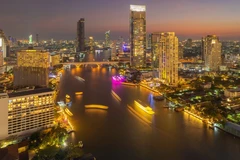
Thailand’s capital rolls out “Phone off, learning on” programme

Bangkok Governor Chadchart Sittipunt said this initiative is a proactive measure to regulate and monitor the use of digital devices in schools, thereby enhancing an effective learning environment and preventing negative impacts on health and behaviour caused by excessive screen time.

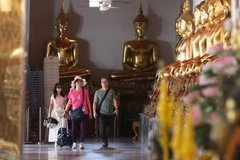
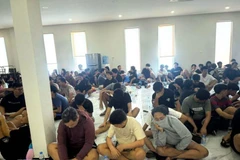
Visitors to a pagoda in Bangkok, Thailand (Photo: Xinhua/VNA)

Thailand tourism plans response to Middle East conflict

The Tourism Authority of Thailand (TAT) is promoting Thailand as a safe destination and plans to suggest the establishment of a strategic operations unit to monitor flight capacity, load factors, oil prices and travel costs.

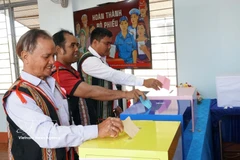
A large number of ethnic minority voters in Gao commune, Gia Lai province, head to polling stations early in the morning. (Photo: VNA)

International media spotlight Vietnam’s National Assembly election

The election of deputies to the 16th National Assembly and People’s Councils at all levels for the 2026–2031 tenure is an important political event demonstrating the people’s right to mastery in choosing outstanding representatives who will convey their will and aspirations to the bodies of State power.

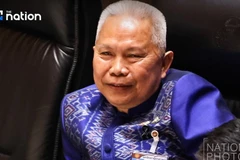
Sophon Saram of the Bhumjaithai Party is elected Speaker of Thailand's House of Representatives on March 15, 2026. (Photo: nationthailand.com)

Thailand elects new parliamentary speaker

Sophon Saram of the Bhumjaithai Party received 289 votes to become Speaker of the House of Representatives, compared to 123 votes for Parit Wacharasindhu of the People’s Party.

China Central Television (CCTV) reports on Vietnam’s election.( Photo: VNA)

International media spotlight Vietnam’s Election Day

Russia’s Sputnik underscored the election’s significance in consolidating the new-term administration apparatus, advancing institutional reforms and enhancing technological application in electoral activities, thereby contributing to political system reinforcement and national development.

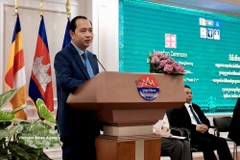
Cambodian Information Minister Neth Pheaktra speaks at the event. (Photo: VNA)

Cambodia intensifies campaign against fake news, misinformation

The initiative aims to enhance information quality in the digital era through three main strategies. These include combating the spread of fake news within Cambodia and across the Greater Mekong Subregion, promoting verified news produced by professional media organisations and digital content creators, and strengthening media literacy education for the public in Cambodia and neighbouring Mekong countries.

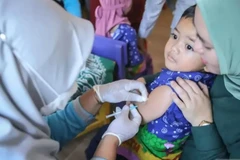
A child receives a measles vaccination in Sumenep, East Java, Indonesia (Photo: Antara)

Indonesia faces surge in measles cases

In response, doctors are advising parents to limit their children's exposure to large gatherings, especially during the upcoming Eid al-Fitr holiday, when families often meet in large numbers, increasing the risk of disease transmission.

Authorities in Banteay Meanchey province raids a building used for online fraud in Poipet city, arresting more than 270 people and seizing a large amount of evidence in July (Photo: AKP/VNA)

Cambodia proposes life imprisonment for leaders of online scam networks

A 2024 report by the United States Institute of Peace estimated that illicit revenues from online scams in Cambodia could exceed 12.5 billion USD annually, equivalent to roughly half of the country’s GDP. Prime Minister Hun Manet has previously said the scam centres are seriously damaging Cambodia’s economy and international image, pledging to “clean up” the problem.

Laos confirms stable fuel supply

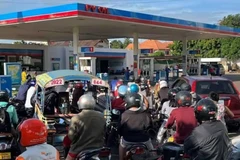
Laos confirms stable fuel supply

Government spokesperson Sonexay Sitphaxay and Lao Deputy Minister of Industry and Commerce Chanthaboun Soukaloun provided an update on the national fuel supply situation.

Singapore diversifies its sources of imported LNG, and also has a fuel stockpile for power-generation companies to draw from. (Photo: Reuters)

Singapore adopts multiple measures to safeguard energy security

On the measures the Singapore government has in place to handle the rise in global gas prices, Tan highlighted that around half of the city-state’s gas is piped to Singapore from the region and is therefore “unaffected”. Moreover, the country diversifies its sources of imported LNG, and hence is “not overly exposed to the Middle East”, he noted.