Jakarta (VNA) – Indonesia plans to fast-track the development of renewable energy, aiming to build 100 gigawatts (GW) of solar power capacity within the next two years as part of efforts to advance energy transition and strengthen national energy security.
Speaking during a recent cabinet meeting at the Presidential Palace in Jakarta, Indonesian President Prabowo Subianto said the government has instructed a special task force on renewable energy and energy conservation to fast-track the large-scale solar programme.
According to the leader, the solar power expansion will require about 100,000 ha of land. The government has already identified large areas suitable for development, including around 67,000 ha in West Java.
Prabowo said the government is also considering land owned by state forestry company Perhutani, which controls about 800,000 ha across Java.
Beyond solar energy, he said the government is promoting alternative fuels such as biodiesel and bioethanol. Agricultural commodities including palm oil, sugarcane, cassava and corn are expected to play a larger role in producing bioethanol as a substitute for gasoline.
Indonesia is also seeking to expand geothermal and hydropower development to strengthen long-term energy resilience, he added.
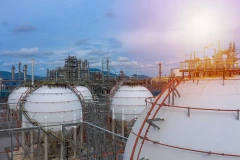
In the near term, the Indonesian government is banking on several newly discovered gas reserves to support domestic energy supply.
The President highlighted a major gas field discovered in the Andaman Sea off Aceh. The project could support plans to build a natural gas pipeline network connecting northern Aceh to other parts of Sumatra and eventually to Java.
He also said the government will soon advance development of the Abadi gas field in the Masela Block in the Arafura Sea near Maluku. The project is expected to produce about 9.5 million tonnes of liquefied natural gas annually, along with 150 million standard cubic feet per day of pipeline gas and around 35,000 barrels of condensate per day.
Prabowo said Indonesia continues to explore additional gas reserves in other regions, including Papua, as the country prepares to navigate potential global energy supply disruptions./.