Inter-provincial heritage link ushers in new era of destination management

The launch of a tourism route connecting Ha Long Bay and Lan Ha Bay marks more than an administrative milestone. It signals a shift from managing heritage sites within administrative boundaries to a more integrated approach to destination governance.

Hanoi (VNA) - The launch of a tourism route connecting Ha Long Bay and Lan Ha Bay marks more than an administrative milestone. It signals a shift from managing heritage sites within administrative boundaries to a more integrated approach to destination governance.

A long-standing bottleneck within Vietnam's first inter-provincial UNESCO World Heritage site – Ha Long Bay–Cat Ba Archipelago – has been removed as Quang Ninh province and Hai Phong city officially launched a cross-boundary passenger transport service linking the two bays.

Tickets for the new routes went on sale on April 4 at Tuan Chau Passenger Port and Ha Long International Cruise Port.
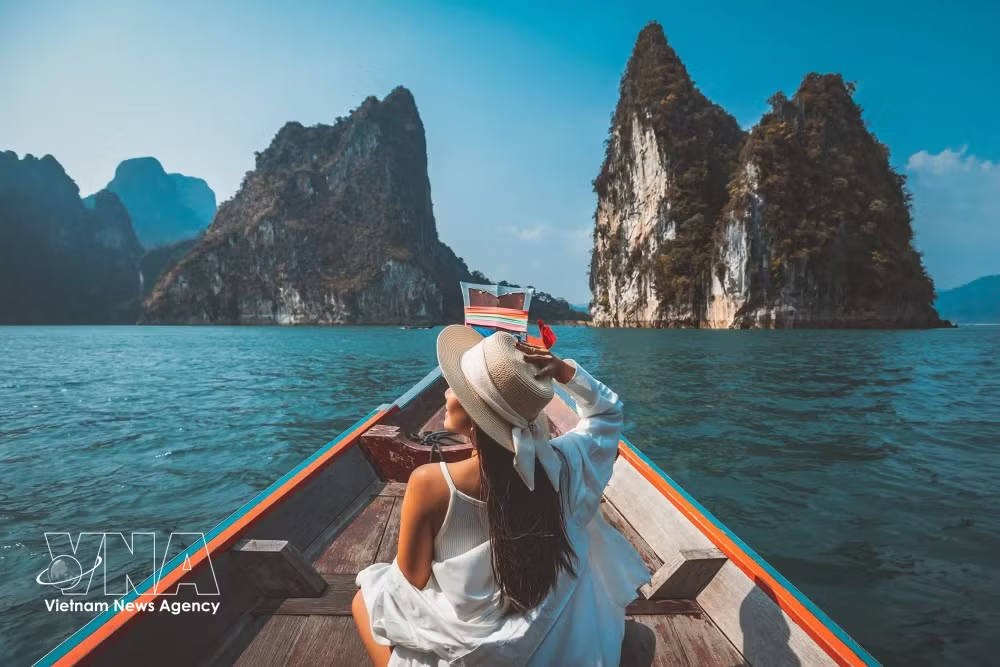
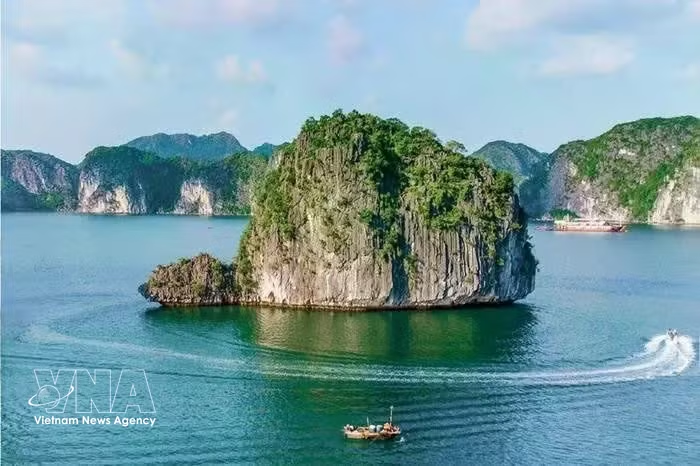
vnanet-plus-t4-ngoc-anh-1.jpg
Quang Ninh is a must-visit destination for both domestic and international tourists. (Photo: Collaborator/Vietnam+)

For years, although the two bays belong to the same Gulf of Tonkin ecosystem, they were managed separately, preventing visitors from enjoying a seamless travel experience and limiting the full tourism potential of the shared heritage.

The new coordination mechanism establishes a unified framework for licensing, regulating and supervising cruise operations between the two bays, enabling tourism businesses to optimise itineraries, develop new products and improve services.

The integrated routes also create a continuous heritage corridor, linking Ha Long Bay's spectacular limestone caves and geological formations with Lan Ha Bay's beaches, Cat Ba's forests and traditional floating fishing villages.

Four new itineraries now allow visitors to explore two or even three bays on a single journey. Instead of the traditional two-day-one-night cruises, tourists can choose more flexible two- or three-day itineraries featuring kayaking, cave exploration, beach activities and visits to local fishing communities.

Longer stays are expected to increase visitor spending, particularly among high-end travellers, a key target market for Vietnam's tourism industry.
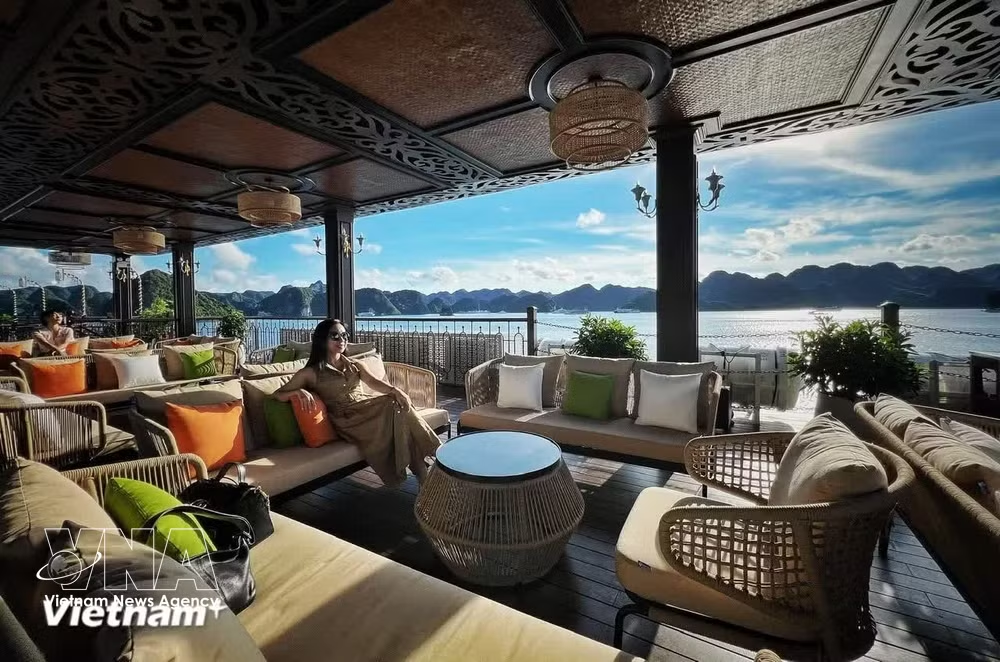
vnanet-plus-t4-ngoc-anh-2.jpg
The newly opened route allows visitors to explore two or even three bays in a single journey. (Illustrative photo: Xuan Mai/Vietnam+)

Nguyen Thi Hanh, Vice Chairwoman of the Quang Ninh People's Committee, said the joint regulations governing cruise operations between Ha Long Bay and Lan Ha Bay marked a new stage in tourism cooperation between Quang Ninh and Hai Phong and would provide fresh momentum for the 2026 summer tourism season.

She said the new mechanism would unlock significant tourism potential for both localities by attracting more visitors and enhancing the value of the shared heritage.

To ensure effective implementation, the Ha Long–Yen Tu World Heritage Management Board has been instructed to work with cruise operators to standardise operating procedures and ensure vessels comply with technical safety and environmental regulations. Border guards, inland waterway police and port authorities have also been tasked with facilitating vessel operations while maintaining security, enforcing regulations and ensuring a safe, sustainable business environment.
vnanet-plus-t4-ngoc-anh-3.jpg
Authorities have been instructed to facilitate cruise operations while strengthening management to ensure safety, security and public order. (Illustrative photo: Collaborator/Vietnam+)

According to the Ha Long–Yen Tu World Heritage Management Board, the new mechanism is expected to attract an additional 5,000–6,000 domestic and international visitors each day, with more than 50 overnight cruise vessels travelling between Lan Ha Bay and Ha Long Bay daily.

More importantly, the initiative represents a fundamental shift in heritage management. Rather than treating the two bays as separate destinations divided by administrative boundaries, it creates a unified tourism space where their natural and cultural assets complement one another, offering visitors a richer and more coherent experience while establishing a new model for integrated destination governance in Vietnam./.
See more

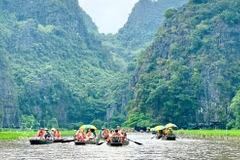
Ninh Binh is praised for its limestone mountains, rice fields and winding rivers. (Photo: VNA)

French magazine spotlights Vietnam as destination for diverse experiences

Paris Match says Vietnam's appeal extends beyond its landscapes and luxury resorts. Its unique combination of nature, history, cultural heritage and local life offers travellers a wide range of authentic experiences, making the country an increasingly attractive destination for international travellers.

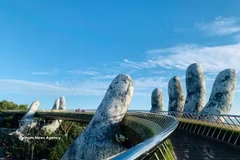
From Da Nang, tourists can easily access attractions such as Sun World Ba Na Hills with its iconic Golden Bridge. (Photo: VNA)

Da Nang emerges as hub for multi-destination travel

Da Nang’s appeal has been further strengthened after being ranked second on Lonely Planet’s list of Asia’s most attractive summer destinations. The recognition underscores the city’s growing role as a tourism and leisure hub in the region.

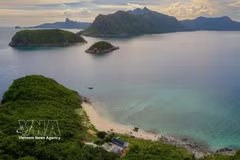
Con Dao tops Travel + Leisure’s list of the world’s 30 hidden islands around the world for off-the-grid adventure and seclusion. (Photo: VNA)

Con Dao named world’s top hidden island destination

According to the Vietnam National Authority of Tourism, Con Son, the largest island in the Con Dao archipelago, is renowned for its dramatic granite cliffs, pristine beaches and crystal-clear waters off Vietnam’s southeastern coast.

The Eye Mountain, one of the signature attractions of the Non Nuoc Cao Bang UNESCO Global Geopark. (Photo: VNA)

Cao Bang seeks to boost sustainable tourism

During the first five months of 2026, Cao Bang welcomed nearly 1.3 million visitors, generated 1.43 trillion VND (54.3 million USD) in tourism revenue, and recorded an average accommodation occupancy rate of 53%.

Phong Nha is best known for its dramatic limestone karsts, vast primary forests and spectacular cave systems within the UNESCO-recognised Phong Nha–Ke Bang National Park. (Photo: VNA)

Phong Nha named among top nature-connected wellness destinations

According to the Quang Tri provincial Department of Culture, Sports and Tourism, Agoda recently unveiled Asia's Hidden Nature Retreats for 2026, featuring places that offer visitors opportunities to unwind, restore mental well-being and recharge amid tranquil natural surroundings.

Da Nang appeals to visitors thanks to its combination of beach holidays, cultural and heritage experiences, entertainment, cuisine and convenient transport links. (Photo: VNA)

Da Nang ramps up summer tourism activities

The city appeals to visitors thanks to its combination of beach holidays, cultural and heritage experiences, entertainment, cuisine and convenient transport links.

Inside Hung Thoong Cave in the Phong Nha – Ke Bang National Park. (Photo published by VNA)

Phong Nha – Ke Bang earns UNESCO World Biosphere Reserve status

The recognition marks the third UNESCO accolade for Phong Nha – Ke Bang, which was inscribed as a World Natural Heritage Site in 2003 and again in 2015. The latest designation highlights the park's global ecological significance while opening new prospects for conservation and sustainable development.

Sun Group officially introduces world-class tourism ecosystems, including Sun Paradise Land Phu Quoc, to the Korean market. (Photo: Sun Group)

Sun Group makes SITF 2026 debut with Phu Quoc flight promotions

For many years, the RoK has remained one of Vietnam’s largest international tourism markets. As travel demand between the two countries continues to grow strongly, Sun Group’s first participation at SITF is seen as a significant step in both the group’s international tourism promotion strategy and Vietnam’s broader efforts to attract global travelers.