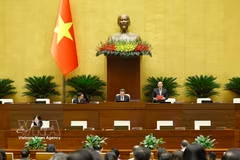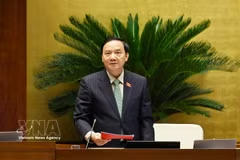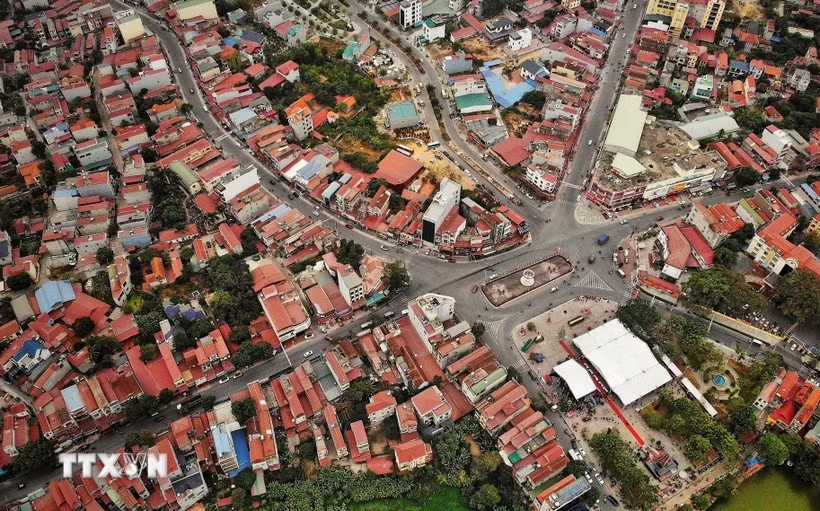
Hanoi (VNA) – Following the restructuring of 34 provinces and centrally-governed cities, the number of commune-level administrative units has fallen by 67%, from 10,035 to 3,321. Communes and wards that do not yet meet prescribed standards could be reorganised in the coming period.
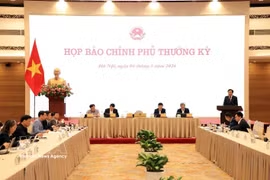
Speaking at a conference reviewing the work of the Ministry of Home Affairs in the first half of 2026 and outlining key tasks for the second half on July 9, Phan Trung Tuan, Director of the Department of Local Administrations under the Ministry of Home Affairs, said the initial direction from the Party Central Committee was that the restructuring of communes and wards would not be carried out simultaneously.
Localities to develop restructuring plans based on specific conditions
Tuan said public opinion and local authorities have recently shown strong interest in whether communes and wards will continue to be reorganised, adjusted or restructured.
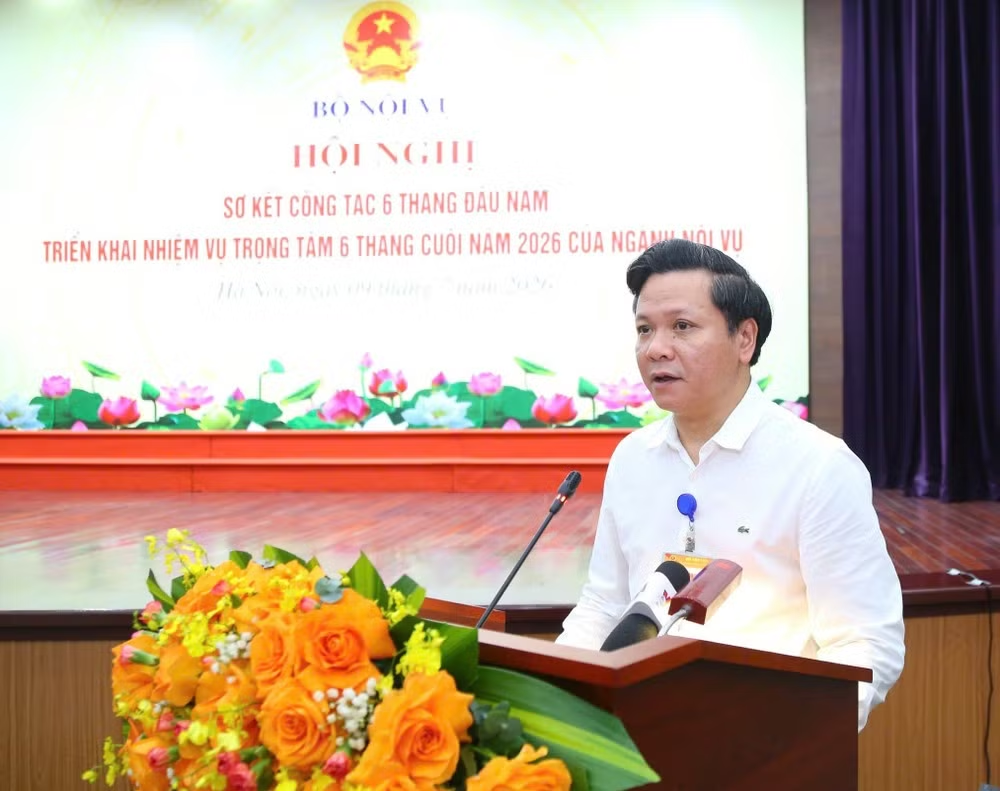
According to Tuan, the Government Party Committee’s report submitted to the Central Steering Committee and the Politburo addressed the issue. The restructuring of communes and wards will be studied and carefully considered by the central authorities.
He said that the Department of Local Administrations studied the issue and gathered opinions in preparation for the national conference reviewing the two-tier local administration model and the overall organisation of the political system.
Following the central authorities’ conclusions, the department will advise the Ministry of Home Affairs on reporting to the Government and issuing timely guidance on commune-level restructuring.
Tuan said that at a conference reviewing one year of implementation of the administration model, Party General Secretary and President To Lam said that small-scale communes that fail to meet prescribed criteria under the National Assembly’s Resolution No. 112 on administrative-unit standards could be reorganised.
Of the 705 commune-level administrative units that do not meet the standards, Tuan said some have special characteristics, including border locations, remote and isolated areas, difficult terrain, as well as historical, traditional and cultural factors.
Therefore, many of these units may not be subject to restructuring in the same manner as during the 2023-2025 period.
Tuan said for the remaining small-scale units that do not meet the requirements for natural area or population size, localities can study adjustments in accordance with regulations.
Once the central authorities reach a conclusion and the Government or the Ministry of Home Affairs issues implementation guidance, local authorities will submit their proposals.
The official noted that the initial direction from the central authorities is that this will not be a nationwide restructuring. Instead, proposals will be considered based on the specific conditions and characteristics of each area and locality.
In addition, competent authorities have outlined plans to develop key communes and wards as growth hubs to create new engines of growth for provinces and cities.
Tuan noted that Party General Secretary and President To Lam had previously raised the idea of establishing large-scale socialist-oriented communes and wards. Localities should therefore study their own circumstances and be ready to implement the policy once official guidance is issued.
At the conference, Deputy Minister of Home Affairs Vu Chien Thang said one of the ministry’s key tasks for the second half of the year is to continue reorganising communes that fail to meet standards and advise the Government on the natural boundaries of the 34 provinces and centrally run cities.
Addressing difficulties at commune level
Providing further information on the issue, Tuan said that since July 1, 2025, the overall model of the political system and the two-tier local administration model have been implemented.
According to reports from localities and central agencies, the two-tier local administration model has basically delivered important results.
“However, the three-tier local administration model had existed and operated for 80 years, while the transition to the two-tier model has taken just over a year. It is therefore inevitable that certain difficulties have emerged during the operation of the new model,” Tuan said.
He added that during the one-year review, the Central Steering Committee conducted a thorough assessment of the results achieved while identifying a number of shortcomings.
Following the one-year review, the upcoming third Plenum of the Party Central Committee is expected to consider and issue conclusions on administering the two-tier local administration model, particularly at the commune level./.