📝OP-ED: Distortion tactics targeting Vietnam’s election results exposed

It comes as no surprise that ill-intentioned forces abroad and discontented individuals at home have reacted negatively to the official results of the election of deputies to the 16th NA and People’s Councils at all levels for the 2026–2031 tenure.

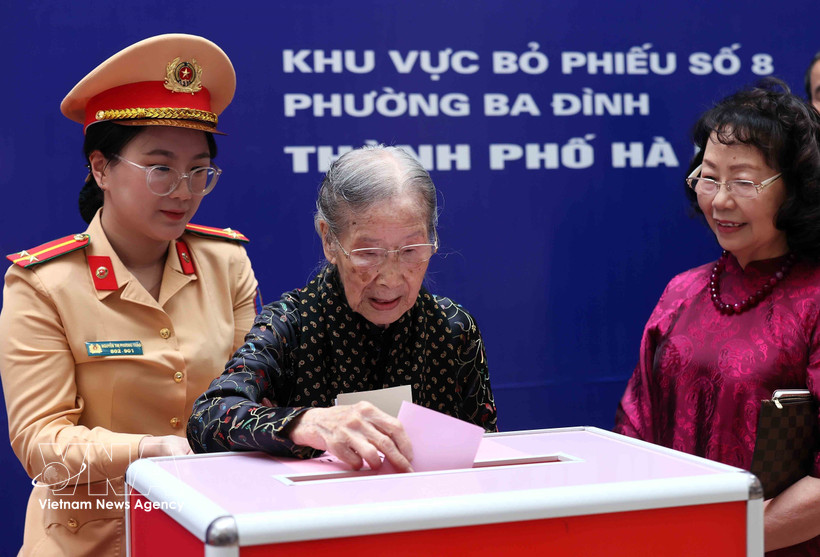
101-year-old voter Doan Thi Thuan (centre) casts her ballot at the polling station at Phan Chu Trinh primary school, Ba Dinh ward, Hanoi. (Photo: VNA)

Hanoi (VNA) – Although the resolution on the results of the 16th National Assembly (NA) election and the list of elected deputies was officially announced on March 21 afternoon, hostile elements had already prepared articles in advance – even before voters nationwide went to the polls on March 15 – using keywords such as “unfair”, “undemocratic”, and “lacking transparency”. Their ultimate aim is not only to smear the electoral process or distort voting results, but also to incite social disorder, erode public trust in the Party and the State, and undermine the great national solidarity bloc.

It comes as no surprise that ill-intentioned forces abroad and discontented individuals at home have reacted negatively to the official results of the election of deputies to the 16th NA and People’s Councils at all levels for the 2026–2031 tenure. They are unwilling to accept the evident outcomes shaped by the National Election Council and tens of millions of voters.

That is, according to preliminary reports from 34 provinces and cities nationwide, approximately 76.198 million out of nearly 76.424 million eligible voters cast their ballots, representing a turnout of 99.7% – the highest ever recorded in history.
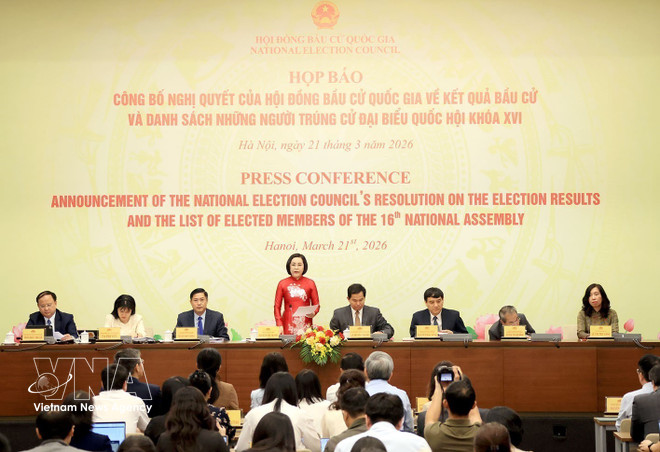
vnanet-press-conference-election.jpg
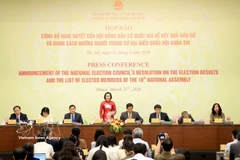
The National Election Council holds a press conference in Hanoi on March 21 to announce the resolution on the election results and the list of elected deputies to the 16th National Assembly. (Photo: VNA)

Out of the 500 deputies elected to the 16th NA, 214 were candidates nominated by central agencies and organisations.

The composition of the new legislature has seen a reduction in the number of deputies concurrently holding positions in executive and judicial bodies, alongside an increase in full-time legislators. Notably, the proportion of expected full-time deputies reaches 40% – the highest level to date – up 1.4 % compared to the 15th NA tenure, 5.5% to the 14th, 7.2 % to the 13th, and 10.6% to the 12th.

Party and State leaders were elected as NA deputies across various constituencies nationwide, demonstrating strong trust from voters.

That is also the affirmation of Nguyen Huu Dong, member of the NEC and deputy head of its Personnel Sub-committee, that the election of 500 NA deputies, 2,552 members of provincial-level People’s Councils, and 72,437 others of commune-level People’s Councils demonstrates that personnel preparations were conducted thoroughly, democratically and in accordance with the law.

Hostile elements turn a blind eye to the truth that has been proven through the election process and results: the political awareness and sense of civic responsibility of voters have been enhanced; the leadership and guidance by Party committees and administrations at all levels have been implemented decisively and synchronously; and the information and communications work has been carried out widely and effectively. The principles of democracy, openness, and transparency were ensured throughout the entire election process – from planning the structure, composition, and number of candidates; consultation and gathering of voter opinions; nomination of candidates; and election campaigning to the organisation of voting and vote counting, thereby selecting qualified and deserving representatives.

Regardless of the positive changes in Vietnam’s socio-economic life and the rigorous conduct of the election process, hostile forces continue to deny the results with vague arguments lacking concrete evidence. Some have even resorted to farcical acts, issuing online “calls” to "sign a joint statement rejecting the election results."

Although these are isolated voices running counter to the prevailing trend in Vietnam, it remains necessary to clearly identify the tactics and objectives of those who are deliberately distorting the election results.

Those tactics include claiming that the election results were “pre-arranged” and that voting was a mere “formality”, aiming to trigger doubts about electoral transparency and erode public trust in the Party and the regime.

Another is to distort the truth about the five core steps in the consultation process for nominating candidates to the NA and People’s Councils at all levels. Its objective is to attack the Party's leadership, deny the democratic nature of the electoral system, and thereby sabotage the country’s chosen development path.

“Muddying the waters” is another tactic which exploits social media to spread misinformation and exaggerate isolated incidents to create a bandwagon effect and confusion among the public. The objective is to incite division and social instability, and provoke discontented individuals and those lacking a firm political stance.

Repeating fabricated claims about negative phenomena until falsehoods are perceived as truth is also a tactic used by hostile forces. They exaggerates minor issues into major ones with a view to distorting perceptions of Vietnam’s election process in particular and the country as a whole in the international arena./.
VNA

See more

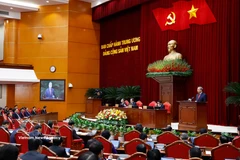
The second meeting of the 14th Party Central Committee opens in Hanoi on March 23. (Photo: VNA)

Second meeting of 14th Party Central Committee opens in Hanoi

The meeting is also scheduled to consider personnel affairs for State agencies for the 2026–2031 term and provide opinions on the five-year socio-economic development plan, national financial plan and medium-term public investment plan for 2026–2031, along with other key national issues.

☀️ Morning digest on March 23

☀️ Morning digest on March 23

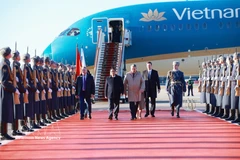
Prime Minister Pham Minh Chinh's official visit to Russia, the announcement of the results of the general election and the list of elected deputies to the 16th NA, and Vietnam's congratuations to the Lao People’s Revolutionary Party on the 71st founding anniversary are among news highlights last weekend.

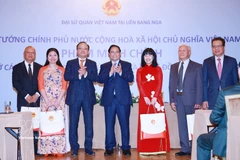
PM Pham Minh Chinh (centre) presents gifts to the Vietnamese community in Russia at the meeting in Moscow on late March 22 (local time). (Photo: VNA)

PM hails contributions by OVs in Russia to homeland

The Government leader described the special bond between the peoples of Vietnam and the former Soviet Union, as well as the Russian Federation today, as a shining symbol of solidarity and special international friendship.

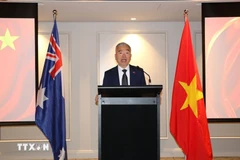
Vietnamese Consul General in Sydney Nguyen Thanh Tung (Photo: VNA)

Vietnam – Australia ties increasingly substantive: Consul General

Australian travellers increasingly value Vietnam for its safety, welcoming hospitality, cultural richness, diverse cuisine, and affordability. Traditional favourites, such as Hanoi, Ho Chi Minh City, Ha Long Bay, Hoi An, and Phu Quoc, are complemented by rising interest in emerging spots.

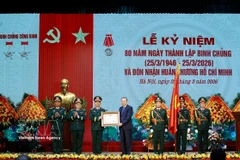
Party General Secretary To Lam presents the Ho Chi Minh Order to the Engineering Corps (Photo: VNA)

Party chief presents Ho Chi Minh Order to Engineering Corps

Amid a fast-changing and increasingly complex global landscape, Party leader To Lam urged Engineering Corps to uphold absolute loyalty, strict discipline, and high combat readiness; firmly uphold political mettle, sharpen strategic awareness, and guard against complacency or being caught off-guard in any scenario.

Prime Minister Pham Minh Chinh and his Russian counterpart Mikhail Vladimirovich Mishustin sign a Joint Communiqué on the outcomes of the official visit to Vietnam by the Russian Prime Minister (Hanoi, January 14, 2025). Photo: VNA

PM’s visit to deepen Vietnam-Russia Comprehensive Strategic Partnership

Prime Minister Pham Minh Chinh's March 22-25 visit to Russia aims to further strengthen Vietnam-Russia relations, especially in politics, and expand cooperation in key areas such as economy, trade, investment, energy, and oil and gas, he said. It is expected to outline major directions for future cooperation: enhancing political trust; maintaining the Comprehensive Strategic Partnership in security, defence, and foreign affairs; and boosting economic and trade collaboration to make it more effective and substantive.

Deputy Minister of Foreign Affairs Le Thi Thu Hang (Photo: VNA)

PM’s official visit to bolster Vietnam-Russia Comprehensive Strategic Partnership

The visit will reaffirm the enduring traditional friendship and trusted cooperation between the two countries, while also providing an opportunity to strengthen the bilateral ties both in breadth and depth with a forward-looking vision. It will help create favourable external conditions and mobilise resources for Vietnam’s development in a new era.

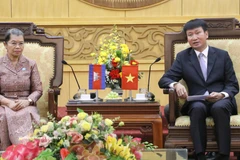
Ambassador Nguyen Minh Tam presents Party General Secretary To Lam's flowers to the LPRP Central Committee's External Relations Commission to congratulate on the LPRP's 71st founding anniversary. (Photo: VNA)

Vietnam, Laos reaffirm enduring partnership across generations

Ambassador to Laos Nguyen Minh Tam noted that the Vietnam – Laos special relationship is deepening in a more practical and effective manner across areas, delivering tangible benefits to both peoples while contributing to regional and global peace, stability, cooperation and development.

Prime Minister Pham Minh Chinh receives Indonesian Ambassador to Vietnam Adam Mulawarman Tugio in Hanoi on March 20. Photo: VNA

Indonesia one of Vietnam’s top foreign policy priorities: PM

PM Chinh asked Indonesia to facilitate Vietnamese goods’ greater access to its market; promote cooperation in the Halal industry; effectively carry out fisheries cooperation and support Vietnam in combating illegal, unreported, and unregulated (IUU) fishing; and enhance cooperation in locality-to-locality exchanges, education and training, tourism, cultural exchange and people-to-people connections.