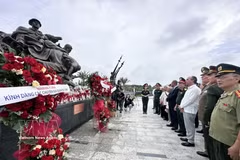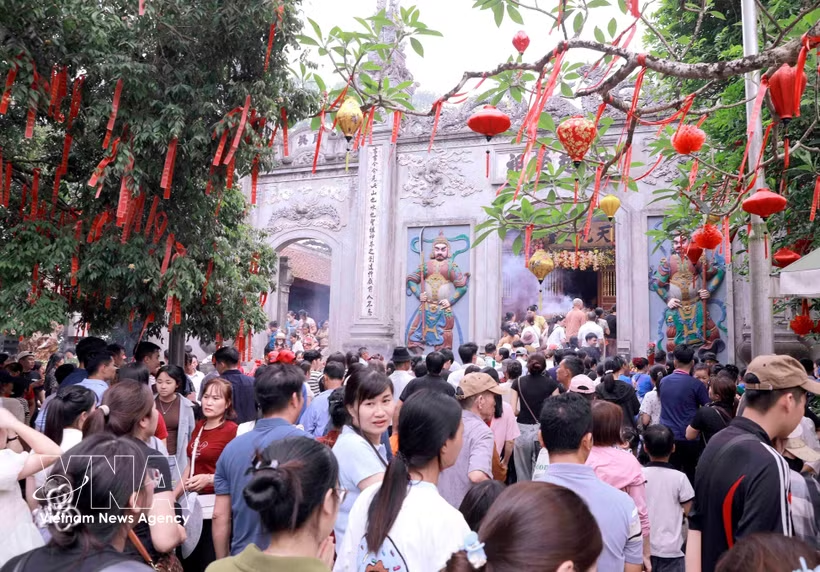
Hanoi (VNA) – Throughout thousands of years of nation-building and national defence, the culture of respecting history, showing gratitude, and honouring those who have rendered services to the nation has become an enduring traditional cultural value, forming the foundation for Vietnam’s national identity, nurturing patriotism, and strengthening the great unity.
In today's era of international integration and the rapid spread of information, fostering gratitude and respect for historical truth has become even more important, helping equip people with the awareness and resilience to recognise and resist false and distorted information.
Lasting cultural values
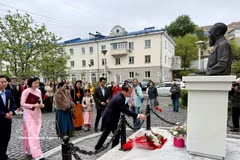
In Vietnamese cultural life, gratitude toward preceding generations has long been preserved as an integral part of the nation's identity. This tradition is reflected in ancestor worship practiced in families, the Worship of the Hung Kings, village deities, national heroes and eminent cultural figures, as well as tributes to generations who sacrificed their lives for the nation's independence and freedom. Together, these practices have created a continuous, enduring and profound cultural legacy. They are not merely spiritual rituals but also a means for the Vietnamese community to preserve historical memory and pass on patriotism, a sense of origin and responsibility towards the nation to future generations.
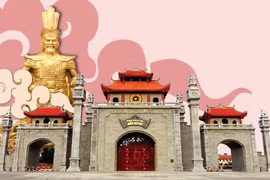
Looking back on the nation's long history, every stage of Vietnam's development has been marked by outstanding individuals who placed national interests above their own. They include the Hung Kings, who laid the foundation for the ancient state of Van Lang; the Trung Sisters, who led an uprising against foreign rule; Ngo Quyen, who secured the historic Bach Dang victory; General Tran Hung Dao, who triumphed over the Mongol invaders three times; Emperor Quang Trung (also known as national hero Nguyen Hue), who achieved a decisive victory over Qing invaders; and President Ho Chi Minh, the beloved leader who devoted his entire life to national independence and the people's happiness. All have become enduring spiritual symbols, honoured and remembered with deep gratitude and respect by generations of Vietnamese people.
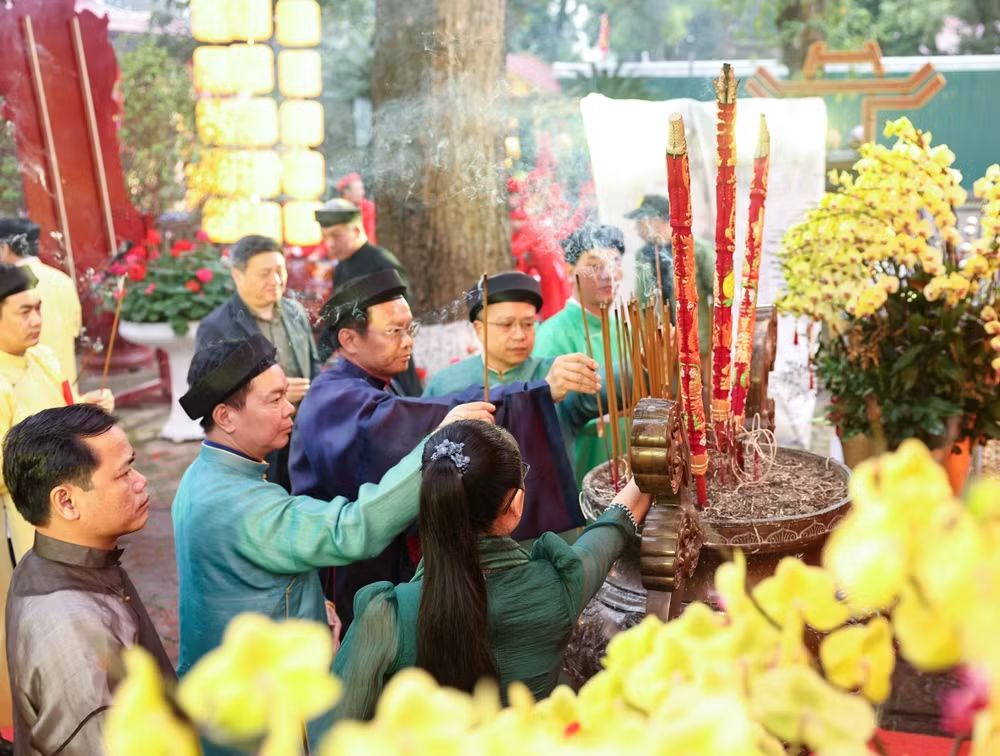
The reverence for those who built and defended the nation has been preserved through many forms, including literature, the arts, festivals, legends, beliefs and architectural works associated with different localities. Over time, these have become an integral part of the nation's spiritual life and collective memory.
According to Assoc. Prof. Dr. Nguyen Van Huy, a cultural researcher and former Director of the Vietnam Museum of Ethnology, Vietnam's forefathers created a rich and sustainable system for transmitting history, encompassing official historical records, scholarly literature, folklore and spiritual beliefs. They all shared a common purpose of honouring national heroes and eminent cultural figures, thereby fostering national pride and building enduring strength for the country.
Official historical records serve as the foundation for establishing historical truth and recognising the contributions of predecessors, forming the framework of the nation's collective memory. Scholarly literature, meanwhile, portrays the ideals and character of national heroes through timeless works, bringing history closer to the people, stirring emotions and inspiring generations with patriotism and civic responsibility.
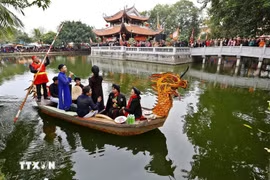
Perhaps most distinctive is the way Vietnamese people have brought history from the pages of books into everyday community life through folklore, traditional beliefs and festivals. Legends about Saint Giong, the Trung Sisters, Ngo Quyen or the story of Le Loi returning the magical sword are not intended to replace historical facts but rather to express the people's admiration and gratitude towards those who rendered service to the nation. Likewise, temples, shrines, communal houses and the worship of village deities, Saint Tran and the Hung Kings have made national heroes an inseparable part of the community's spiritual life. Through thousands of festivals held across the country each year, history is re-enacted through rituals and folk cultural activities, naturally passing on patriotism and gratitude towards previous generations from one generation to the next.
Huy said this diverse and enduring system of transmitting history has transformed national heroes and eminent cultural figures into "living symbols" in the public consciousness, giving Vietnamese history lasting vitality and enabling each generation to draw lessons from the past on patriotism, the will for independence and aspirations for national development.
Affirming that the tradition of respecting history and expressing gratitude to those who have rendered services to the nation is deeply rooted in Vietnam's culture, Assoc. Prof. Dr. Bui Hoai Son, a standing member of the National Assembly's Committee for Culture and Education, said it embodies the values of remembering its source when drinking water. It is also reflected in ancestor worship, community spirit and solidarity forged through thousands of years of nation-building and defence. Therefore, gratitude is not merely a ritual but a cultural virtue; not merely a memory but the conscience of the nation.
According to Son, a nation can only achieve sustainable development if it values its history and those who shaped it. Thus, honouring national heroes, eminent cultural figures and national leaders is not only a way of recognising their contributions but also an important means of educating future generations.
Paying tribute to these figures first and foremost acknowledges the immense contributions of those who helped shape the nation. More profoundly, it is the way a nation passes on its core values to future generations, including patriotism, the will for independence, self-reliance, aspirations for progress, sacrifice for the community and responsibility towards the country's destiny.
Son cited President Ho Chi Minh's words that 'Our people must know our Vietnamese history, from root to tip.' Those words are not merely a call to study history but also a profound cultural message, he said.
“Knowing history leads to gratitude. Gratitude inspires people to live more honourably. And living honourably is the most practical way to carry forward the legacy of those who made history," he added.
Building the cultural resilience of Vietnamese people
If the tradition of "remembering the source when drinking water" lies at the heart of Vietnam's cultural identity, then history education is the means by which the enduring value continues to be nurtured in every generation of Vietnamese people.
Cultural experts have noted that amid deep international integration and the rapid development of digital technology, people, especially young people, are exposed to an enormous volume of information from various sources, particularly the internet and social media. While this presents opportunities to broaden knowledge, it also poses significant challenges as misinformation, historical distortions, the denial of the contributions of predecessors, and the misrepresentation of national leaders have become increasingly sophisticated.
What is particularly concerning is that such content rarely appears in the form of extremist rhetoric or open opposition. Instead, it is often presented through seemingly objective narratives. A short video, an edited photograph or a story told in a seemingly humorous way can gradually alter people's perception of history. Without a solid foundation in historical knowledge and the ability to verify information, audiences can easily be misled and develop distorted perceptions of the nation's past.
For that reason, experts believe that alongside preserving heritage and honouring national heroes, eminent cultural figures and national leaders, fostering gratitude and respect for history has become a long-term requirement for the country's development. History education and the cultivation of gratitude help strengthen critical thinking, improve people's ability to distinguish right from wrong, and build the cultural resilience of every citizen.
Education in gratitude should begin with the closest and most familiar environment. The family is the first school of gratitude. It may be reflected in offering incense at the family altar, listening to grandparents' stories about their homeland, wartime experiences and years of hardship, or in parents teaching their children to respect the elderly, appreciate the contributions of previous generations, and live responsibly towards their families and communities.
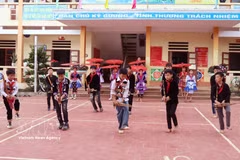
In schools, history should be taught not merely as a series of dates, events and figures, but as stories about people, destinies, choices and aspirations. Students should have opportunities to visit museums, historical sites and martyrs' cemeteries, meet historical witnesses, and participate in experiential activities, creative projects, stage performances, short-film production, digital exhibitions and history-themed games. When history resonates emotionally, knowledge is more likely to endure.
In society, the media, literature, the arts, cultural industries and digital platforms should work together to tell historical stories in ways that are modern, engaging, accurate and humane.
"We need more quality films, more accessible books, more dynamic museums and more creative digital products so that history is not confined to textbooks but becomes an integral part of contemporary spiritual life," said Son.
According to experts, fostering in every individual a love for history and pride in the nation's traditions will provide the strongest "immunity" against misinformation and historical distortions, enabling Vietnamese people to remain steadfast in the face of false narratives.
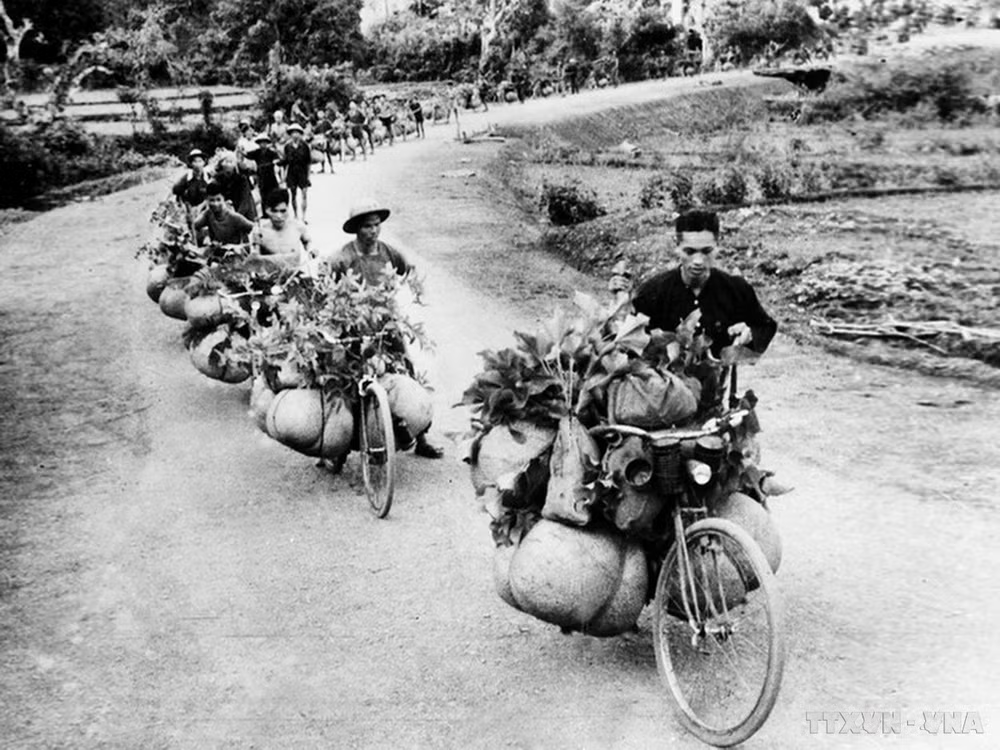
Son stressed that respecting history is not only a cultural attitude but also the capacity to safeguard national identity. International integration offers abundant opportunities to learn, engage in dialogue and enrich Vietnamese values. However, the deeper the integration, the stronger the cultural foundation Vietnam needs to avoid losing its identity or becoming disoriented by diverse streams of information, including misinformation, distortions and denial of history.
"History is the shared memory of a nation. When that memory is distorted, public trust is damaged. When the contributions of previous generations are denied, the nation's moral foundation is undermined. Therefore, preserving the tradition of respecting history means preserving truth, conscience and the spiritual source of the nation's strength," he stated.
Vietnam's history has demonstrated that the nation's strength stems not only from economic potential or military power, but first and foremost from its cultural identity, patriotism, the spirit of great national unity and gratitude towards those who shaped the nation's history. Respecting history and honouring those who made history is therefore not only a fine cultural tradition of the Vietnamese people, but also the foundation for building cultural resilience, strengthening social trust, nurturing aspirations to contribute, and generating the internal strength needed for the country's sustainable development in the new era.
Building the Vietnamese people in the current period cannot be separated from fostering historical identity, patriotism, civic awareness and social responsibility, Son said.
“A modern Vietnamese citizen should possess global knowledge, digital competence and innovative thinking, while remaining deeply rooted in national culture, respecting the past, honouring predecessors and acting for the future of the nation," he added./.