Hanoi (VNA) - While the electric vehicle (EVs) market is gaining momentum, dealers of gasoline-powered cars and motorbikes, both new and used, in Hanoi are facing a wave of order cancellations, vehicle returns, and even deposit forfeiting.
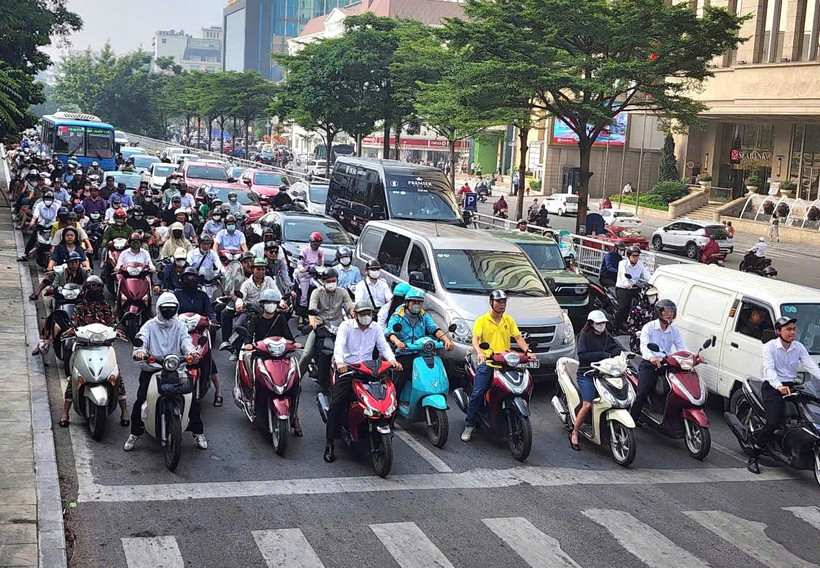
Under the Prime Minister's Directive No. 20/CT-TTg issued on July 12, Hanoi will become the first Vietnamese city to ban fossil fuel-powered motorcycles and mopeds from the city's inner Ring Road 1, starting July 1, 2026. This move initiates the country’s gradual transition towards green transportation.
However, the ban has worried many consumers. Tran Thuy, a resident of Ba Dinh ward, recently bought a Honda SH motorbike worth 74 million VND (2,830 USD) as a gift for his son. However, before registering the vehicle, he learned of the planned ban on petrol motorbikes within the inner Ring Road starting next year. So he contacted the dealer to return the motorbike, but they refused since the invoice had already been issued, he said.
Similarly, Le Van Thanh from Nam Tu Liem shared his concern. He has just bought a Yamaha NVX for over 55 million VND. Now, hearing about the petrol-fuelled vehicle ban, he becomes worried. The bike is practically new—less than 500 km—but reselling it would mean a heavy loss, he said, adding that the longer he keeps it, the more its value will drop.
Car owners are also uneasy. Doan Anh Dung, representative of C3 Auto, a used-car showroom, reported a sharp rise in cancellations due to concerns about the future of fossil-fuel vehicles.
“On July 14 alone, I received over a dozen calls from people wanting to sell their petrol cars, including relatively new models. Of the 40 cars we had in stock, seven customers either cancelled deposits or returned vehicles that day. Some who had already paid simply decided not to take their cars.”
Dung attributed much of the uncertainty to misinterpretation of the Government policy.
He explained that Directive 20 clearly states that from July 1, 2026, petrol and diesel motorbikes will be banned from circulating within Hanoi’s Ring Road 1. From January 1, 2028, the ban extends to petrol motorbikes and restriction targets private fossil-fuel cars within both Ring Roads 1 and 2. “But this is not a total ban—at least not yet,” he stressed.
Nonetheless, dealerships are reacting cautiously. This week, Dung’s firm plans to reduce imports, especially high-end models, to minimise risks. “We may also cut prices to accelerate sales,” Dung added.
However, not everyone is pessimistic. Hoang Shin, co-owner of My Dinh Auto Exchange, offered a more optimistic view. He said that his showroom is still selling 40–50 cars per month. Genuine demand is still there. Directive 20 is a long-term policy and hasn’t significantly affected the market yet, he held.
High costs, poor infrastructure, and calls for transition support
Switching from petrol to electric vehicles presents challenges that go beyond the purchase itself—financial, infrastructural, legal, and behavioural issues all come into play.
Pham Van Tuan from Ba Dinh ward pointed to cost as the primary barrier. Electric vehicles now cost at least 600–700 million VND, he noted, saying that he retired with savings of about 300–400 million VND, which isn’t enough to switch. “If I don’t switch, my petrol vehicle will become useless in the city centre.”
Petrol motorbike owners shared similar concerns. Mai Thi Huyen from Tay Ho said that she bought a motorbike worth over 40 million VND recently for work. Selling it now means losing at least 7–10 million VND. But keeping it means she can’t enter the inner city next year—it’s very inconvenient, she stated.
Many residents cited the high initial investment and stagnant income levels as major hurdles. Poor charging infrastructure is another barrier, especially in old apartment buildings and narrow tube houses.
“We can’t charge vehicles in basement garages. To charge, we have to go to shopping centres - it’s both costly and inconvenient,” said Nguyen Linh from Cau Giay.
Experts praised Hanoi for leading the way in limiting fossil-fuel vehicles, but warned that without a clear transition roadmap and supporting policies, citizens and businesses will face considerable strain.
Calls are growing for the Government to offer direct financial assistance for vehicle replacement such as subsidies for switching to EVs, VAT reductions on electric vehicles, low-interest loans, or free installation of home chargers for early adopters.
Buy-back schemes for old petrol vehicles are also being recommended to ease resale difficulties and financial pressure.
Significant investment in public charging infrastructure will be critical, particularly in residential areas, shopping centres, transport hubs, and repurposed petrol station sites.
Automotive expert Nguyen Tuan emphasised that green transport is the right direction, but policies must prioritise citizens and businesses. The transition should be fair, flexible, and clearly phased, he underscored.
Directive 20 signals the beginning of a green revolution in urban transport. To realise its goals, experts agreed that comprehensive solutions - spanning finance, infrastructure, and communication, alongside coordinated action between government, businesses, and the public - are essential. Only then can green transport be truly sustainable and widely adopted./.
See more
Efforts made to keep Bac Ai pumped-storage hydropower project on schedule
The project, which is included in the approved National Power Development Plan for 2021–2030 with a vision towards 2050, is developed to strengthen national energy security, support a circular economy and contribute to Vietnam’s commitment to achieving net-zero emissions by 2050, as pledged at the COP26 climate conference.
Experts seek to improve power dispatch in new energy era
Electricity demand is expected to rise strongly, while global energy markets remain volatile. In this context, rooftop solar and BESS are emerging as key solutions to improve flexibility and ensure supply, especially during peak periods.
Deputy PM demands stricter management, more decisive action against IUU fishing
Deputy PM Tran Hong Ha requested a thorough review and settlement of the 11 issues raised by the EC’s inspection mission during its working visit to Vietnam from March 10 to 19.
At least 10% reduction in pilotage service fees offered for all Vietnamese-flagged vessels
The timely and coordinated actions taken by regulatory authorities and the business community will not only help ease cost pressures but also ensure smooth maritime transport, and stabilise the supply of goods and energy for the economy.
National conference highlights AI trends, opportunities in Vietnam
AI is described as a core driver of innovation and growth rather than merely a supporting tool. It is necessary to build a strong academic community with closer links among research, training and real-world deployment.
Enterprises must pioneer in achieving double-digit economic growth from 2026: PM
Reports delivered at the conference showed that Vietnam had about 1 million active enterprises by late 2025, up more than 25% from 2020, contributing roughly 60% of GDP and employing more than 16 million workers. They also account for the bulk of the country’s trade turnover, while Vietnam ranks among the world’s top 15 destinations for foreign direct investment.
Vietnam has strong foundations for energy and fuel self-reliance: Australian expert
Leak assessed that Vietnam holds significant advantages, including abundant solar and wind resources supported by hydropower and battery storage, a growing electric vehicle industry, electrification-ready industrial sectors, and substantial biomass and bioenergy potential.
Vietnam tops Asia in financial wellbeing, yet long term financial freedom remains a challenge
Vietnam has emerged as the highest scoring market in Asia in terms of overall financial wellbeing, with a score of 65.1 out of 100, well above the regional average.
Vietnamese airlines adjust flight networks from April to optimise efficiency
The authority held a working session on March 24 with domestic airlines, aviation fuel suppliers, airport operators, and the Vietnam Air Traffic Management Corporation to discuss coordinated responses to current market challenges.
Vietnamese goods promotion: Greater transparency needed
As transparency, traceability and social responsibility increasingly become essential entry requirements, proactive compliance will give Vietnamese enterprises a clear advantage in building trust among international partners.
Opportunities for Vietnamese businesses to promote exports to African markets
Vietnamese exporters were advised to seek partners through reputable channels and to use secure payment methods, such as irrevocable letters of credit confirmed by trusted European or American banks, or documentary collection with a deposit of at least 20% of the contract value. Deferred payment arrangements should be avoided.
Prime Minister stresses firms’ role in double-digit growth target
While the Party and State will continue refining institutional framework, mechanisms and policies, Prime Minister Pham Minh Chinh made clear that enterprises must be the main drivers of growth. He urged them to take greater responsibility for rapid and sustainable development, while actively contributing to institutional reform.
Aviation authority grants Qatar Airways permission for three flights
According to the authority, these flights will not carry domestic passengers on the Hanoi–Ho Chi Minh City leg. Instead, they are intended to transport passengers affected by the exceptional situation in the Middle East, while gradually restoring air transport activities between Qatar and Vietnam, including passengers, cargo and parcels.
Higher deposit rates, tighter liquidity dampen demand for equities
Banks, particularly small and medium institutions with weaker deposit bases, are likely to continue raising deposit rates in the short term to attract funding and sustain credit growth.
Reference exchange rate falls slightly on March 27
The State Bank of Vietnam set the daily reference exchange rate at 25,100 VND/USD on March 27, down 2 VND from the previous day.
Vietnam cuts fuel taxes to zero till April 15 to stabilise energy market
The cuts are expected to ease the burden on households and help firms sustain production and trade, even as it trims state budget revenue by an average of about 7.2 trillion VND (276.9 million USD) per month.
Vietnam steps up rice market diversification through FTAs
Effective utilisation of free trade agreements (FTAs) has also been identified as a key solution to expand export markets. Authorities are incorporating rice into support roadmaps helping enterprises maximise FTA benefits while accelerating negotiations to expand tariff quotas with partners such as the EU and the UK.
Fuel prices continue to fall from midnight on March 26
According to the MoIT, Vietnam’s fuel prices remain at an average level in the region and are lower than those in neighbouring countries sharing land borders.
Launch of Vietnam Consumer Rights Day 2026 set to take place this weekend
At the national launch ceremony, scheduled for the afternoon of March 28, representatives of ministries and agencies, social organisations and businesses are expected to make commitments affirming their responsibility to comply with the law, provide safe and transparent products, and help build consumer confidence and a fair marketplace.
Deputy PM meets GS Energy leader, encourages renewable investment
Deputy Prime Minister Ho Quoc Dung called on GS Energy to continue working closely with Vietnamese authorities and partners to explore solutions for developing local supply chains, enhance mutually beneficial cooperation and contribute to the sustainable development of both countries.