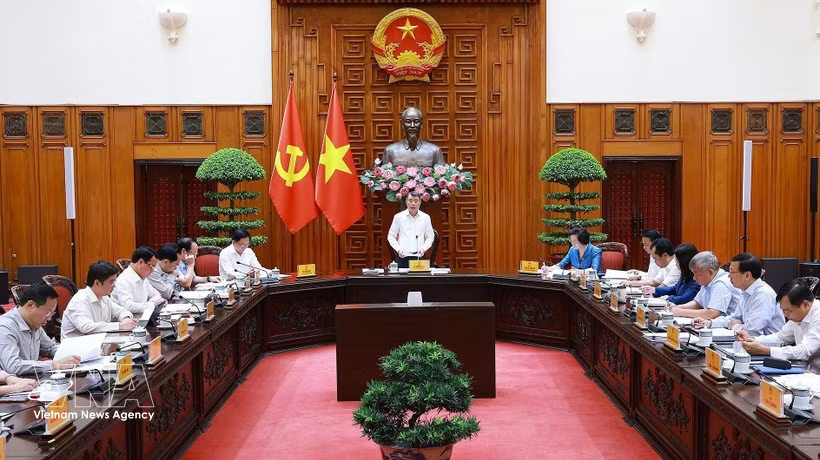
Hanoi (VNA) – Prime Minister Le Minh Hung has urged ministries, sectors and localities to work in close coordination to ensure the effective and timely implementation of four national target programmes and disburse 100% of capital allocated for 2026, including carry-over funds from the 2021–2025 period.
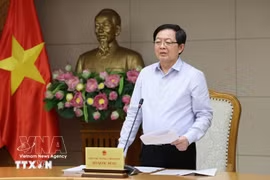
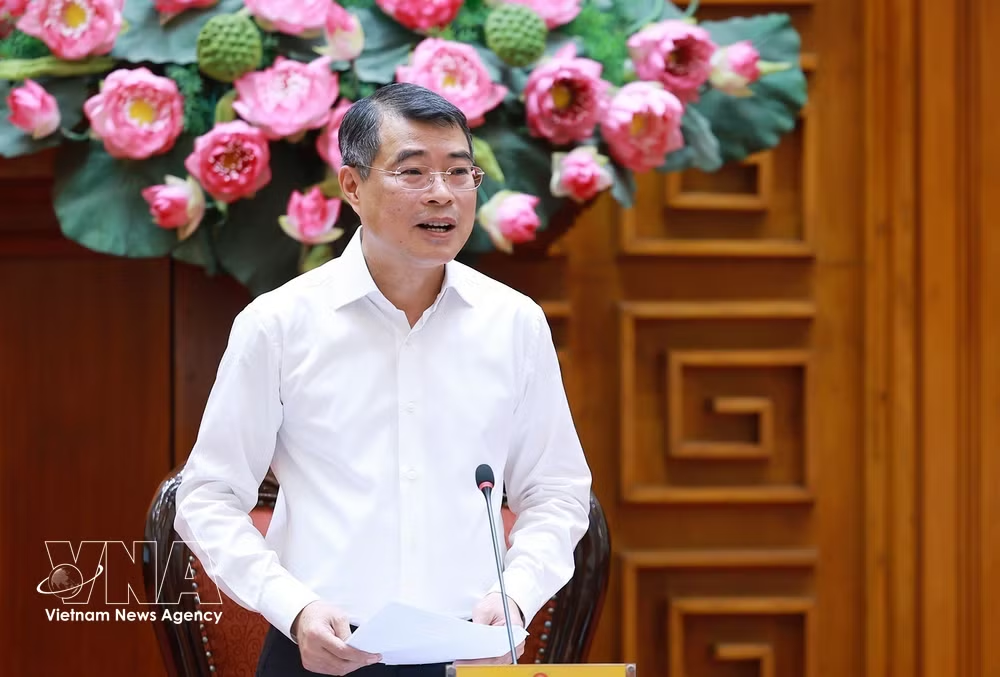
Chairing the inaugural meeting of the Central Steering Committee for National Target Programmes on July 9, PM Hung stressed that agencies at all levels must accelerate implementation, strengthen coordination and improve accountability to maximise the effectiveness of public investment.
The newly established Central Steering Committee is tasked with supervising the implementation of the national target programmes on new-style rural area building, sustainable poverty reduction and socio-economic development in ethnic minority and mountainous areas; cultural development; health care, population and development; and the modernisation and quality improvement of education and training.
The meeting reviewed implementation progress, focusing on institutional perfection, issuance of guidance documents, and capital allocation and disbursement while identifying bottlenecks and assigning responsibilities to accelerate implementation.
The PM, who is also head of the Central Steering Committee, noted that despite budget constraints, the National Assembly and the Government have allocated relatively large funding for the national target programmes. He highly valued efforts by the Ministry of Agriculture and Environment as the standing body of the committee, as well as its coordination with the Ministry of Ethnic and Religious Affairs in swiftly implementing the programme on new-style rural area building, sustainable poverty reduction and socio-economic development in ethnic minority and mountainous areas
However, he noted that implementation has fallen significantly behind schedule, with some tasks at risk of missing both implementation and disbursement targets for 2026. Guiding documents and capital allocation plans for several programmes remain incomplete. While the amount of carry-over funds from the 2021–2025 period transferred to 2026 is large, disbursement is still slow.
The PM also pointed to excessive and overlapping guidance documents, the absence of a mechanism for integrating the programmes, and insufficient awareness of the importance of these programmes among some local leaders.
Agencies in charge of the programmes must bear full responsibility before the Government and the Central Steering Committee for implementation progress, quality and outcomes, he stressed, asking for stronger coordination across all four programmes to avoid overlaps, prevent wastefulness and ensure resources are used for the right objectives and beneficiaries.
The Government leader requested ministries, sectors and localities to achieve a 100% disbursement of the funds from the central budget allocated for 2026, including more than 17 trillion VND (646.5 million USD) carried over from the three national target programmes implemented during the 2021–2025 period. He said the fulfilment of this target should become a key criterion in evaluating the performance of ministries, sectors and local authorities.
The PM also asked agencies to strictly adhere to the principle of assigning clear responsibilities, tasks, deadlines and expected results, with implementation outcomes, disbursement progress and benefits to the public serving as the basis for assessing the accountability of leaders.
He assigned the Ministry of Agriculture and Environment to intensify supervision of ministries and localities, ensure projects are ready for implementation immediately after funding is allocated, and coordinate efforts to fully disburse carry-over funds in 2026.
Other ministries were given specific deadlines to finalise capital allocation plans, complete legal and technical guidance, issue implementation handbooks and accelerate the allocation and use of the 2026 funds. The Ministry of Finance was tasked with monitoring monthly disbursement progress, publicising implementation results and proposing fund reallocations where necessary.
The PM also ordered the establishment of a working group led by a standing Deputy PM to review and develop a practical plan for integrating the national target programmes. The group is required to submit its report to the Government before July 25.
PM Hung reaffirmed the Government's commitment to greater decentralisation for localities while requiring ministries to strengthen inspection, supervision and timely guidance to ensure all programmes meet the objectives set by the Party and the State./.