Hanoi (VNA) - As Vietnam enters a new phase of accelerated development, integrating three national target programmes, new-style rural development, sustainable poverty reduction, and socio-economic development in ethnic minority and mountainous regions, is an essential step toward advancing green growth and inclusive development, said Minister of Ethnic and Religious Affairs Dao Ngọc Dung.
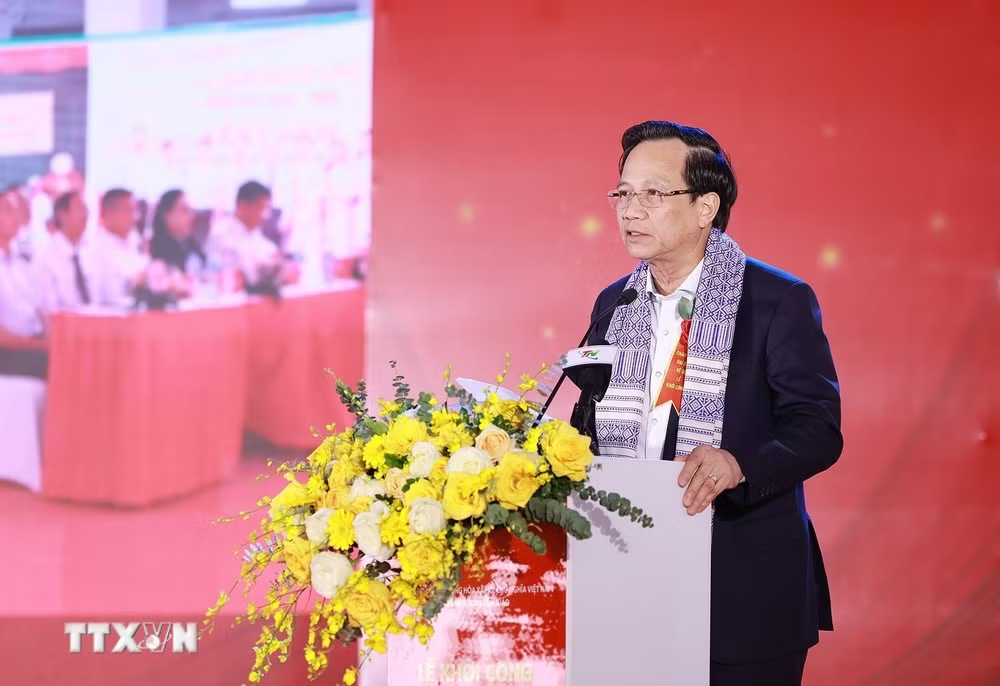
“These programmes are expected to create significant opportunities for socio-economic development in ethnic minority and mountainous areas in the coming period, thereby helping to narrow the development gap between regions,” the minister said.
According to the minister, the implementation of the National Target Programme for ethnic minority and mountainous areas has contributed to promoting socio-economic development in these regions, creating livelihoods, increasing incomes, reducing poverty, and addressing the pressing needs of people living in particularly disadvantaged areas.
Support policies and livelihood development initiatives have helped people eliminate hunger, reduce poverty, and improve living conditions, he said, adding that investment in infrastructure and local economic development has played an important role in enabling people to produce in accordance with market demand.
“Numerous essential infrastructure projects serving people’s livelihoods in disadvantaged ethnic minority and mountainous areas have been constructed, contributing significantly to improving the quality of social services such as healthcare and education,” the minister said.
Notably, over the past five years, the poverty reduction rate in ethnic minority areas has averaged 3.4%, higher than the national average, thereby contributing to narrowing regional development disparities.
At the same time, vocational training and employment support have helped provide stable jobs for a large labour force in these areas. Poor ethnic minority households have gained better access to State support policies, including social security funding.
“These results have helped narrow the development gap between ethnic minority and mountainous areas and other regions, contributing significantly to sustainable development,” said the official. “They reflect the concerted efforts of the entire political system and ethnic minority communities, while ensuring social order and security, strengthening national defence and external relations, consolidating grassroots political systems, reinforcing the great national unity bloc, and enhancing ethnic minority communities' trust in the Party and the State.”
To enhance community-based tourism models and agricultural products in ethnic minority and mountainous areas, the minister said, localities should identify distinctive cultural values while preserving the cultural environment of destinations. It is important to respect authenticity and indigenous values, preserve positive cultural traditions, and eliminate practices that hinder socio-economic development, such as child marriage, superstition, and costly rituals.
At the same time, awareness of sustainable community-based tourism linked to social responsibility should be strengthened to ensure that local people benefit from tourism development, enabling them to focus on production and livelihood development.
Spatial planning for community-based tourism sites should be organised, including support for restoring traditional culture, particularly that of indigenous ethnic groups, and developing craft villages associated with traditional cultural values, he said.
Localities also need to upgrade infrastructure using local resources such as transport, electricity, clean water, healthcare, digital infrastructure and telecommunications connectivity, waste treatment, cultural activity spaces, exhibition areas, and service and recreational facilities./.