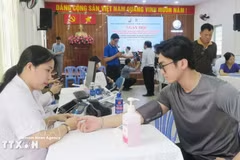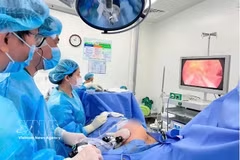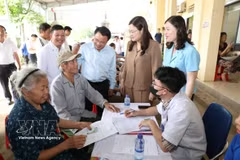
Hanoi (VNA) – At the “Organ and Tissue Donation Day – Giving Lives On" ceremony, a solemn tribute was held to honour donors whose final gift pulled desperately ill patients back from the brink.
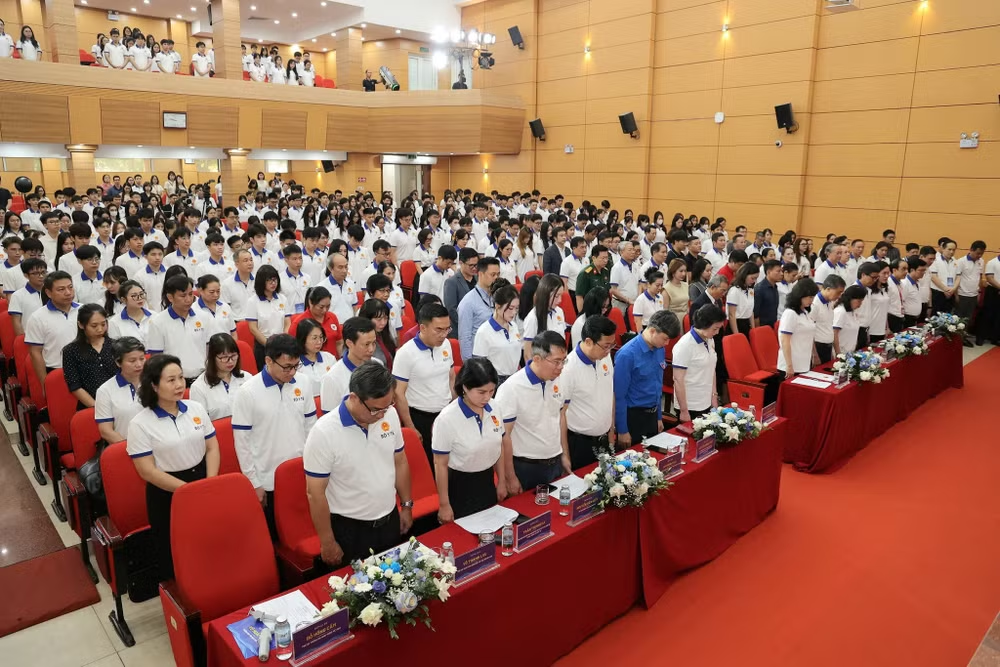
Hundreds of attendees stood in silence as Secretary of the Party Central Committee and Deputy Prime Minister Pham Thi Thanh Tra rang the ceremonial bell in remembrance of deceased donors and the families who chose to donate their loved ones’ organs and tissues to total strangers. Every peal of the bells echoed the unbreakable link between those who slipped away and those who received a renewed chance at life thanks to their generosity.

Ordinary citizens behind transplant breakthroughs
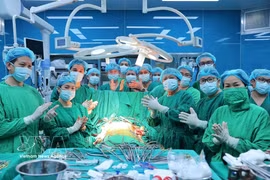
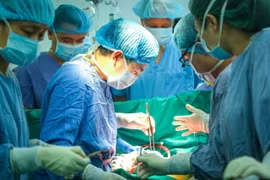
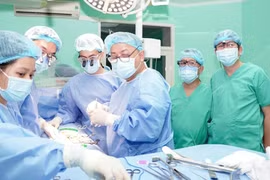
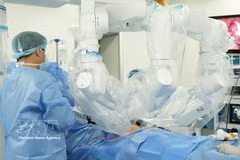
Since Vietnam’s first transplant from a brain-dead donor back in 2010, hundreds of such donors have made that same life-or-death decision. Vietnam’s globally respected transplant record isn’t just a story of surgical skill and round-the-clock dedication, but ordinary donors and families showing staggering courage.
One of the most recent cases came in early January 2026, when Nguyen Thi Cuc, a 46-year-old nurse at the Friendship Hospital, donated her organs after being declared brain-dead, giving five critically ill patients a future they’d almost given up on.
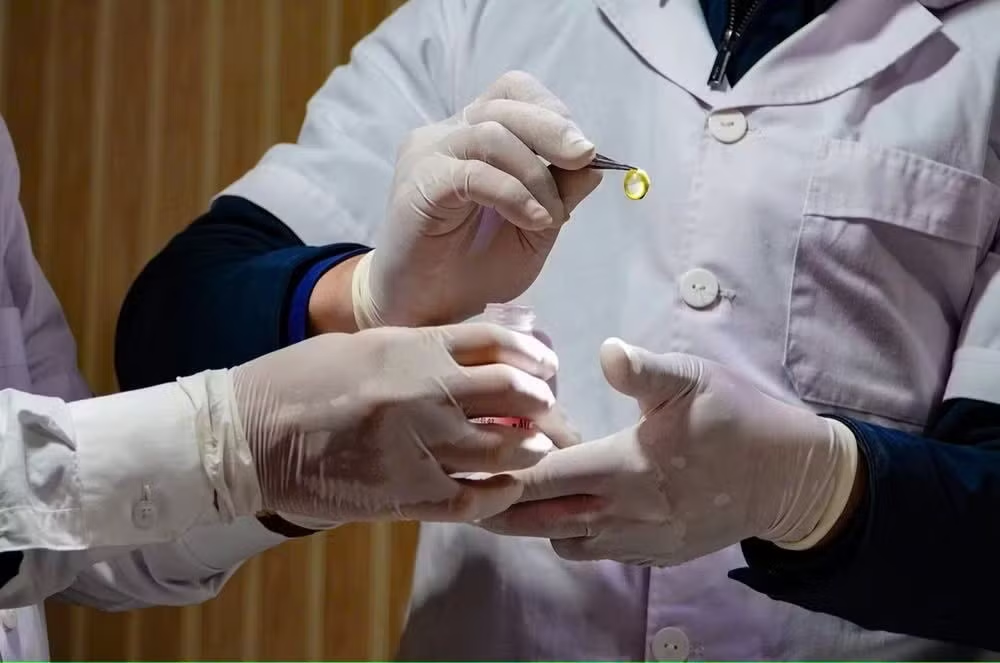
Then there was Pham Thi Huong, just 26 years old, who lost a long fight with cancer in March 2026 in Ninh Binh province. Right in the bloom of her life, she chose to donate her corneas, restoring sight to those trapped in blindness.
Deputy Prime Minister Tra also brought up a story that touched hearts across borders – a 19-year-old British woman who suffered a fatal accident while travelling in Ha Giang province. Doctors fought to save her but couldn’t. In the thick of their grief, her family made the merciful choice to donate her organs, giving four Vietnamese patients life-saving transplants and the return of their eyesight.
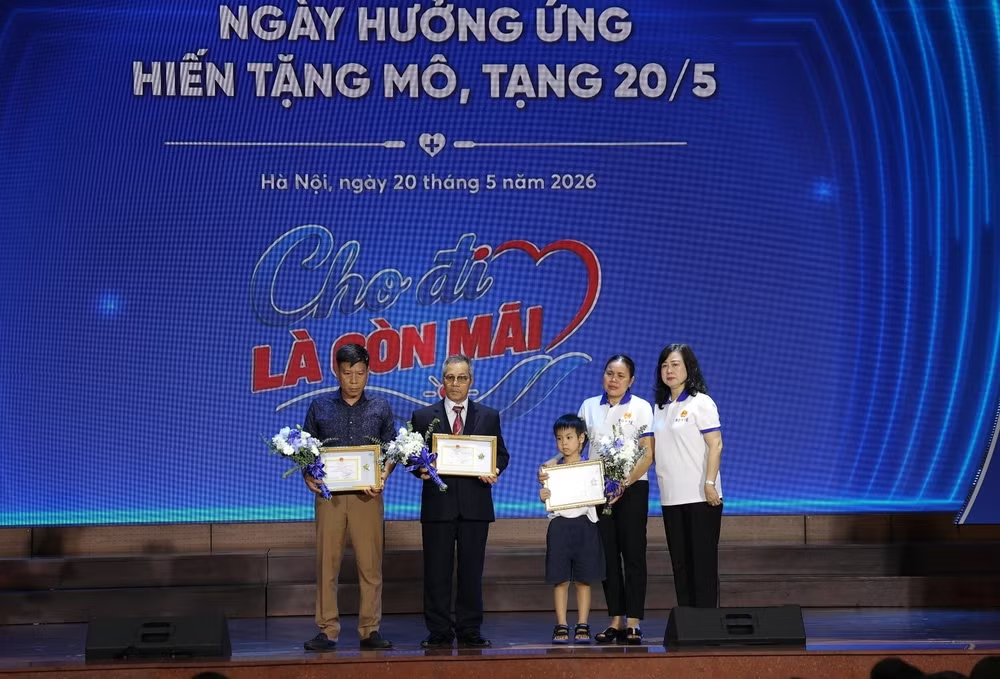
Every registration is a life rope
Minister of Health Dao Hong Lan said Vietnam has spent over three decades perfecting complex transplant techniques. Today, the country is comparable with many of the region’s most advanced health systems.
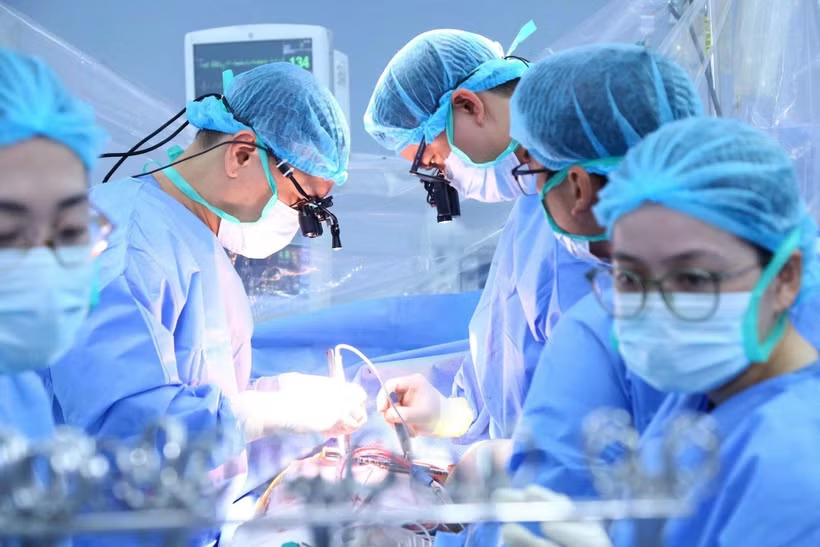
Vietnamese surgeons have carried out close to 11,000 organ transplants, rescuing tens of thousands of patients who had run out of options. The country recorded 1,212 transplants in 2024 and 1,368 in 2025, and the total number of organ donors has hit 286.
The health sector has poured substantial funding into facilities, training and tech transfer. In the early days, only a few hospitals could handle transplants. Now, 34 hospitals across the country are authorised to do them.
Fewer than 1,000 transplants were performed in the first 20 years. Over the past four years, however, the annual count has topped 1,000, placing Vietnam at times among Southeast Asia’s leaders by transplant volume.
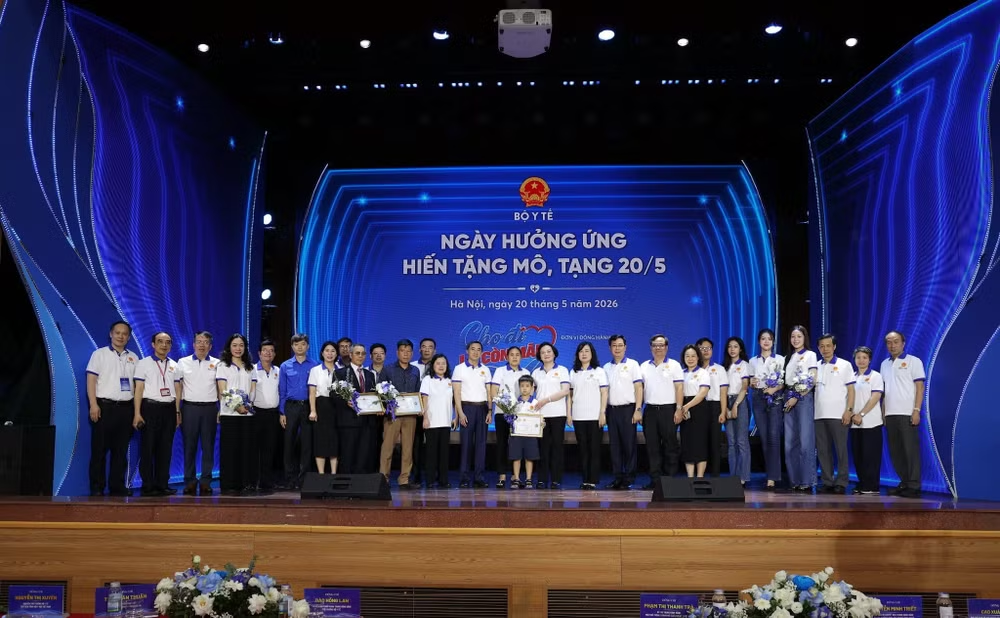
According to the Vietnam National Coordinating Centre for Human Organ Transplantation (VNHOT), the country’s first transplant from a brain-dead donor took place in 2010. From 2010 through 2023, the country saw only ten such donors. Facing a dire organ shortage, authorities ramped up public awareness campaigns to push donations. Donor numbers consequently shot up to 41 in 2024, 66 in 2025, and 25 in the first months of 2026. Even so, officials admit that Vietnam’s donation rate still trails most other countries.
Building a culture of organ donation
VNHOT Director Assoc. Prof. Dong Van He said the development of Vietnam's organ donation and transplantation system rests on three pillars: an effective legal framework, a capable healthcare system and, above all, public support.
Dr. Du Thi Ngoc Thu from Cho Ray Hospital said Vietnam continues to add to and revise the legal rules around organ donation and transplantation.
Southern Vietnam is home to 11 of the country's 33 transplant centres, and nine of them are in Ho Chi Minh City. Between 2019 and 2022, Cho Ray Hospital teamed up with Thong Nhat Hospital and Children's Hospital No. 2 on a scientific project to set up an organ donation and transplantation management network and software based on international best practices.
The software now takes donor registrations from all over Vietnam, Thu noted, adding that the Cho Ray Hospital system has already logged nearly 64,000 sign-ups.
Lan said 177,454 people have registered to donate their organs and tissues after death so far./.