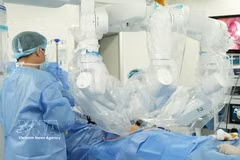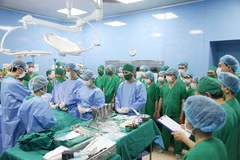
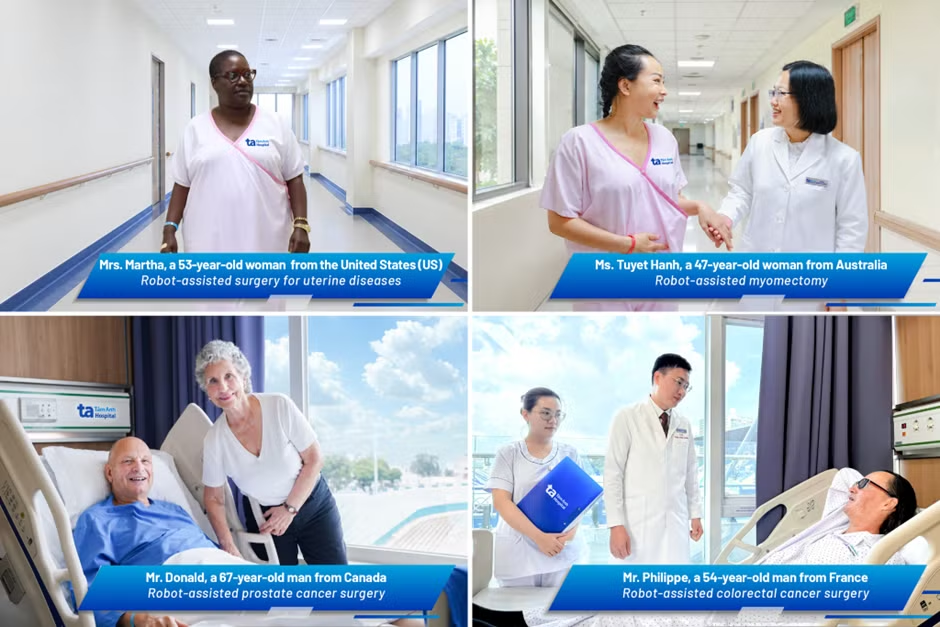
Hanoi (VNA) - Just 12 hours after undergoing a robot assisted hysterectomy using the da Vinci Xi surgical system at Tam Anh General Hospital, Martha, a 54 year old American, was able to sit up, walk and eat normally. Years earlier, she had undergone open surgery and remained haunted by the prolonged pain and weeks-long recovery.
“I could hardly believe I had just undergone major surgery. I experienced only mild discomfort afterward, was able to walk on my own and was discharged the very next day,” Martha said.
Previously, Donald, a 67 year old Canadian, also decided to travel to Vietnam for prostate cancer surgery after facing a two-month waiting period for surgery in his home country. Just 12 hours after being admitted to Tam Anh General Hospital, Donald was transferred to a state-of-the-art hybrid operating room, one of the most advanced and heavily invested surgical facilities in Vietnam. Just 16 hours after surgery, he was able to stand and walk independently and was discharged after 48 hours.
This is part of an emerging trend in Vietnam's healthcare sector, as international patients increasingly travel to the country not only to reduce treatment costs but also to gain access to advanced surgical techniques that previously often required treatment at major medical centers in the US and Europe.
At Tam Anh General Hospital, two da Vinci Xi surgical systems manufactured by US-based Intuitive Surgical have been deployed to perform robot-assisted surgery, particularly for cancer and other complex conditions. The da Vinci Xi is widely used at major surgical centers worldwide. Its high-definition 3D camera system provides magnification of the surgical field, while its robotic instruments offer a wide range of movement and greater flexibility than the human wrist, helping surgeons perform precise procedures in deep and confined anatomical areas.
The da Vinci Xi system has been cleared by the US Food and Drug Administration (FDA) and has been used in more than 20 million surgical procedures involving over 120 types of cancers and complex conditions. After more than a year of operation, Tam Anh General Hospital has performed nearly 500 multidisciplinary robot assisted surgery procedures across urology, gastrointestinal surgery, thoracic surgery and obstetrics and gynecology. Many of these patients have come from countries including the US, France, Canada and Australia.
Following the successful implementation of robotic single site surgery with da Vinci in July, Assoc. Prof. Vu Le Chuyen, MD, PhD - Director of the Center for Urology, Nephrology and Andrology, and his surgical team at Tam Anh General Hospital continued to master dual console robotic surgery with da Vinci, one of the most complex techniques available on the da Vinci Xi platform.
Robotic single site surgery with da Vinci minimizes surgical invasiveness through a single incision measuring just 2-2.5 cm. In contrast, dual console robotic surgery takes robot-assisted surgery to a new level by allowing two specialists to control the robotic system simultaneously within the same surgical field. This approach can reduce operating time by more than 70%, enhance procedural safety and optimise treatment outcomes for patients.
Assoc. Prof. Tran Quang Binh, MD, PhD - Chief Medical Officer of Tam Anh General Hospital Group in Ho Chi Minh City, said that mastering these advanced robot-assisted surgery techniques required Tam Anh General Hospital to invest hundreds of millions of US dollars in two new-generation da Vinci Xi systems and supporting equipment. The hospital has also developed comprehensive high-tech infrastructure across specialised departments, bringing together experts from multiple fields and a strong surgical workforce comprising 12 experienced robotic surgery teams across four specialties. Operating room procedures have been standardised, while anesthesia and critical care, nursing and robotic technician teams operate according to international standards.
Currently, the cost of robot-assisted surgery at Tam Anh General Hospital starts at 85 million VND (approximately 3,000 USD). This is among the lowest rates globally, approximately one-tenth of the cost in the US or Singapore and about half the cost in Thailand, while maintaining the highest professional standards and allowing health insurance coverage in accordance with applicable regulations.
Each year, Tam Anh General Hospital attracts thousands of overseas Vietnamese and international patients from the US, the UK, Germany, Canada, Australia, Japan, the Republic of Korea and other countries for medical examinations and treatment. Approximately 20% of these cases involve robotic surgery, contributing to Vietnam's emergence as a new destination for high-tech medical tourism.
“We came to Tam Anh because we could access technology and medical expertise comparable to those at major centers, at a much lower cost,” Donald said.
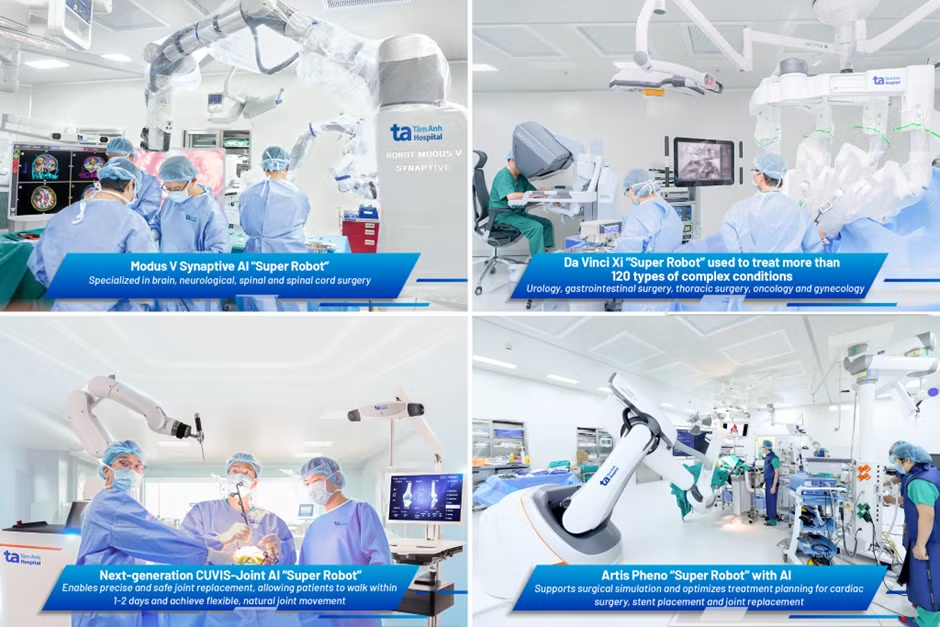
Beyond its two da Vinci Xi systems, Tam Anh General Hospital has established a comprehensive high tech ecosystem supporting diagnosis and treatment. The hospital has brought together advanced systems from around the world, including the Modus V Synaptive neurosurgical robotic system, the Cuvis-Joint robotic system for joint replacement, the Artis Pheno system for cardiovascular interventions, AI enabled CT and MRI systems, AI applications in laboratory testing and pathology, and the advanced Versa HD radiotherapy system.
Alongside its investment in advanced technologies, the hospital has developed facilities in accordance with European standards, from operating rooms to inpatient treatment areas. Doctors, nurses and customer care staff can communicate in multiple languages and provide assistance with legal procedures, insurance and medical records, helping overseas Vietnamese and international patients feel confident and comfortable receiving treatment in Vietnam./.