Hanoi (VNA) – As localities nationwide implement Politburo Resolution No. 72-NQ/TW on improving public health care, many are strengthening primary health care, accelerating digital transformation and investing in high-quality medical personnel. Together, these efforts are laying the foundation for a more modern, equitable and people-centred healthcare system.
Strengthening primary health care
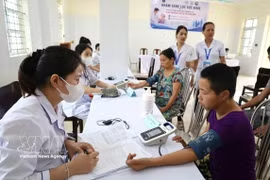
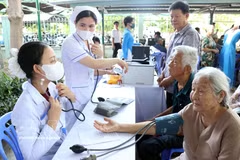
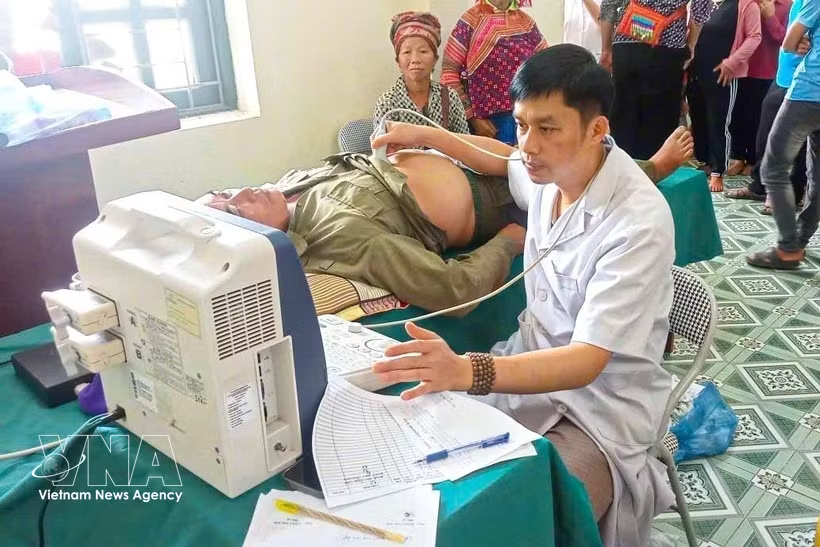
Aiming to ensure all citizens can access quality healthcare close to home, detect diseases earlier and improve quality of life amid rapid population aging, cities and provinces are adopting reforms to enhance healthcare capacity.
The northern province of Quang Ninh has launched the first phase (2026–2030) of its national health care, population and development programme for 2026–2035, marking a major push to modernise grassroots healthcare through digital transformation.
By 2030, the province targets universal electronic health records and lifetime health management, with all commune health stations operating family doctor models and home health monitoring services. Preventive health care will focus on ethnic minority, mountainous, border and island communities, while programmes will promote child nutrition, address gender imbalance at birth, adapt to population ageing and expand prenatal and newborn screening.
More than 90% of communes and wards are expected to meet national healthcare standards.
Meanwhile, the northern mountainous province of Lang Son is also strengthening preventive and primary health care while expanding digital transformation and technology applications.
By 2030, the province aims to raise life expectancy to 75.5 years, achieve over 95% coverage for essential vaccinations and health insurance, and provide every resident with at least one free annual health check-up and an electronic health record from 2026.
According to Deputy Director of the provincial Department of Health Hoang Xuan Truong, healthcare facilities have begun implementing the programme, with more than 161 billion VND (6.21 million USD) allocated for 2026.
Vice Chairman of the provincial People's Committee Tran Thanh Nhan said Lang Son will continue improving primary healthcare, mobilising resources and strengthening oversight to fulfil Resolution 72.
As Vietnam's largest health care hub, Ho Chi Minh City is developing a multi-tier healthcare system centred on patients, ensuring continuous care from prevention to treatment and rehabilitation.
The city has 169 hospitals, more than 13,000 healthcare facilities, 168 commune-level health stations and nearly 300 satellite clinics, serving as the leading medical centre for southern Vietnam.
According to Director of the municipal Department of Health Tang Chi Thuong, the city is responding to population aging and rising chronic diseases by integrating healthcare services across all levels while expanding electronic health records, electronic medical records, telemedicine and shared medical databases to improve treatment quality.
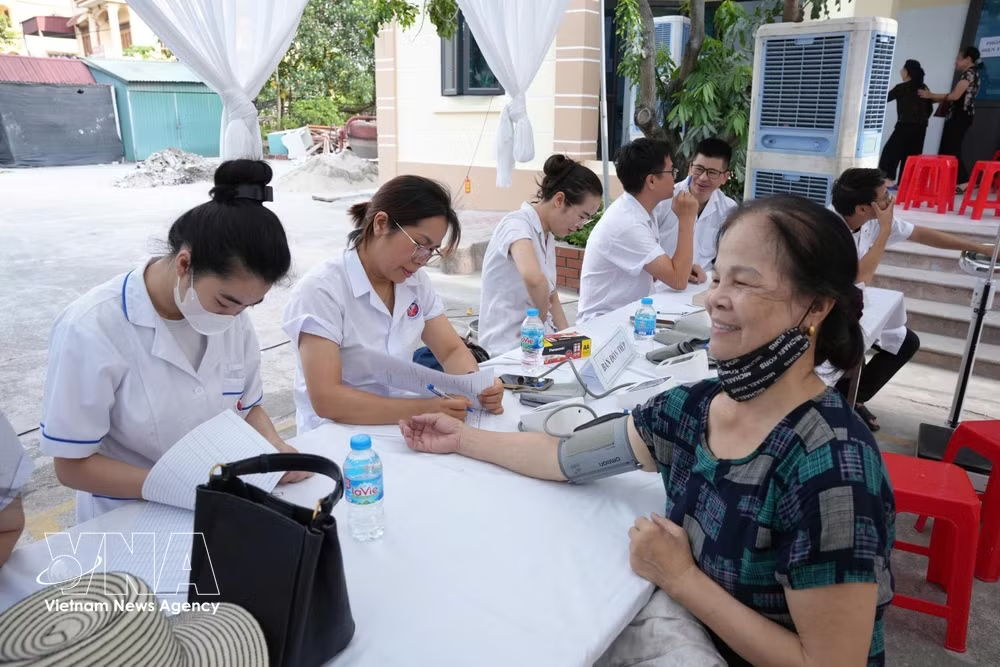
The simultaneous investment in primary healthcare, digital transformation and innovative healthcare models is creating a solid foundation for achieving Resolution 72's goal of building a modern, equitable and people-centred healthcare system.
Building a stronger healthcare workforce
While investment in grassroots healthcare strengthens frontline services, developing medical personnel remains essential to achieving the resolution's objectives. Many localities continue to face shortages of healthcare workers, particularly at the primary level.
Following administrative restructuring, the central province of Gia Lai faces significant workforce pressure. The number of commune-level health stations has fallen from 373 to 135, while each station now serves nearly three times as many residents. The province currently lacks nearly 500 healthcare workers, alongside shortages of facilities, medical equipment and information technology infrastructure.
To address these challenges, Gia Lai has introduced a dedicated healthcare development plan featuring measures to recruit, train and retain personnel, dispatch doctors and technicians from higher-level hospitals to grassroots facilities, and seek government support for special policies and investment in mountainous and remote areas.
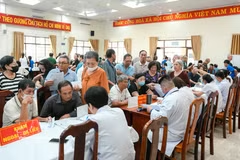
Other provinces are also focusing on workforce quality through specialised training, technology transfer and stronger collaboration among healthcare institutions. In Ca Mau, a conference on healthcare in an ageing society examined ways to strengthen the medical network serving government officials, with local authorities calling for expanded specialist training, technical support and telemedicine to improve frontline medical capacity.
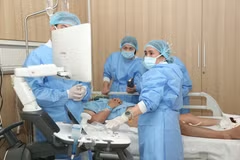
The central city of Da Nang continues to stand out in international cooperation. More than 20 specialists from Orbis International, representing seven countries, have trained over 230 ophthalmologists, nurses and eye-care professionals through hands-on instruction, live surgery, clinical workshops and advanced simulation. The programme enables Vietnamese medical staff to master modern ophthalmic techniques and improve eye-care services, particularly in the central and Central Highlands region.
Vice Chairwoman of the Da Nang People's Committee Nguyen Thi Anh Thi said Orbis' decision to continue deploying its Flying Eye Hospital programme in the city reflects the success of international cooperation while enhancing the professional capacity of Vietnam's healthcare workforce and expanding access to advanced medical services.
From strengthening primary healthcare to developing human resources and accelerating digital transformation, localities across Vietnam are working to improve healthcare quality, support the implementation of Resolution 72 and build a modern, sustainable healthcare system./.