Hanoi (VNA) - In the years ahead, an advanced medical centre should do more than treat the most complex cases. It must also generate new knowledge, train highly skilled physicians, and spread specialist expertise throughout the healthcare system. This vision underpins Vietnam’s ambition to build a modern, compassionate, self-reliant and internationally integrated healthcare system that serves the health and well-being of its people.
Building national capacity for advanced health care
Since performing its first kidney transplant in June 1992, Vietnam has completed more than 10,000 organ transplants and mastered kidney, liver, heart and lung transplantation, as well as the transplantation of other human tissues and organs. Stories of life-saving transplants continue to emerge, including coordinated organ procurement and transplantation involving patients separated by thousands of kilometres.
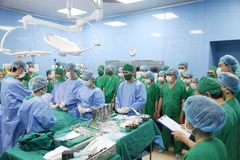
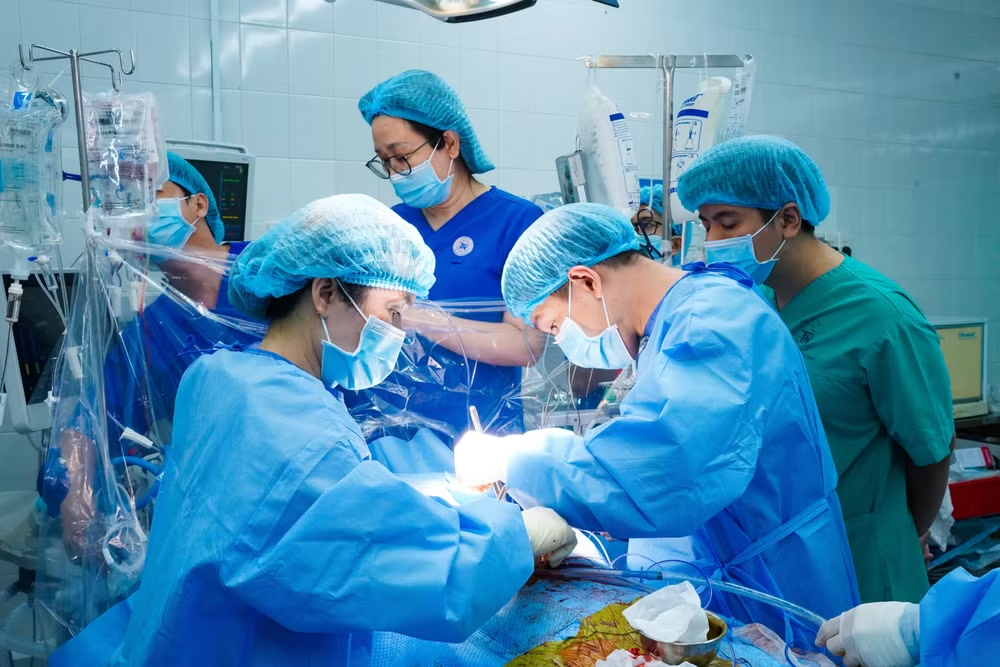
The Viet Duc University Hospital has cemented its position as a leading national surgical centre by mastering single-organ transplantation while also carrying out multi-organ and domino transplants. These milestones demonstrate not only technical excellence but also the growing organisational capacity, inter-hospital coordination and national organ allocation system.
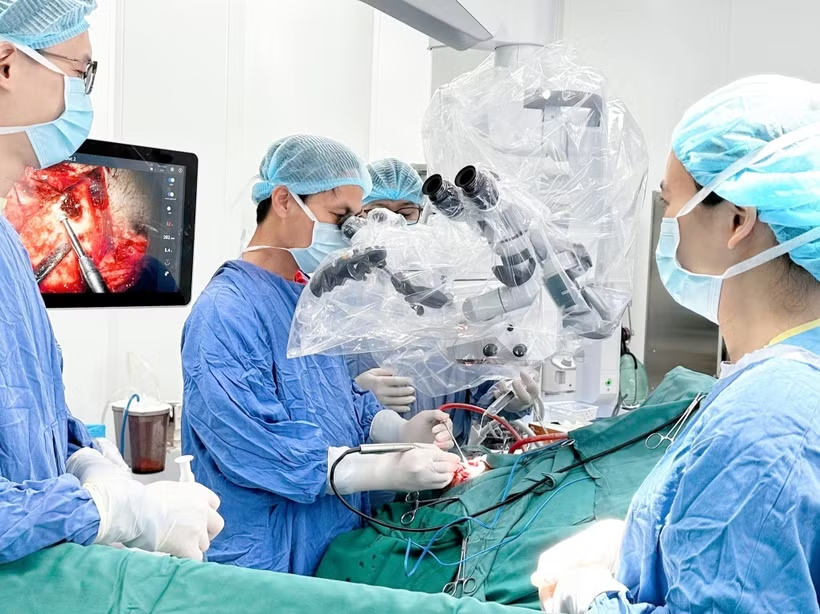
Hospitals across the country have also successfully introduced other advanced procedures, including fetal cardiac intervention, transcatheter aortic valve replacement, robotic surgery, neurovascular intervention, high-precision radiotherapy, and extracorporeal life support.
Alongside technological advances, leading medical institutions have increasingly assumed responsibility for training and guiding the broader healthcare system. Professional supervision, teleconsultation and telemedicine have enabled widespread technology transfer, allowing procedures once available only in Hanoi, Ho Chi Minh City or Hue to be performed at provincial hospitals, including those in mountainous, border and disadvantaged areas.
Another notable development is the expansion of advanced medical services beyond the public sector. Many private hospitals have made substantial investments in infrastructure, equipment, human resources and specialised disciplines, creating additional capacity, expanding service provision and fostering quality-based competition.
These achievements provide the foundation for Resolution No. 72-NQ/TW, which calls for a modern, equitable, high-quality, efficient and internationally integrated healthcare system, with investment focused on several advanced medical centres capable of meeting regional and international standards.
Vietnam's adjusted healthcare network master plan for 2021–2030, with a vision to 2050, also outlines a regional structure covering the country's six socio-economic regions. It envisages 17 provincial general hospitals serving regional functions, at least one highly specialised hospital in each region, and at least one advanced medical facility in every province and city.
A multi-tiered system to lead national health care
As hospital governance and referral systems evolve, both the healthcare sector and individual hospitals face new development priorities.
(Photo published by VNA)
According to People's Doctor Professor Dr Tran Minh Dien, Director of the Vietnam National Children's Hospital, advanced medical centres must become system leaders capable of creating value across the national healthcare network. They should lead their specialties by developing clinical guidelines, quality standards and patient safety protocols while providing continuous training and technology transfer through affiliated hospitals and satellite networks. They should also strengthen teleconsultation, real-time professional support and coordinated patient referrals, while serving as hubs for research, precision medicine, artificial intelligence, big data and digital transformation.
Associate Professor Dr Dao Xuan Co, Director of Bach Mai Hospital, shared this view, arguing that advanced medical centres should not simply gather high-end technologies but serve as strategic pillars of national healthcare capacity.
He believed such centres should rest on five core pillars: advanced clinical care capable of treating the most complex diseases; high-quality workforce training integrated with clinical practice; scientific research, innovation and mastery of emerging technologies; internationally benchmarked hospital governance; and leadership of healthcare networks through the development of professional standards and capacity-building for local hospitals.
Professor Dr Tran Van Thuan, Deputy Minister of Health, said Vietnam's next phase of healthcare development will shift from investing in individual specialised hospitals to building an integrated, multi-tiered network of advanced medical centres with clearly defined roles and strong interconnections.
National flagship hospitals will focus on highly specialised procedures, rare and complex diseases while leading research, specialist training and the development of professional standards. Regional hospitals will be expected to manage most severe cases, reducing patient transfers to a handful of central hospitals. Provincial-level advanced hospitals will serve as specialist hubs, working closely with grassroots healthcare facilities and primary hospitals.
Investment priorities will also evolve from inveseting in individual hospitals to forming specialised healthcare ecosystems.
Another fundamental shift will see knowledge flow replacing patient flow. Rather than routinely referring patients to higher-level hospitals, leading centres will increasingly transfer expertise to lower-level facilities through specialist networks, team training, technology transfer, teleconsultation and continuous professional support.
The Ministry of Health is currently studying new development models, including integrated advanced medical complexes, centres of excellence and collaborative clusters linking hospitals, universities, research institutes and businesses./.