Spring Fair 2026 expands Vietnam–Australia trade cooperation space

In this landscape, the business communities of both sides are playing a pivotal role in translating high-level political commitments into tangible commercial value.

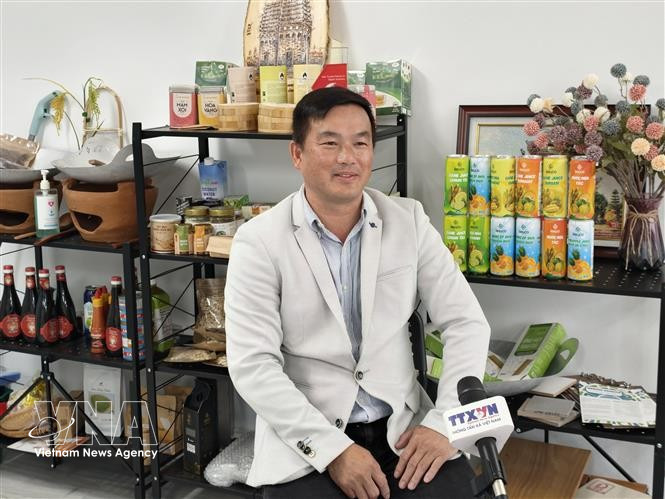
Nguyen Thanh Binh, CEO of KQ Trading and Chairman of the Vietnam–Australia Logistics and Investment Association. (Photo: VNA)

Hanoi (VNA) – As the Vietnam–Australia Comprehensive Strategic Partnership continues to deepen, trade and investment ties between businesses of the two countries are showing encouraging momentum. In this landscape, the business communities of both sides are playing a pivotal role in translating high-level political commitments into tangible commercial value.

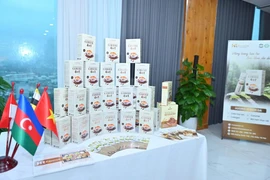
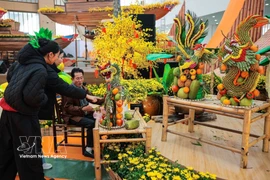
Speaking to Vietnam News Agency correspondents in Sydney on the occasion of Vietnam’s organisation of the Spring Fair 2026, Nguyen Thanh Binh, CEO of KQ Trading and Chairman of the Vietnam–Australia Logistics and Investment Association, noted that Australian consumers are increasingly open to Vietnamese imports. He attributed this trend to improved product quality, distinctive flavours and compliance with Australia’s stringent standards, alongside the country’s highly multicultural society and rising demand for Asian foods.

According to Binh, Vietnam’s key export items to Australia include textiles, tropical fruits such as dragon fruit, mango and coconut, coconut water, processed foods, spices, coffee and cashew nuts.

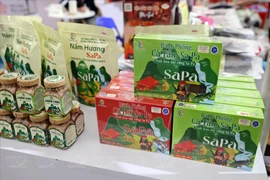
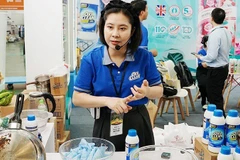
Specific products such as sugarcane juice from Lasuco (Thanh Hoa province), Viet Cuong vermicelli (Thai Nguyen province), Huynh Khoa fish sauce (Phu Quoc), Madam 6 banh hoi and Miss Banh Trang (Ho Chi Minh City) have gradually entered Australian distribution networks and received positive feedback from local consumers.

He stressed that beyond the growing number of Vietnamese products in Australia, there has been a marked improvement in quality, packaging, traceability and compliance with strict quarantine requirements. These factors are decisive for securing stable shelf space in major supermarket chains, rather than limiting distribution to Vietnamese community outlets.

With both countries participating in several new-generation free trade agreements, Binh said tariff reductions have strengthened the competitiveness of Vietnamese goods compared to products from Thailand, Malaysia, Indonesia and China. However, he emphasised that preferential tariffs are only a necessary condition. The sufficient condition lies in meeting strict technical standards on quarantine, certification, product quality and professional supply chain management.

Australia is widely regarded as one of the region’s most stringent markets in terms of quality control, particularly biosecurity and plant quarantine. Therefore, Vietnamese firms seeking deeper market penetration must standardise production processes, ingredients, labelling, packaging and logistics. Experienced intermediaries in the host country can help reduce risks, shorten market entry time and optimise costs, he added.

Binh also highlighted the role of multicultural trade fairs in Australia, which allow Vietnamese enterprises to reach not only the Vietnamese community but also local consumers and other Asian communities. This approach is essential for long-term brand building and market expansion.

In the opposite direction, Australia’s strengths lie in high-end agricultural and food products such as beef, lobster, wine, dairy and seasonal fruits including cherries, apples, grapes and blueberries. While highly regarded in Vietnam for quality and strict production controls, their higher production and labour costs position them in premium segments, requiring appropriate market strategies.

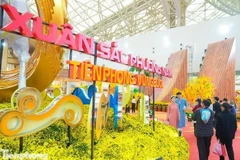
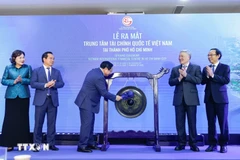
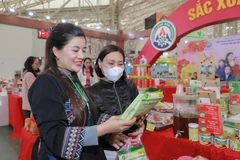
Against the backdrop of Spring Fair 2026, Binh underscored the need for professionally designed trade promotion events aligned with market demand and focused on substantive connections. Drawing from Australian experience, he said fairs should combine product displays with B2B matchmaking, specialised seminars and post-event follow-up mechanisms to ensure concrete cooperation outcomes.

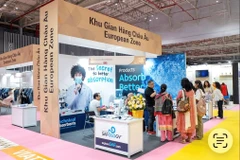
In an increasingly competitive environment, he noted, the presence of international products at events like the Spring Fair will create positive pressure for domestic firms to improve quality, upgrade designs and keep pace with global consumption trends. Over the long term, this shift will help Vietnamese goods move from competing on price to competing on quality and brand value./.
VNA

See more

Representatives of Central Retail Vietnam and Lotte Plaza Market sign a distribution cooperation agreement at the networking event in Ho Chi Minh City on March 13. (Photo: VNA)

Vietnamese firms step up cooperation with international distribution chains

Connecting Vietnamese businesses with international distribution networks has been a key component of government-led trade promotion programmes for many years, which are designed to help domestic companies place goods directly into global retail systems rather than exporting solely through intermediaries.

Direct Hanoi–Amsterdam flights by Vietnam Airlines to begin on June 16. (Photo: Vietnam Airlines)

Vietnam Airlines to launch direct Hanoi–Amsterdam service on June 16

Under the plan, the Hanoi–Amsterdam route will commence operations on June 16, 2026, with an expected frequency of three return flights per week using modern wide-body Airbus A350 aircraft. This will be the first direct air link between Vietnam and the Netherlands, helping to shorten travel time and enhance connectivity between Vietnam and one of Europe’s key economic, logistics and aviation transit hubs.

Farmers harvest the 2025 Winter–Spring rice crop in An Giang province. (Photo: VNA)

An Giang accelerates export shift to meet green consumption trends

To enhance competitiveness, authorities are assisting businesses in obtaining globally recognised certifications such as GlobalG.A.P., Organic and HACCP, enabling key exports including rice, seafood and clean agricultural products to strengthen their position in global markets, according to Quang Xuan Lua, Director of the An Giang Centre for Trade and Investment Promotion.

Motorcycle riders refill their vehicles at a petrol station in Hanoi (Photo: VNA)

E5 RON92 biofuel price falls in latest adjustment

Since the beginning of this year, domestic fuel prices have undergone 14 adjustments, including five decreases and nine increases for RON95 and six declines and eight hikes for E5 RON92. Meanwhile, diesel price has fallen three times and risen 11 times.

A French customer is tasting Vietnamese lychee. (Photo: VNA)

Vietnamese agricultural products boost global brand recognition

Vietnam aims to achieve about 74 billion USD in agro-forestry-fishery export turnover this year. Expanding value-added products, improving quality standards and strengthening brand building, especially through international supermarket systems, will be key to enhancing the competitiveness and global recognition of Vietnamese agricultural products.

An apartment building developed by BCONS in Binh Duong (Photo: VNA)

Resolution 68 boosts businesses entering market

By the end of 2025, Vietnam had more than one million active enterprises. In the first two months of 2026, about 64,500 enterprises entered or re-entered the market, up 29.4% year-on-year, averaging 32,200 newly established or returning businesses per month.

A Vinh Long official introduces signature local products to Korean guests. (Photo: VNA)

Vinh Long courts Korean investment in key sectors

Vice Chairman of the provincial People’s Committee Nguyen Truc Son vowed to accompany investors and provide them with optimal conditions, while building a transparent and stable business environment to secure long-term engagement from foreign enterprises, particularly those from Daejeon.

Delegates at the launching ceremony (Photo: VNA)

Digital platform on overseas market development launched

With Vietnam’s network of 64 trade offices overseas, Deputy PM Son noted that connecting them through a modern digital platform could help establish a unified national trade information system that operates efficiently, transparently and with strong forecasting capacity.

The Government’s issuance of Decree No. 72/2026/ND-CP revising preferential import tariffs on several petrol products and raw materials is a timely move to diversify supply sources. (Photo: VNA)

Fuel import tariff cuts strengthen Vietnam’s energy resilience: experts

Economic expert Dinh Trong Thinh said revising fuel import tariffs helps diversify supply sources and reduce reliance on traditional markets, thereby strengthening Vietnam’s ability to cope with potential global supply shocks. Ensuring access to multiple energy sources is also vital for safeguarding national energy security, he added.

Leaders of Dak Lak province inspect IUU fishing prevention and control efforts at Phu Lac fishing port, Hoa Hiep ward. (Photo: daklak.gov.vn)

Dak Lak readies for EC mission on anti-IUU fishing efforts

Dak Lak province is completing preparations for an upcoming European Commission (EC) inspection on efforts to combat illegal, unreported and unregulated (IUU) fishing, with a view to having the fisheries “yellow card” removed.

Vietnamese Ambassador to Argentina Ngo Minh Nguyet speaks at the event. (Photo: VNA)

Vietnam, Argentina promote trade, investment cooperation

On relations with South America, Nguyet noted that in December 2025, Vietnam and the Southern Common Market (MERCOSUR) announced the launch of negotiations for a Preferential Trade Agreement (PTA). She expressed her hope that the agreement will be signed soon, thereby further boosting trade and investment between Vietnam and MERCOSUR member states, including Argentina.

Customers buy petrol at a Petrolimex petrol station in Tran Hung Dao ward, Hung Yen province. (Photo: VNA)

PM orders stronger measures to ensure stable petrol supply

The MoIT was instructed to direct key petrol producers and traders to proactively develop supply plans to guarantee adequate fuel provision for distribution systems, maintain regular sale operations, and sell products at listed prices. It must also closely monitor developments in global and domestic petrol markets and adopt appropriate management measures when necessary.