Hanoi (VNA) – Thailand has proposed an ASEAN CHIPS Act to promote a unified regional semiconductor ecosystem, aiming to strengthen ASEAN's competitiveness in the global chip industry.
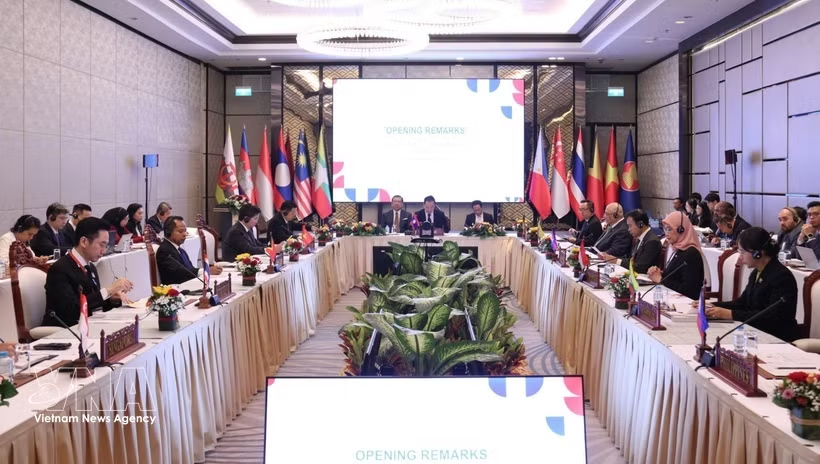
The proposal was presented by Thai Deputy Prime Minister and Minister of Higher Education, Science, Research and Innovation Prof. Dr. Yotchanan Wongsawat at the 22nd ASEAN Ministerial Meeting on Science, Technology and Innovation (AMMSTI-22), held in Vientiane, Laos, on June 26.
Yotchanan said Thailand has completed the initial concept note for the initiative and will submit it to ASEAN senior officials for further consideration. The proposed framework seeks to strengthen regional semiconductor supply chains, develop a highly skilled workforce, share research infrastructure, establish a network of centres of excellence, and promote common industry standards through the creation of an ASEAN Semiconductor Council.
Addressing the meeting, the Thai delegation stressed that ASEAN should move beyond fragmented national development strategies towards an integrated semiconductor ecosystem capable of competing in an increasingly volatile global supply chain.
Thailand also reaffirmed its support for the ASEAN Plan of Action on Science, Technology and Innovation (APASTI) 2026-2035 and called for deeper regional cooperation in health care, artificial intelligence (AI), space technology and innovation.
The country said it aims to train 50,000 AI specialists by 2030 and is ready to serve as a regional hub for semiconductor training, offering access to advanced laboratories, chip design tools and shared research facilities.
In health care, Thailand proposed making health a key pillar of ASEAN science and technology cooperation by expanding the use of AI in medical services, including remote patient monitoring and personalised health care.
The country also invited ASEAN members to collaborate at the Eastern Economic Corridor of Innovation (EECi), where a next-generation synchrotron light source is being developed to support advanced research in materials science, biomedicine and high-tech agriculture.
Thailand further pledged to share satellite technologies developed by the Geo-Informatics and Space Technology Development Agency (GISTDA) to help ASEAN countries monitor PM2.5 pollution, natural disasters and natural resources, saying stronger cooperation in science, technology and innovation will enhance the bloc's resilience and support sustainable, inclusive growth./.